
When we arrived in Kutaisi we had no plan over what to do next. Other members of the Caucasin M’n had watched a match of the U21 European Championships in football in Tbilisi before I arrived. Therefore, what else could we do than go to Batumi when we realised that England were playing the old enemy Germany there the following day.
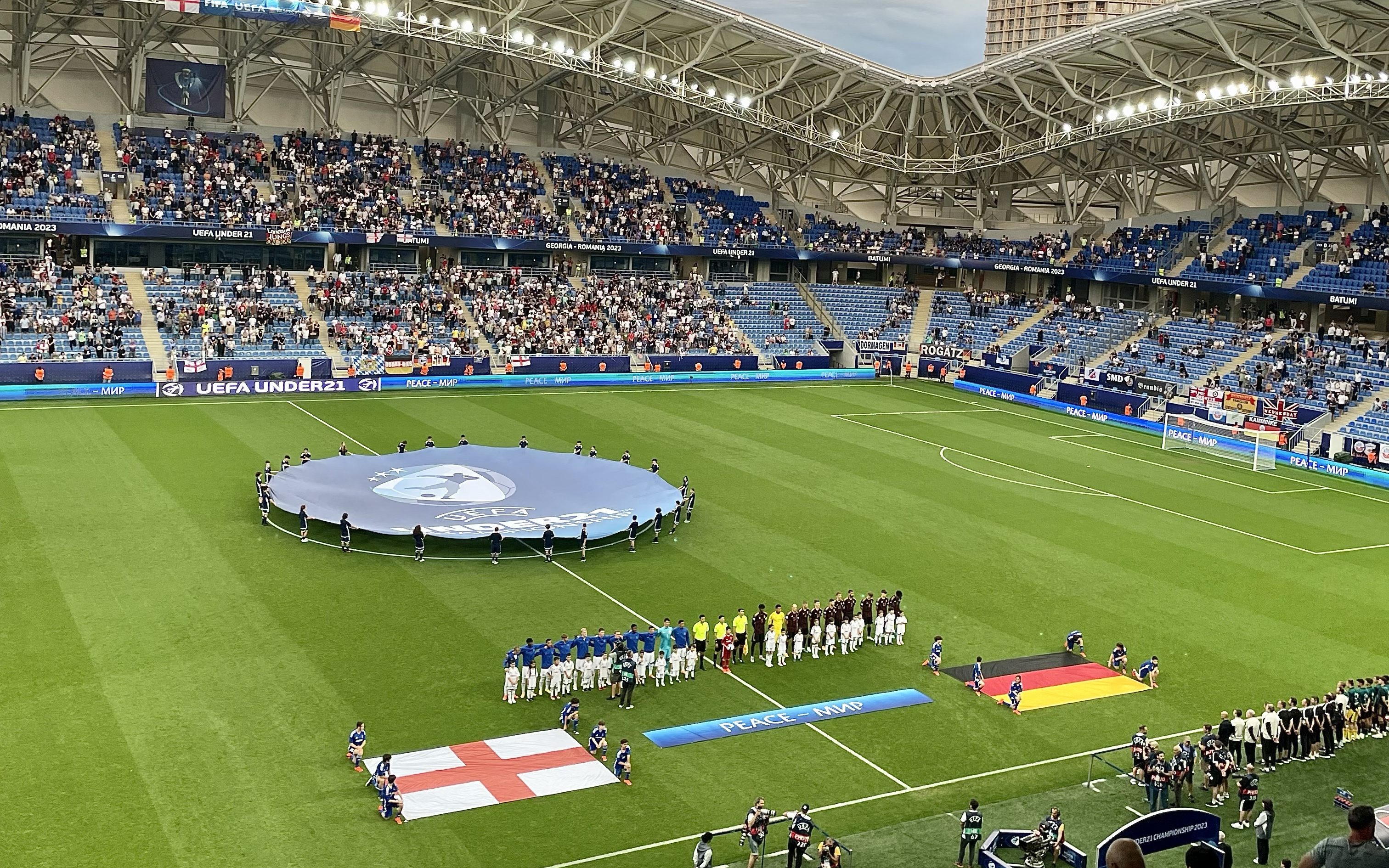
England u21 v Germany u21 in Batumi
On my previous trips to Georgia, I had repeatedly been told not to go to Batumi. For people who travel across Georgia and the Caucasus, staying in hostels, seeing the nature and abandoned buildings, I think Batumi is viewed as a sort of antithesis. Famed for its casinos, hotels, resorts and beaches, mainly catering for tourists from Belarus, Russia, Turkey and Ukraine. Somewhere people travelling would rather avoid.
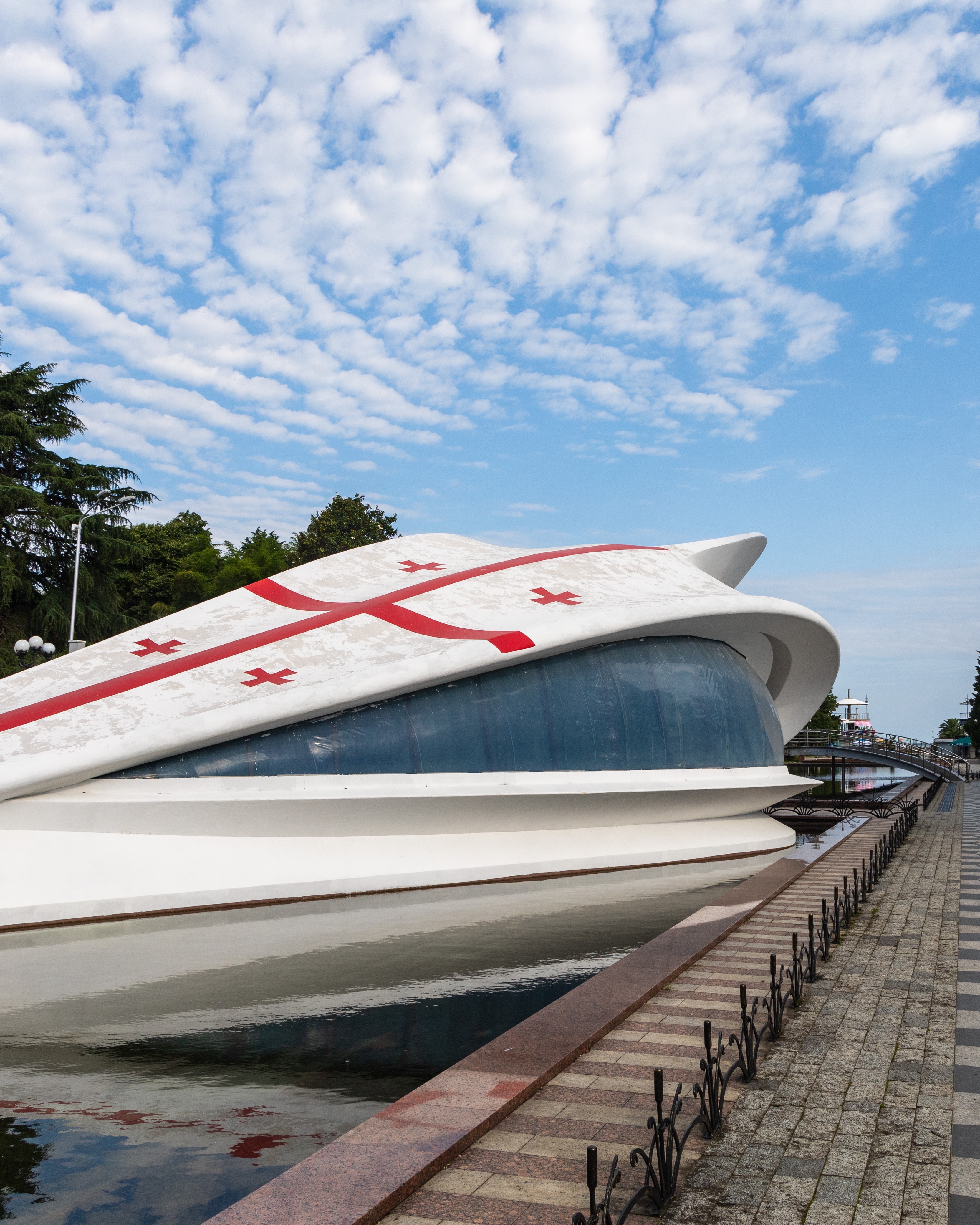
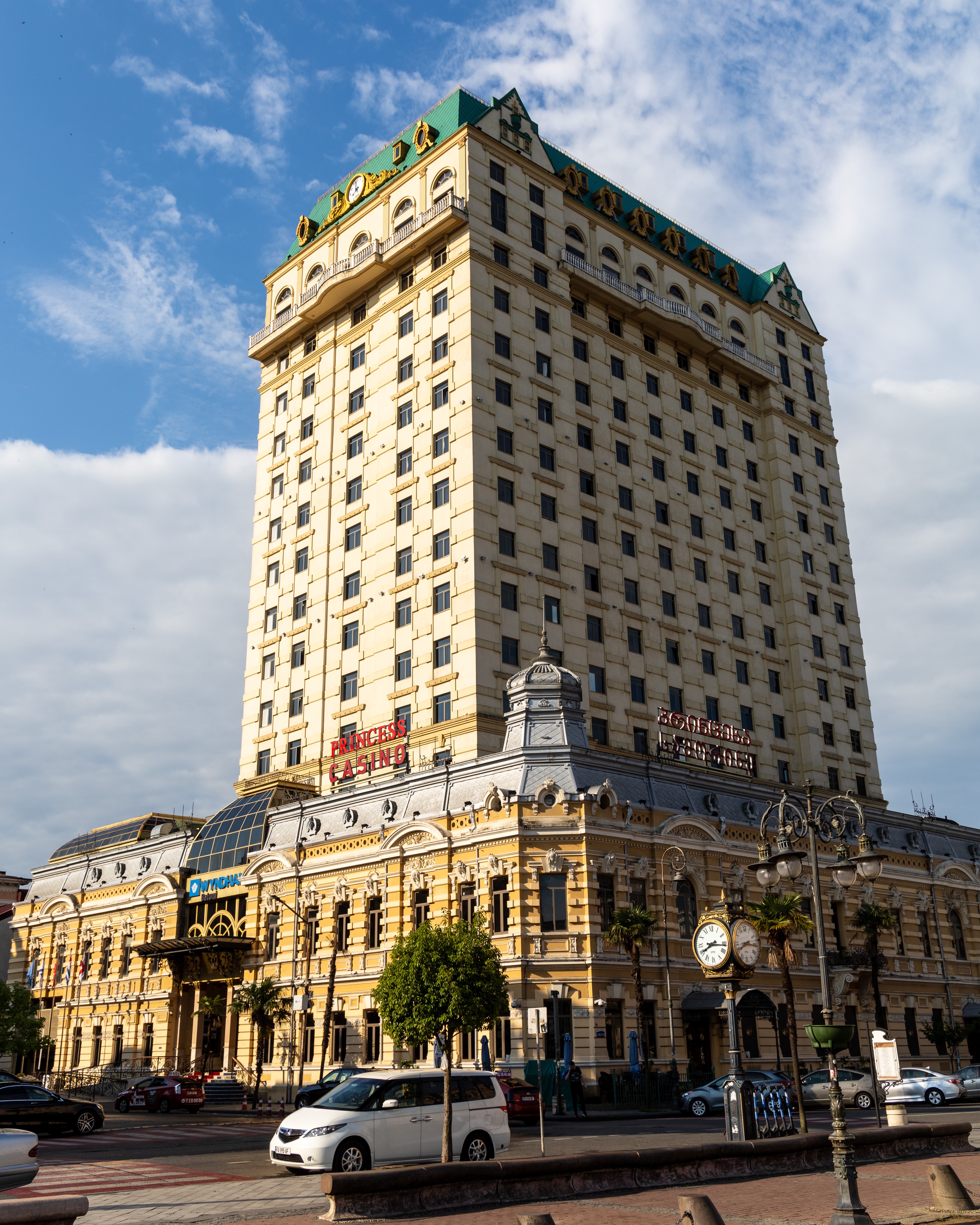
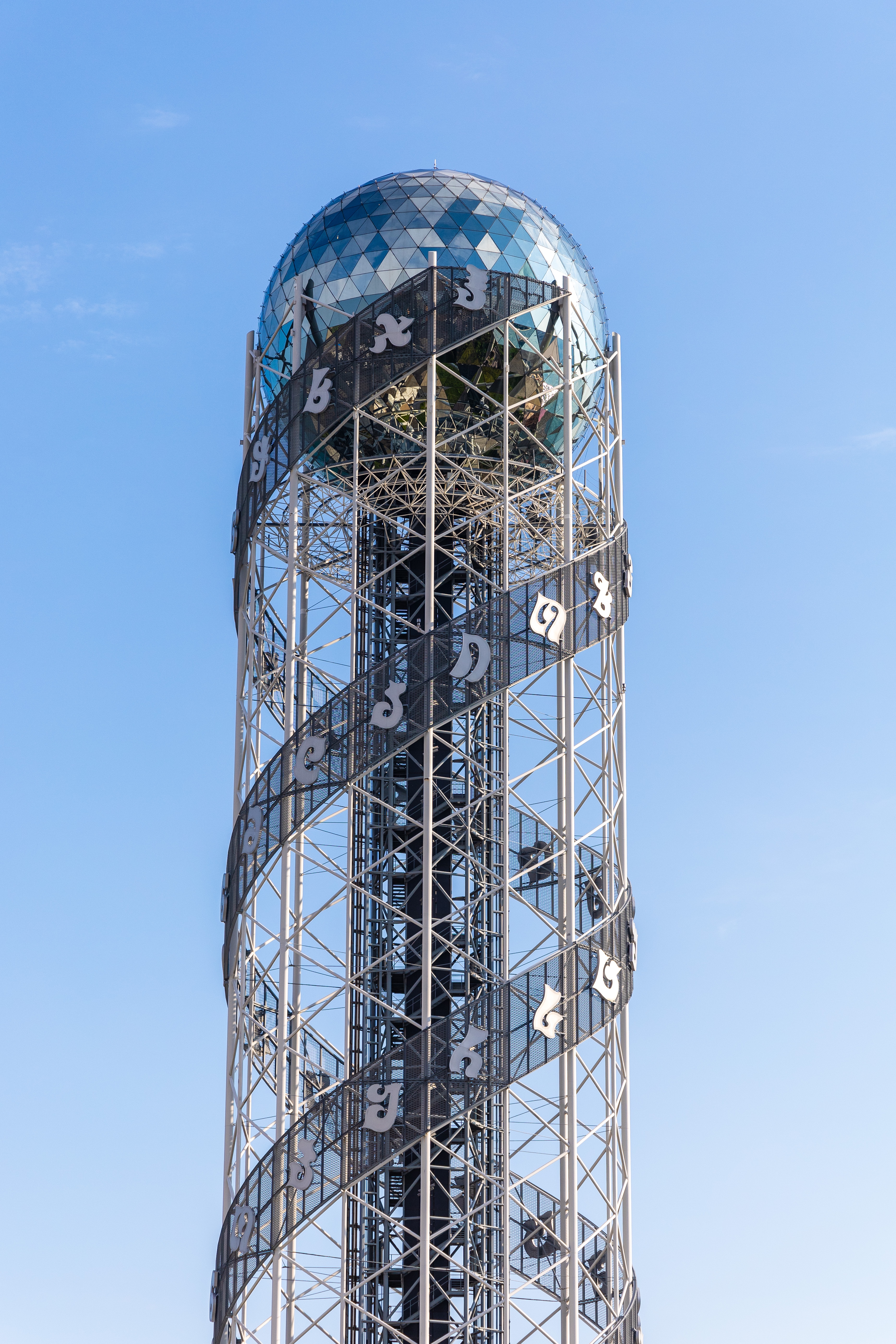
Batumi
In many ways, this is all true, a good portion of the cars there have Russian, Turkish or Ukrainian plates (many of which are from the occupied territories, from Kherson and Mariupol is commonplace). Additionally, personally, the place feels geared towards tourism. You won’t hear the “why are you here?” questions heard often in other places and the genuine openness and intrigue of people to find out why you have visited.
The streets in the morning were simply bizarre. In Tbilisi, the streets will be bustling, with people grabbing coffee in cafes and heading to work. In Batumi, there was quite literally no one about. We only had one day in Batumi so I spent the morning, wandering around empty streets taking photos. At around nine in the morning, I met up with the others in search of breakfast and coffee in the centre of the town. Anywhere else this would be simple. Not in Batumi. We walked for 15 minutes to no avail. Eventually, after circling up and down the old town we found one cafe just opening. After a complex ordering process in Russian, we waited quite honestly the longest time I’ve ever waited for a coffee. It was as if we were in a cafe that never opened nor ever made coffee.
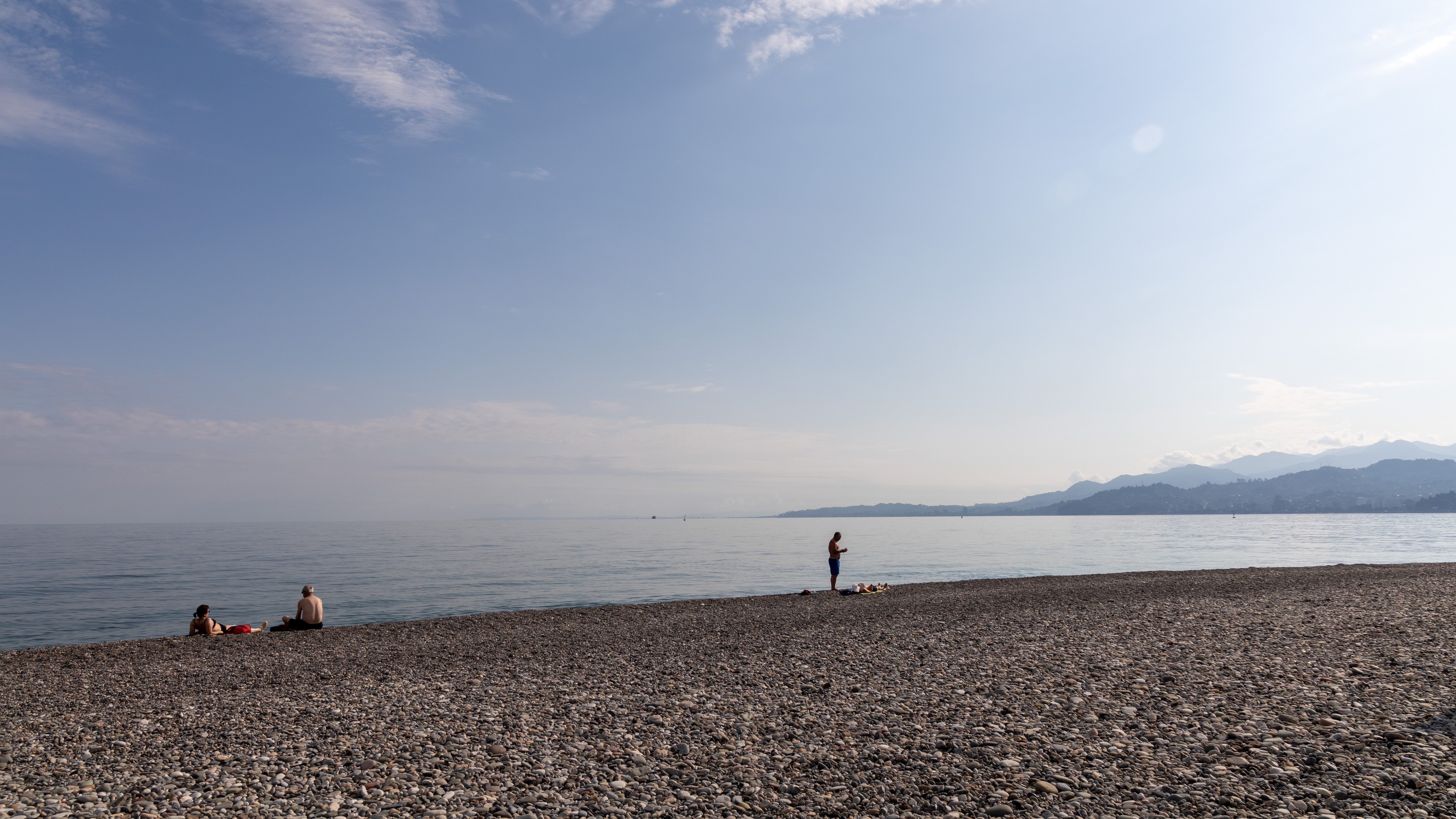
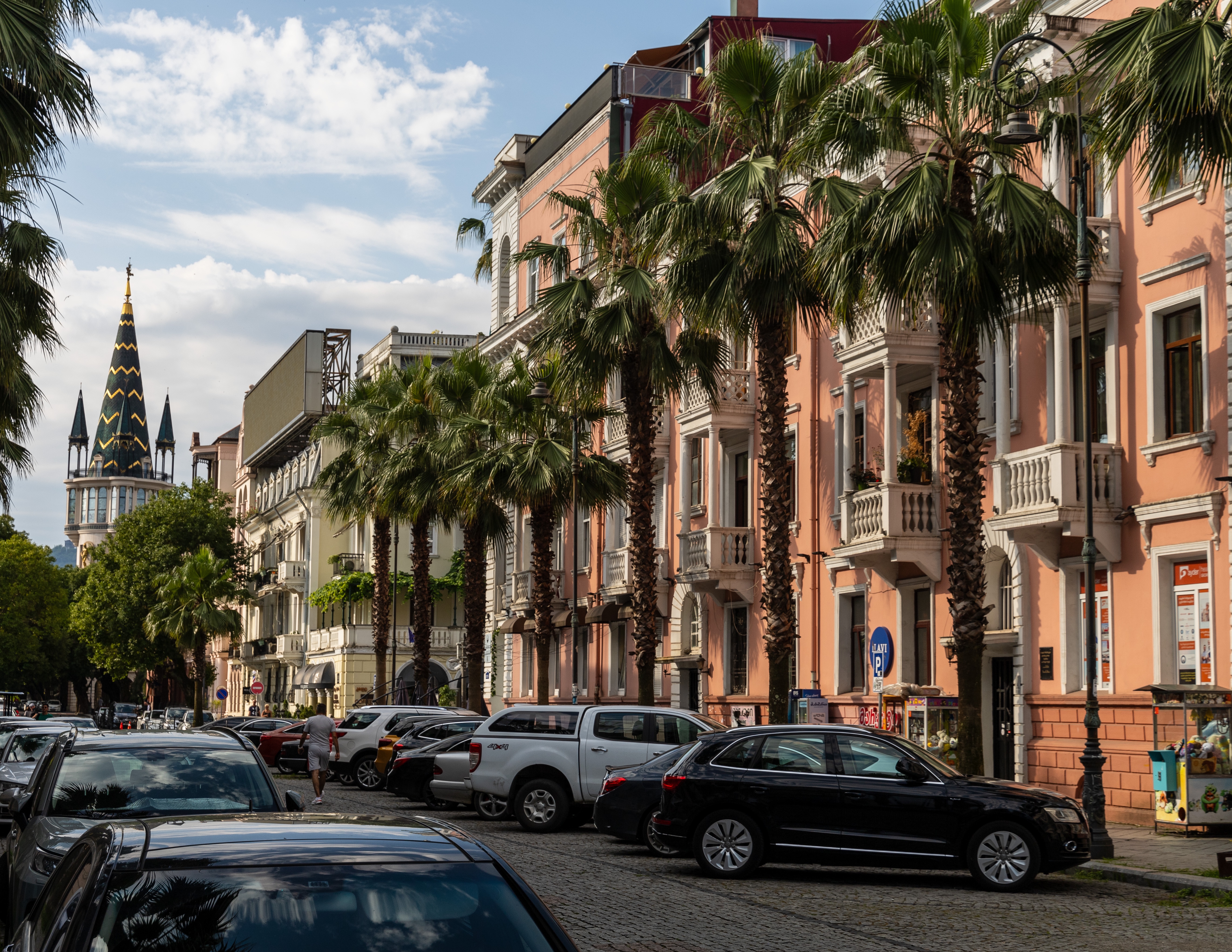
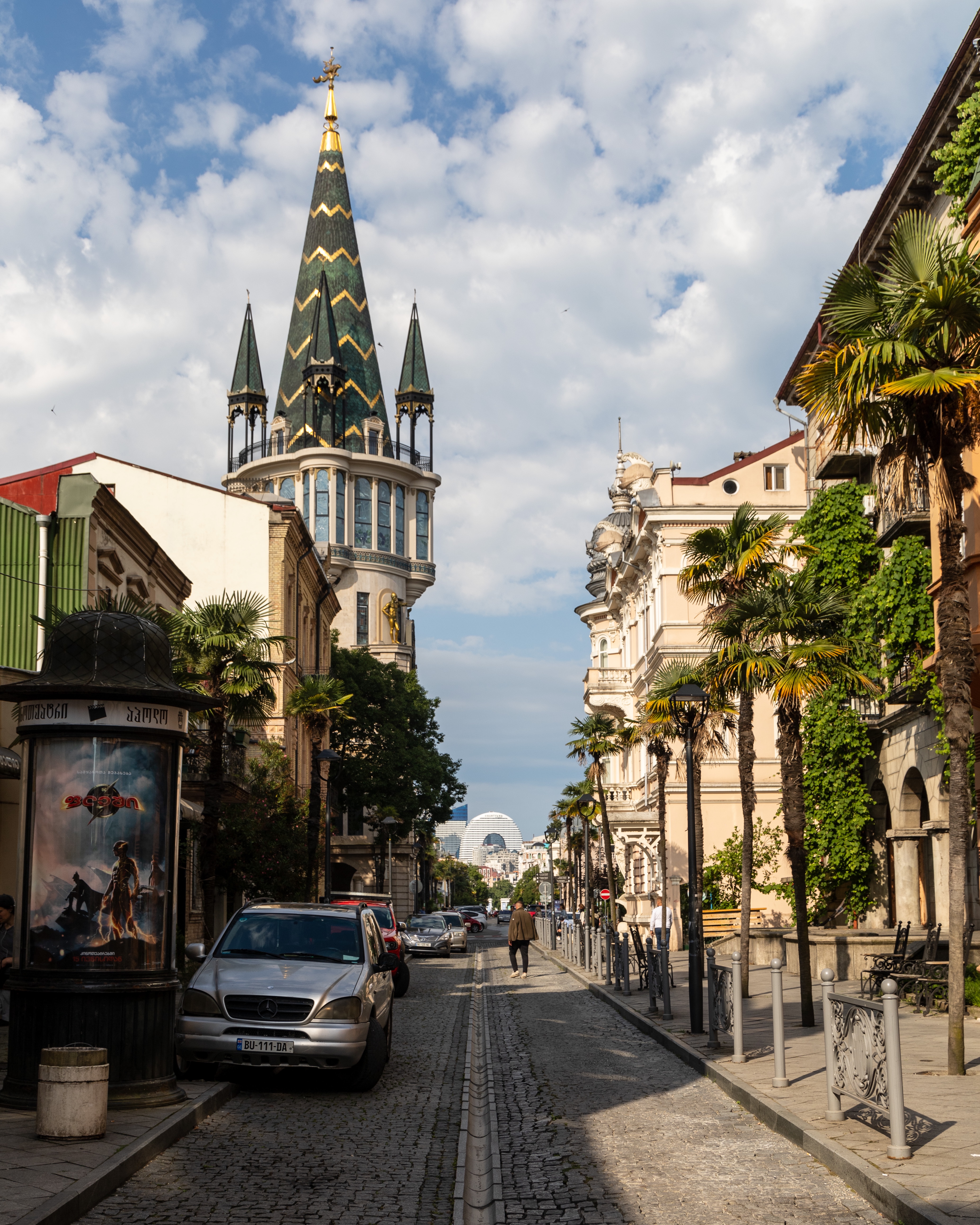
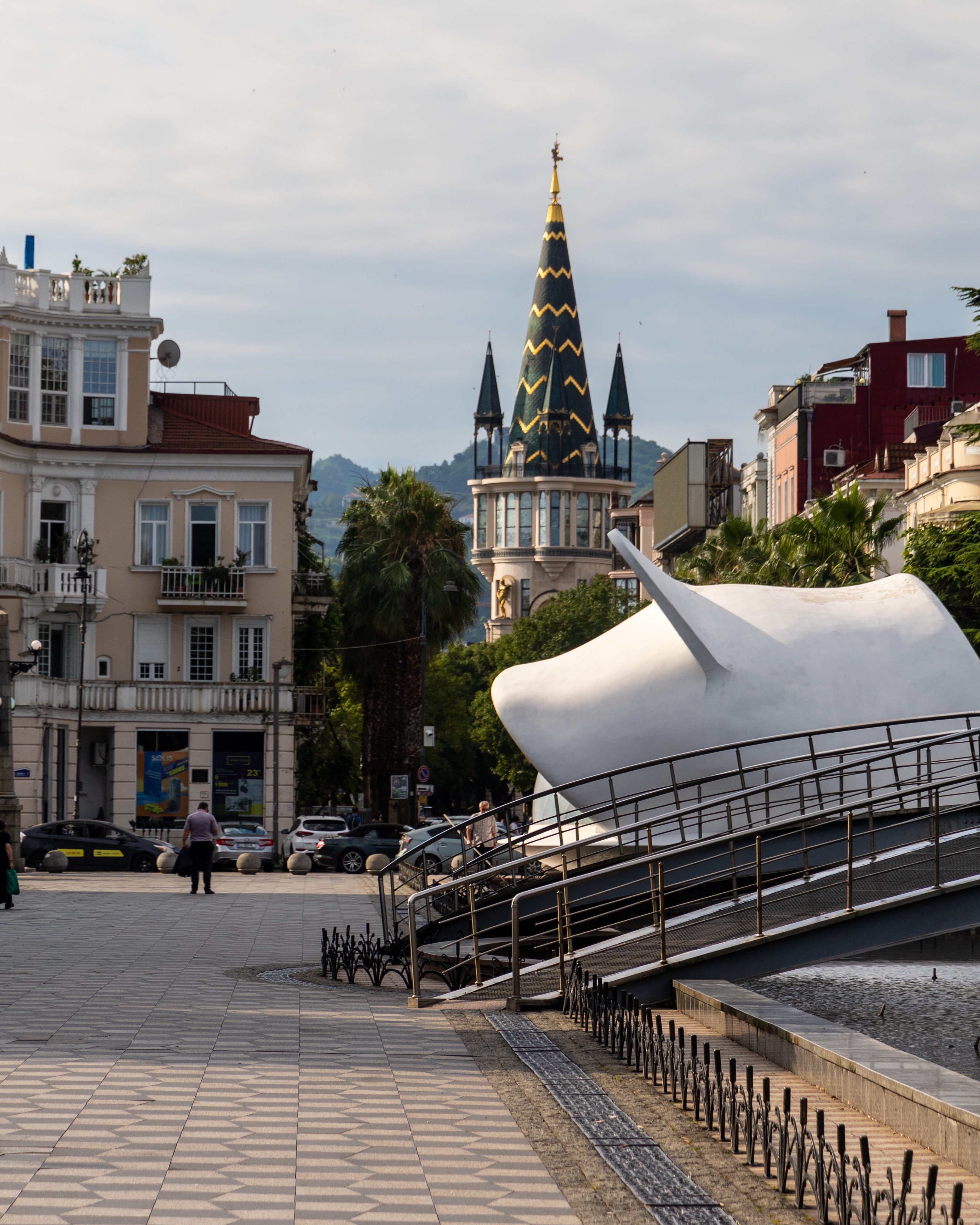
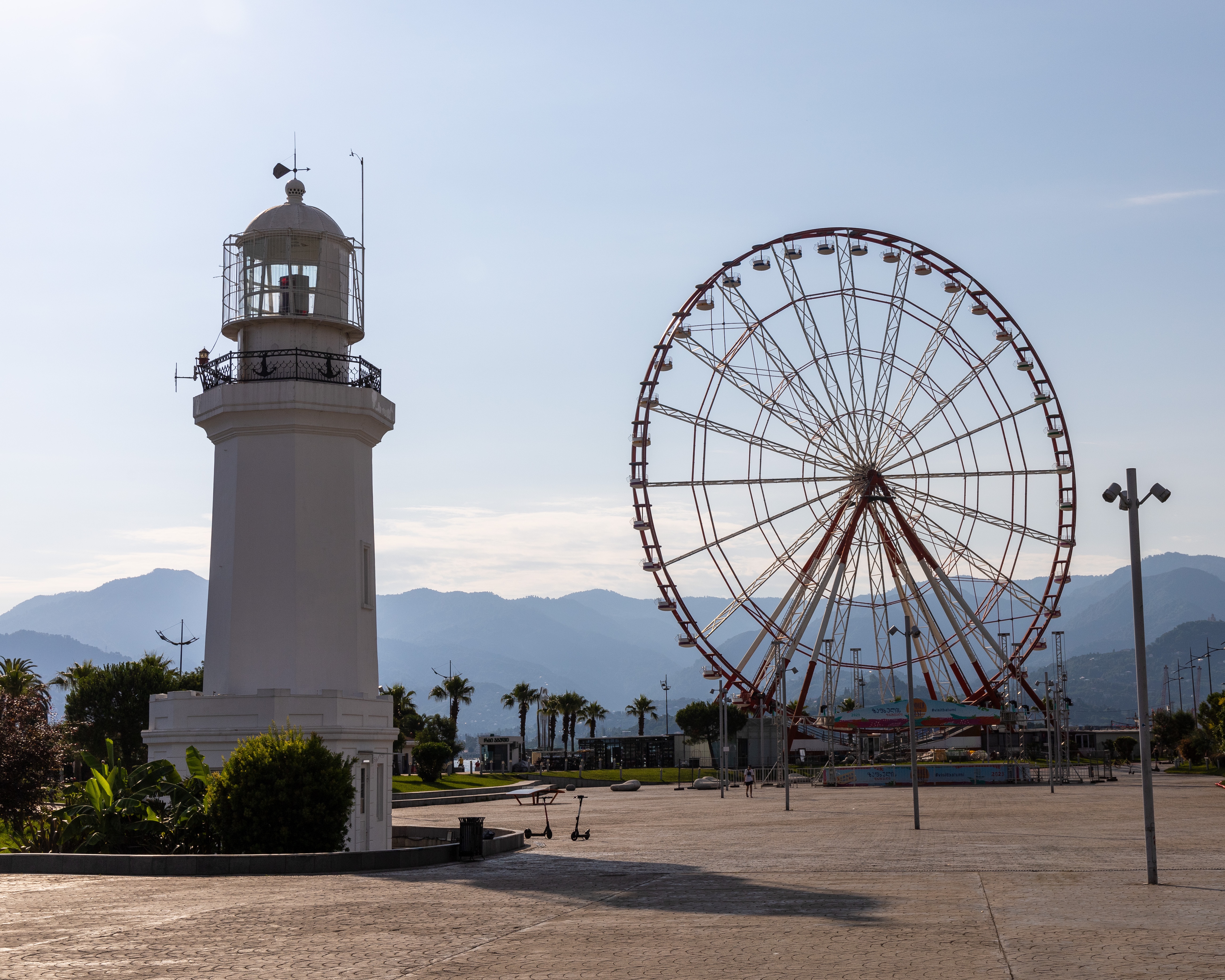
The quiet Batumi morning
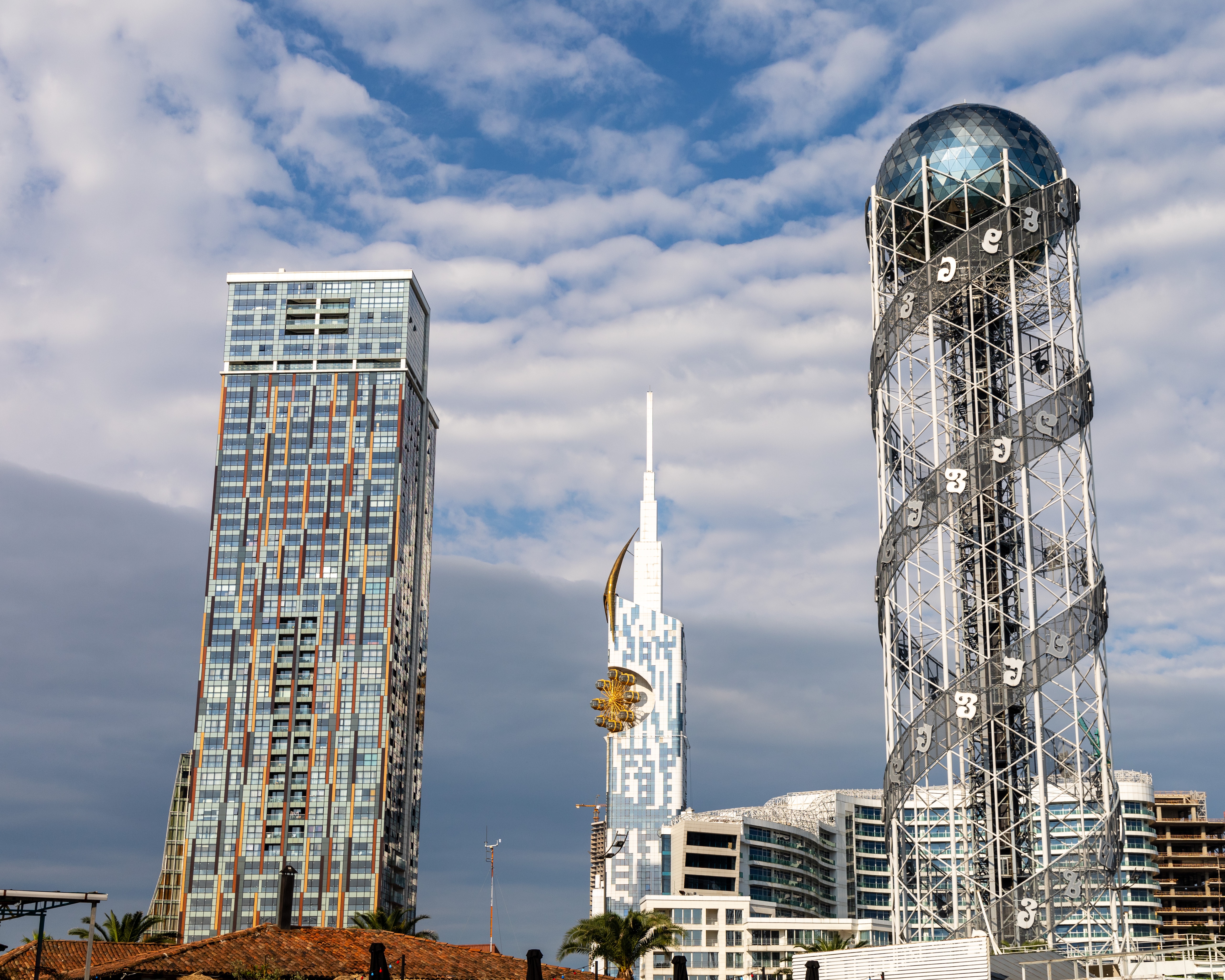
Furthermore, the traditional Georgian and Soviet architecture of Kutaisi and Tbilisi does not dominate the Batumi skyline. There is some very cool Georgian and Soviet architecture scattered around, but the skyline is undoubtedly dominated by ultramodern white and gold buildings.
Batumi is situated in Adjara, an autonomous region of southwestern Georgia. Adjara, in the aftermath of the dissolution of the Soviet Union, was run as a practically independent state within Georgia by its leader Aslan Abashidze. The region avoided the conflict seen in other Georgian regions such as Abkhazia and South Ossetia, however, it did garner a reputation for organised crime and authoritarian rule. Today, Adjara is more closely linked with Tbilisi, since 2007 the Georgian Constitutional Court has been based in Batumi as a way of linking the differing regions of Georgia and decentralising Tbilisi’s control.
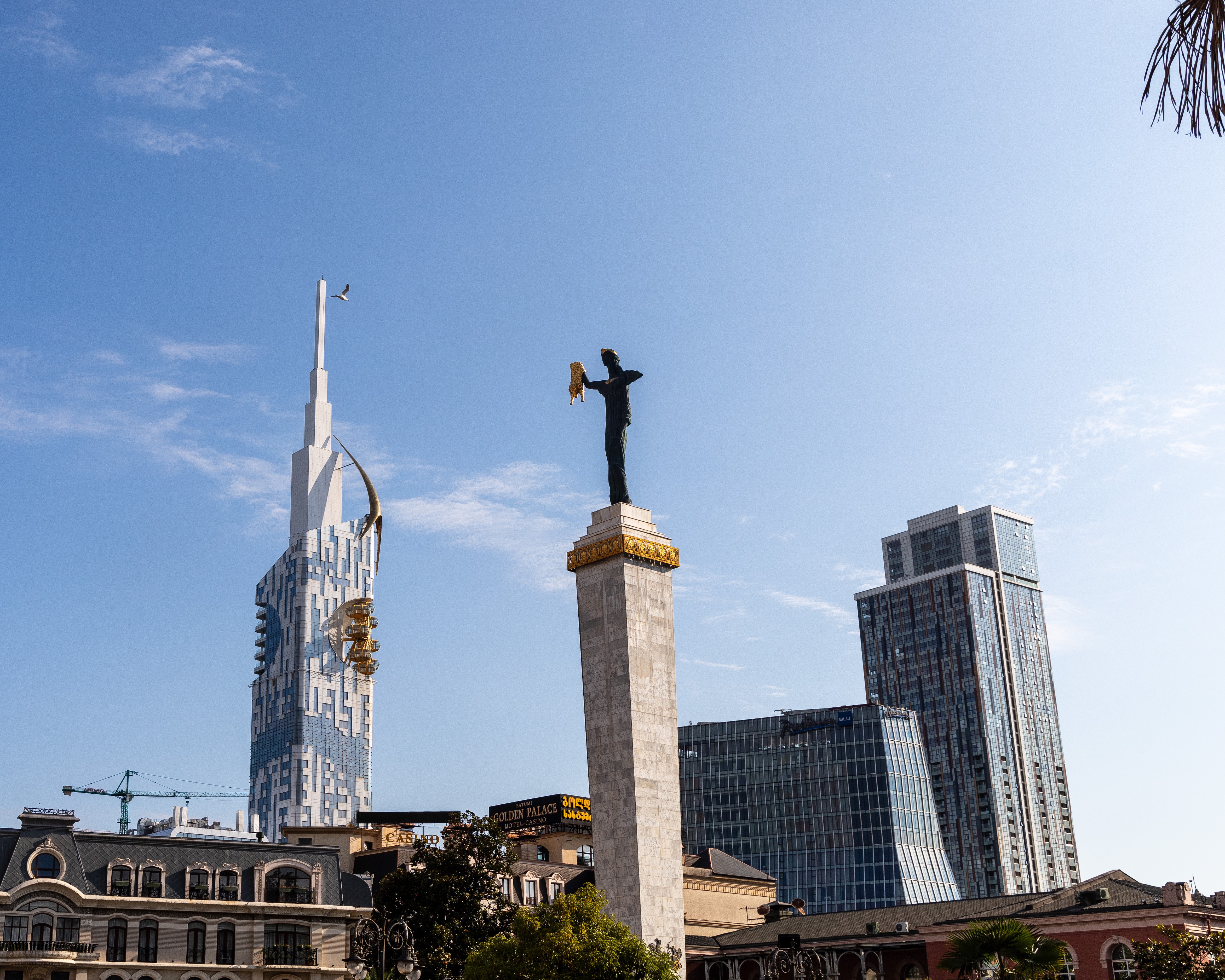
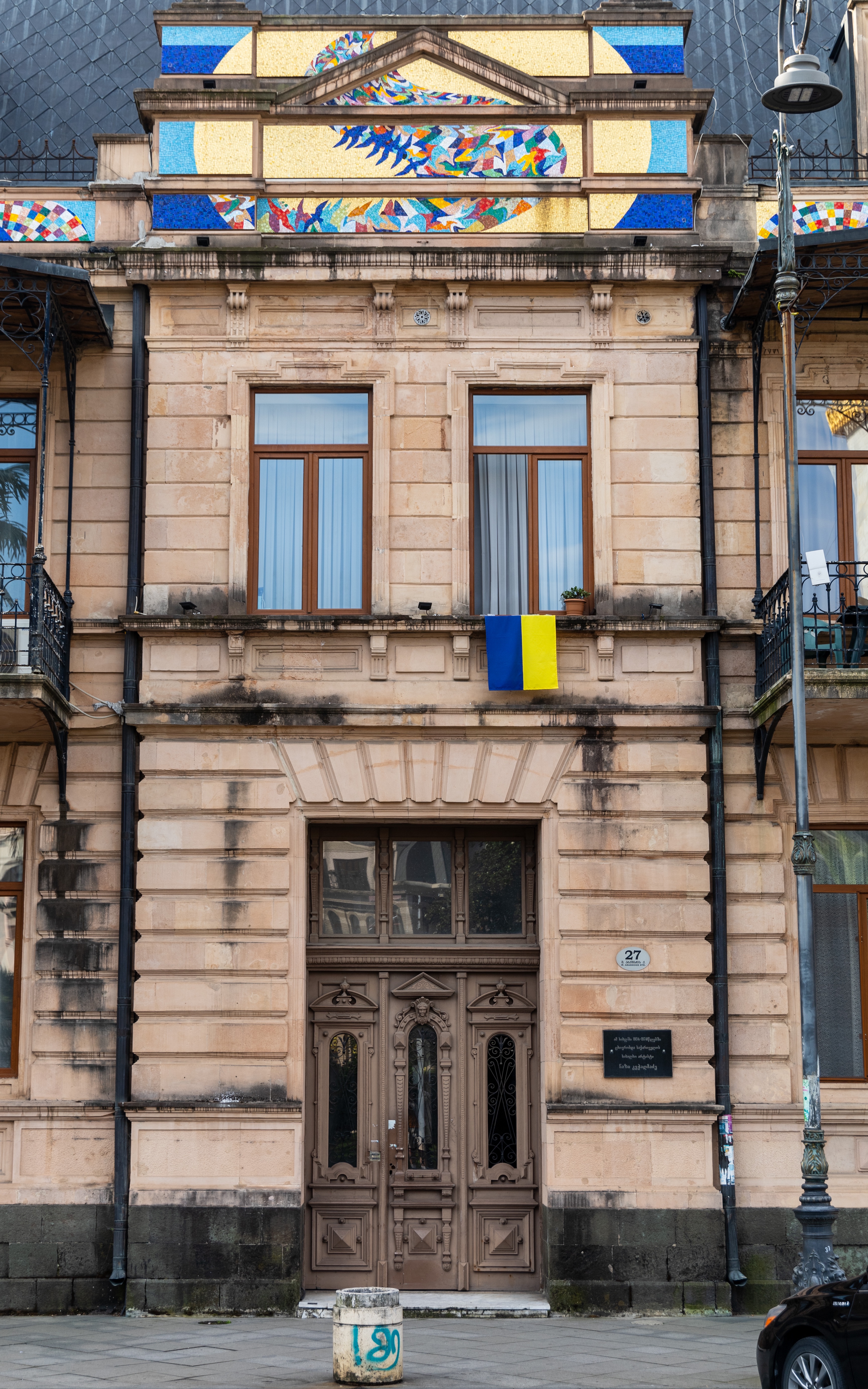
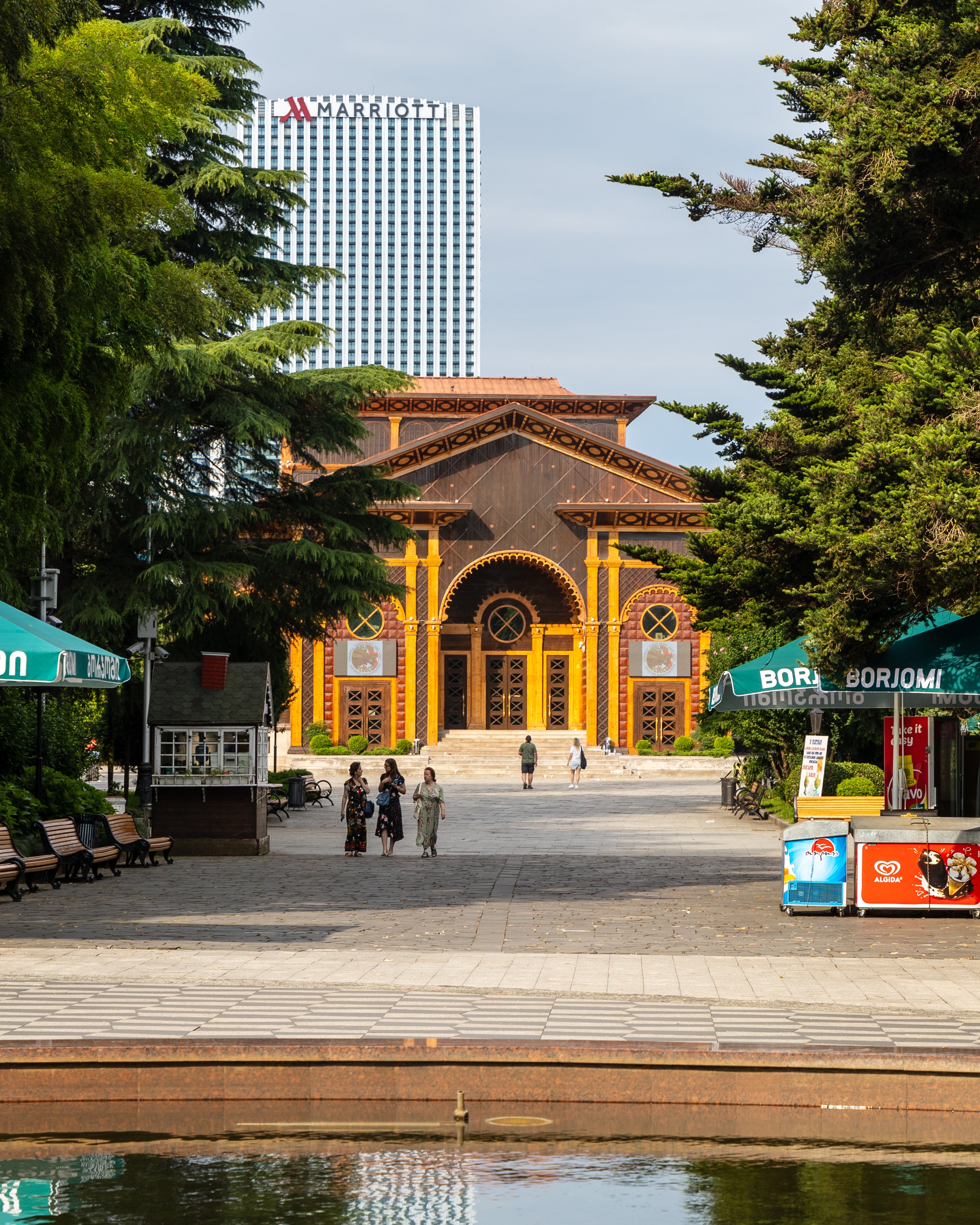
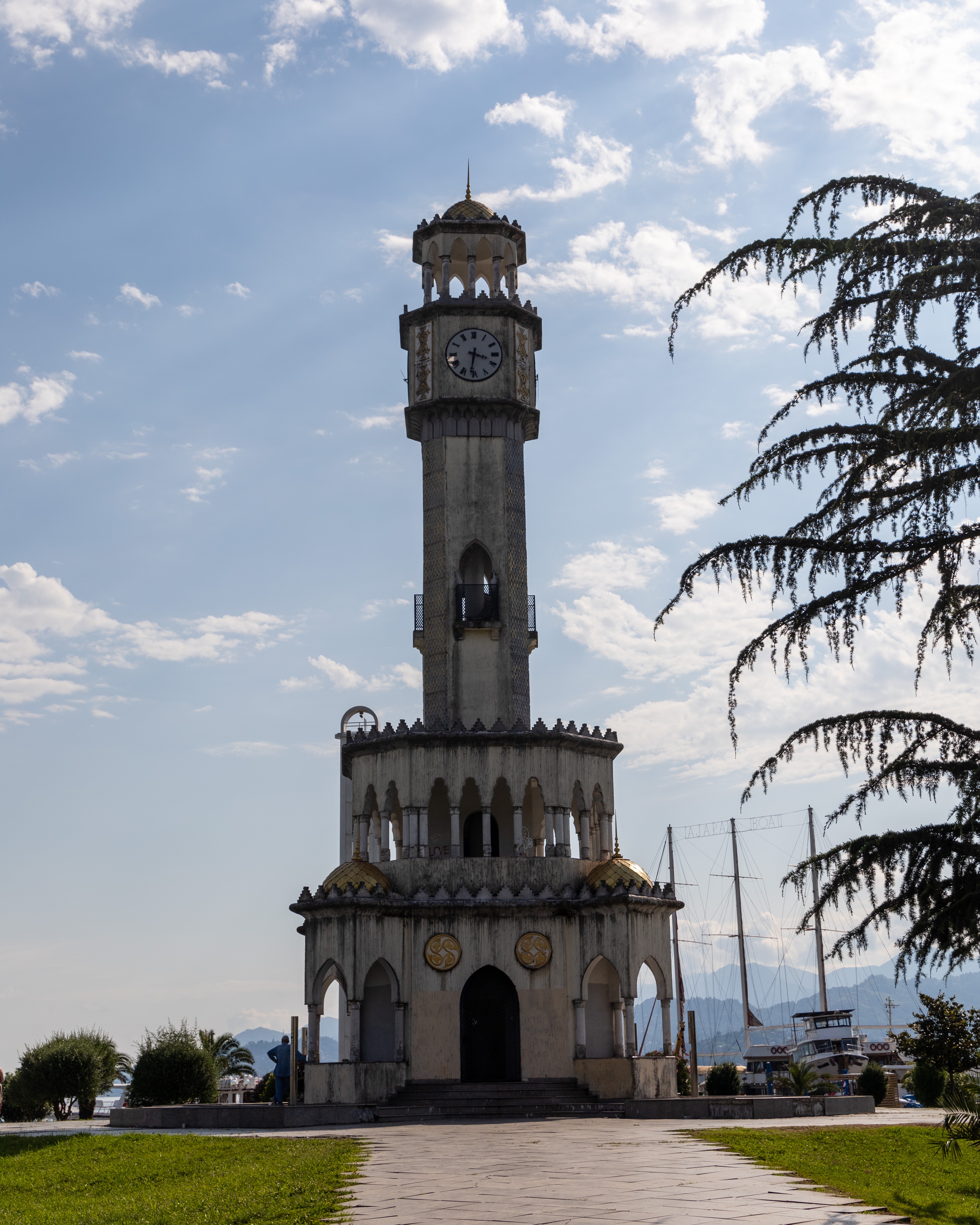
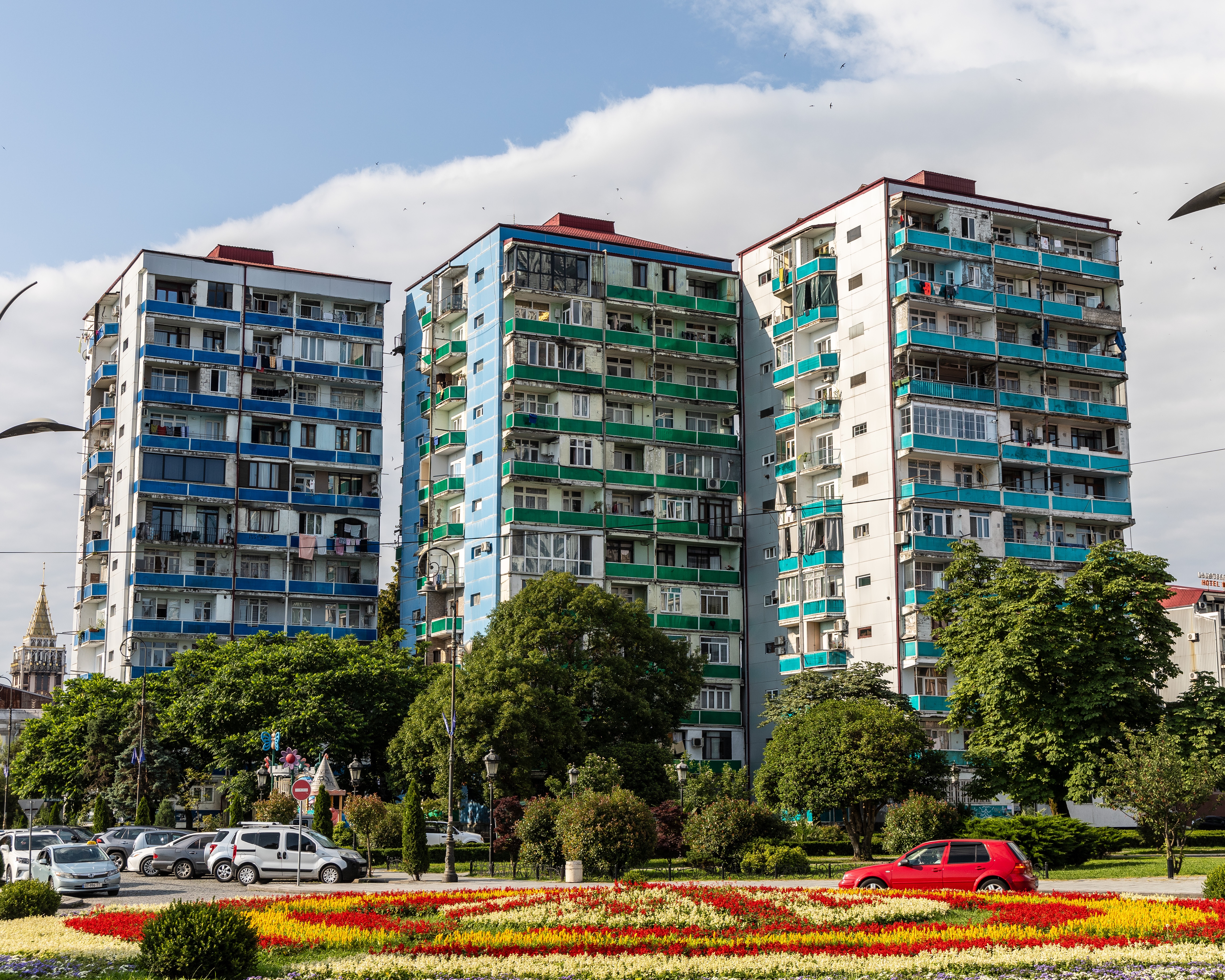
Batumi’s mixed architecture
Nevertheless, Batumi and Adjara still feel different. Until 1921, and the Treaty of Kars, Adjara was a region of the Ottoman Empire and later Turkey. I can’t say Batumi feels what I would consider to be “Turkish”, the Soviet Union likely eroded much of this, however, the remnants remain. In contrast with Georgia in general, where 83% of the population claim to proscribe to the Georgian Orthodox Church, in Adjara, 40% of the population are Muslim. Additionally, the national dress of Adjara is akin to a mixture of Turkish and Caucasian national dresses, somewhat different to the rest of Georgia. Also, not exactly a cultural note, but the weather. The temperate Black Sea weather, rainy and somewhat cool is much more what one would expect on the north coast of Turkey than in the Caucasus.
Despite its weirdness and focus on tourism, I would like to one day return to Batumi. I feel as if I got the experience of a tourist only being there for one night. I didn’t get the chance to experience the restaurants, meet the people, explore the outskirts or lie on the beach. It has a funny sort of intrigue to it. A city of contrasts, the modern and the old, the Turkish and the Georgian, the beach and the rain. In many ways it is the place that had been described to me, however, I don’t think that’s a reason not to visit it.
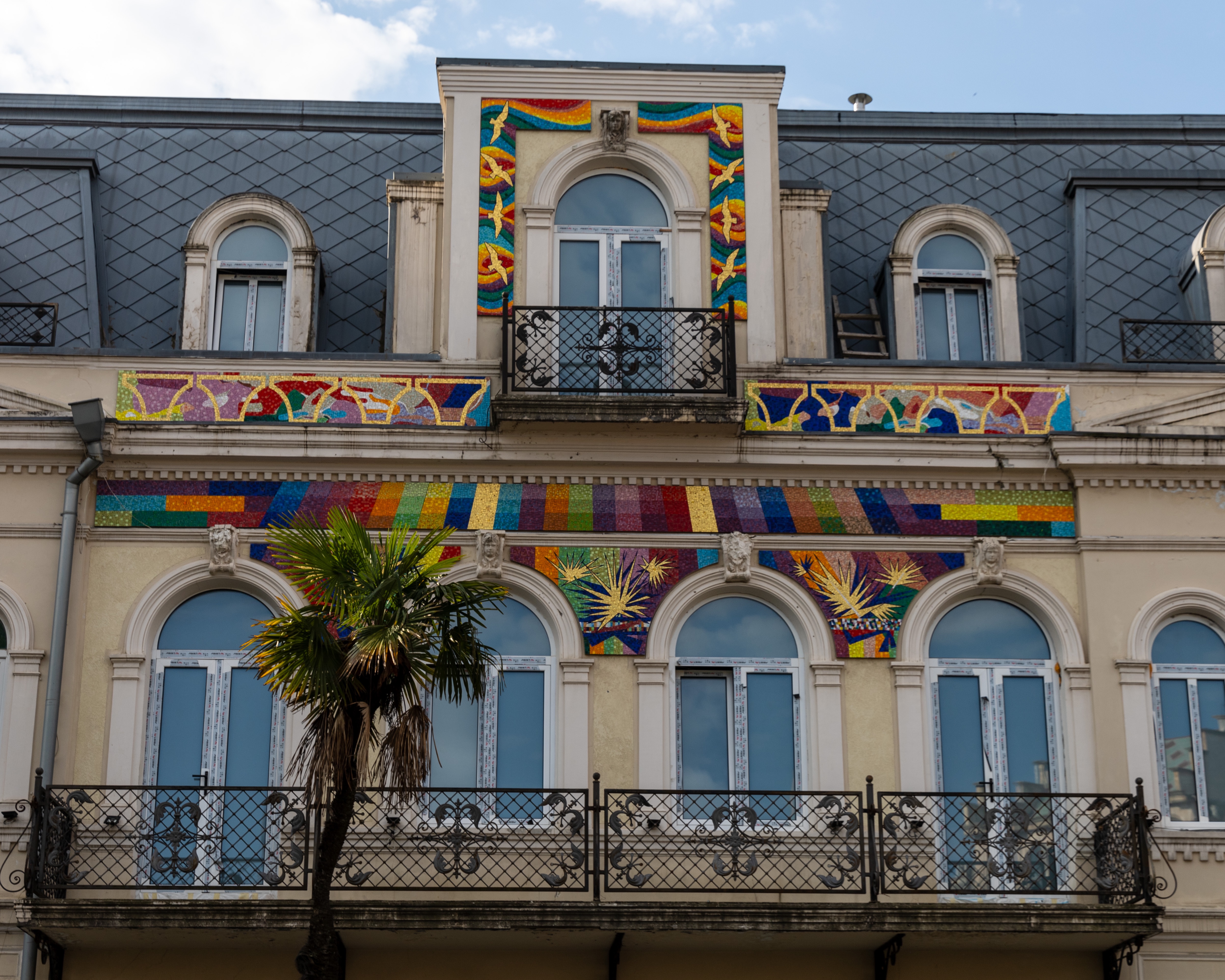
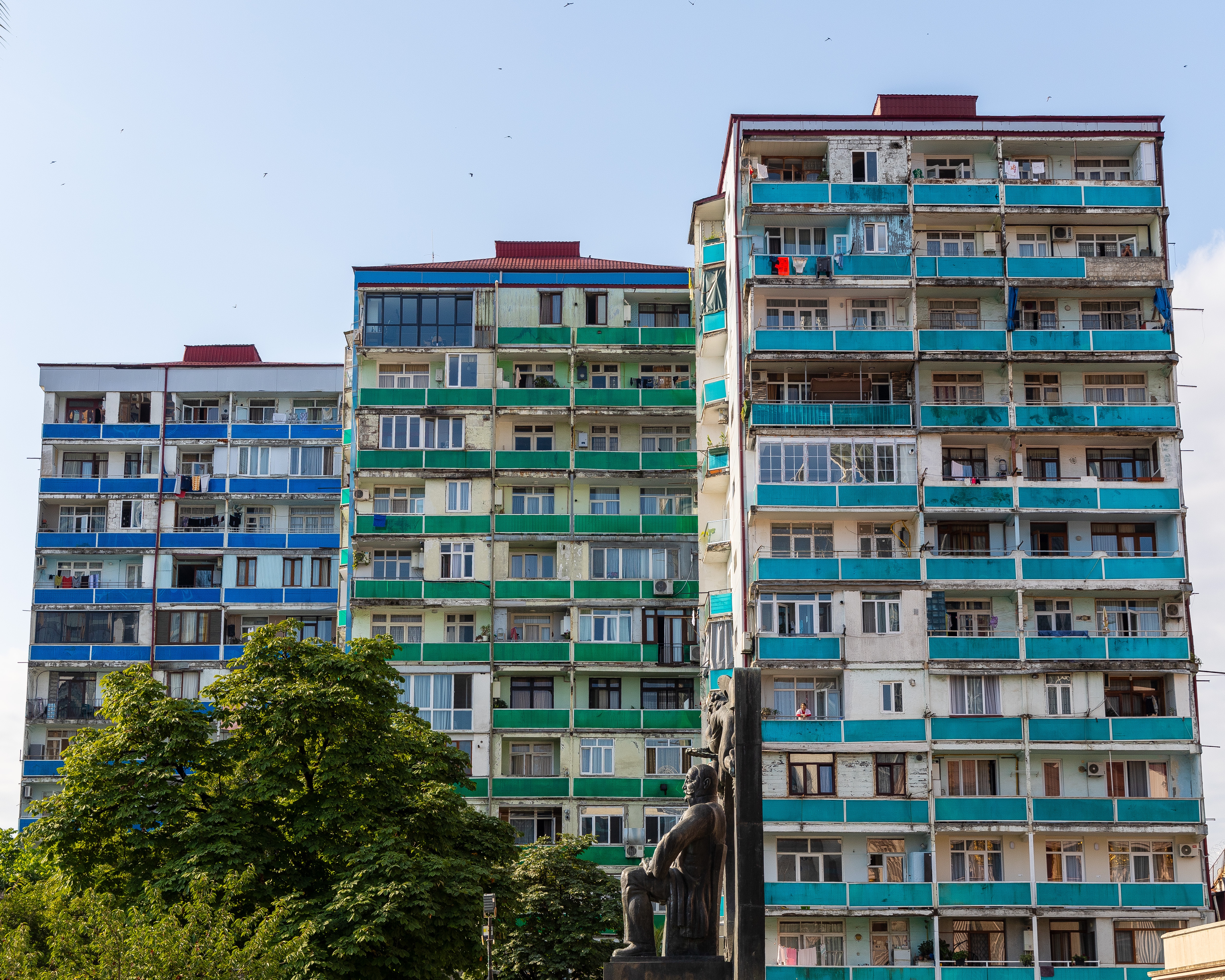
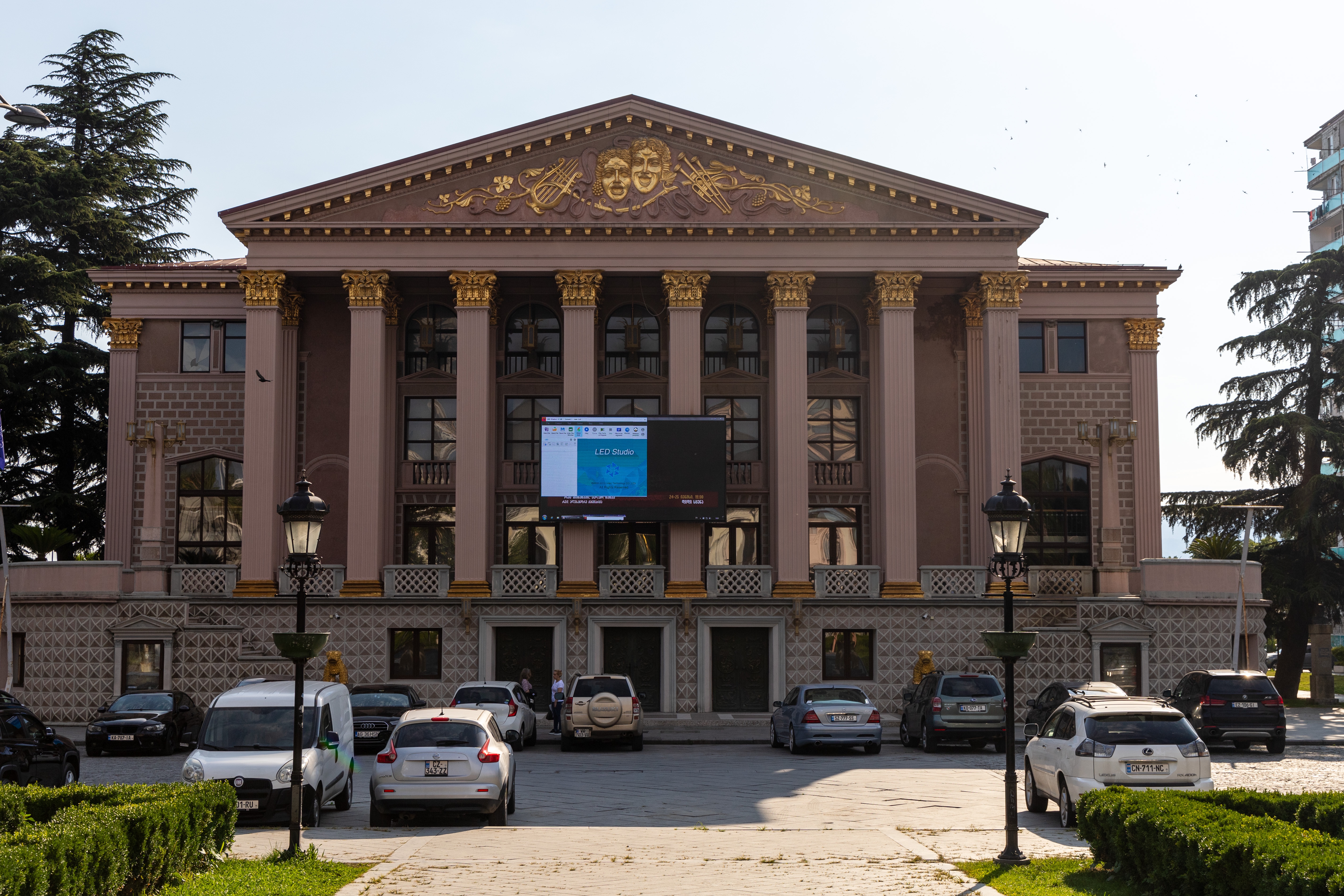
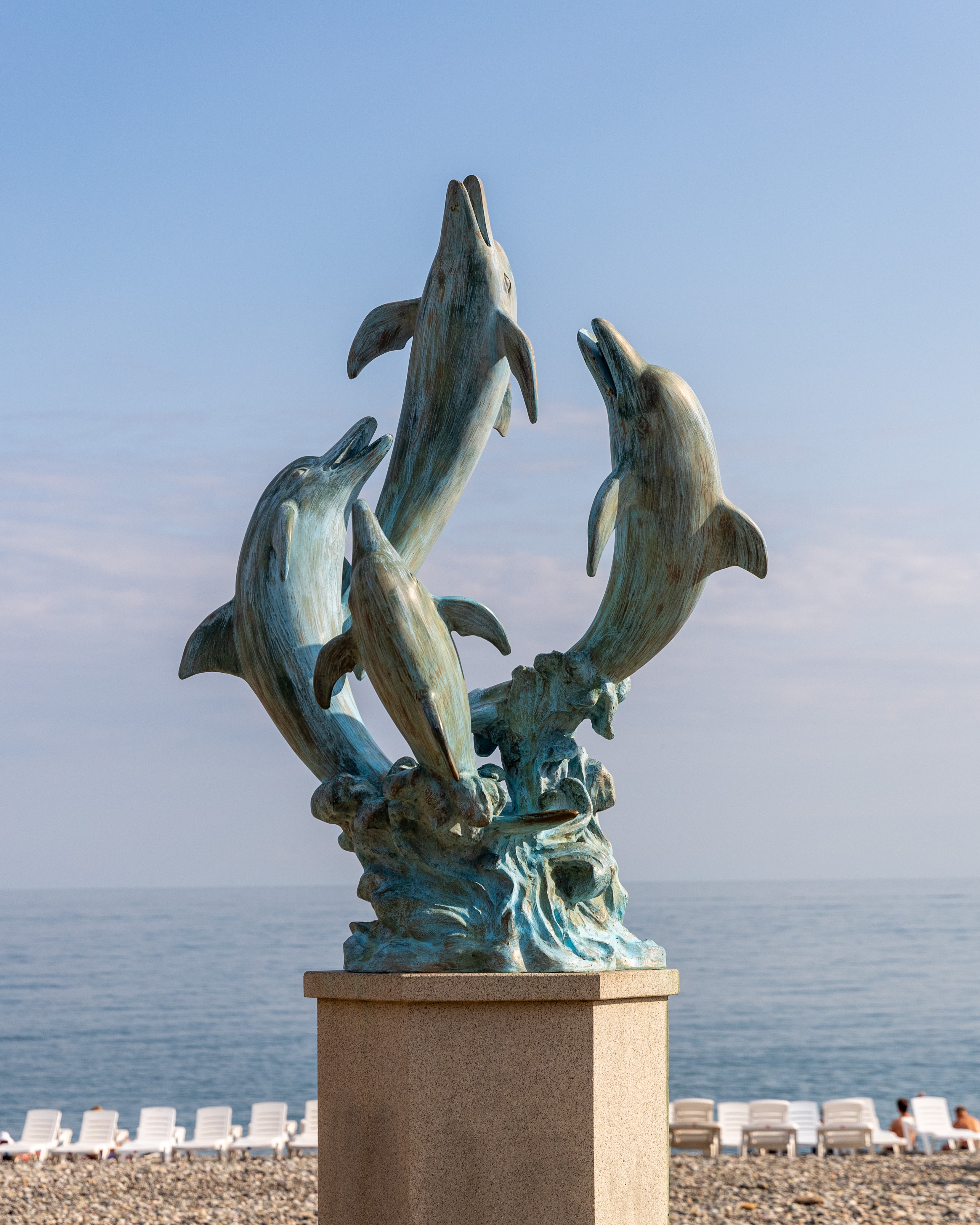
Batumi
After our day in Batumi and night at the football seeing England demolish Germany we set out on the seven-hour marshrutka ride to Tbilisi. The drive itself was interesting, passing many Soviet bus stops, that our resident Soviet bus stop spotter Mr. Joshua Bean would return to a month later. We also passed the city of Gori, the birthplace of Stalin, which I will return to explore one day, and drove within metres of the frontier with South Ossetia, a mere fence separating the Russian-supported region and the rest of Georgia.
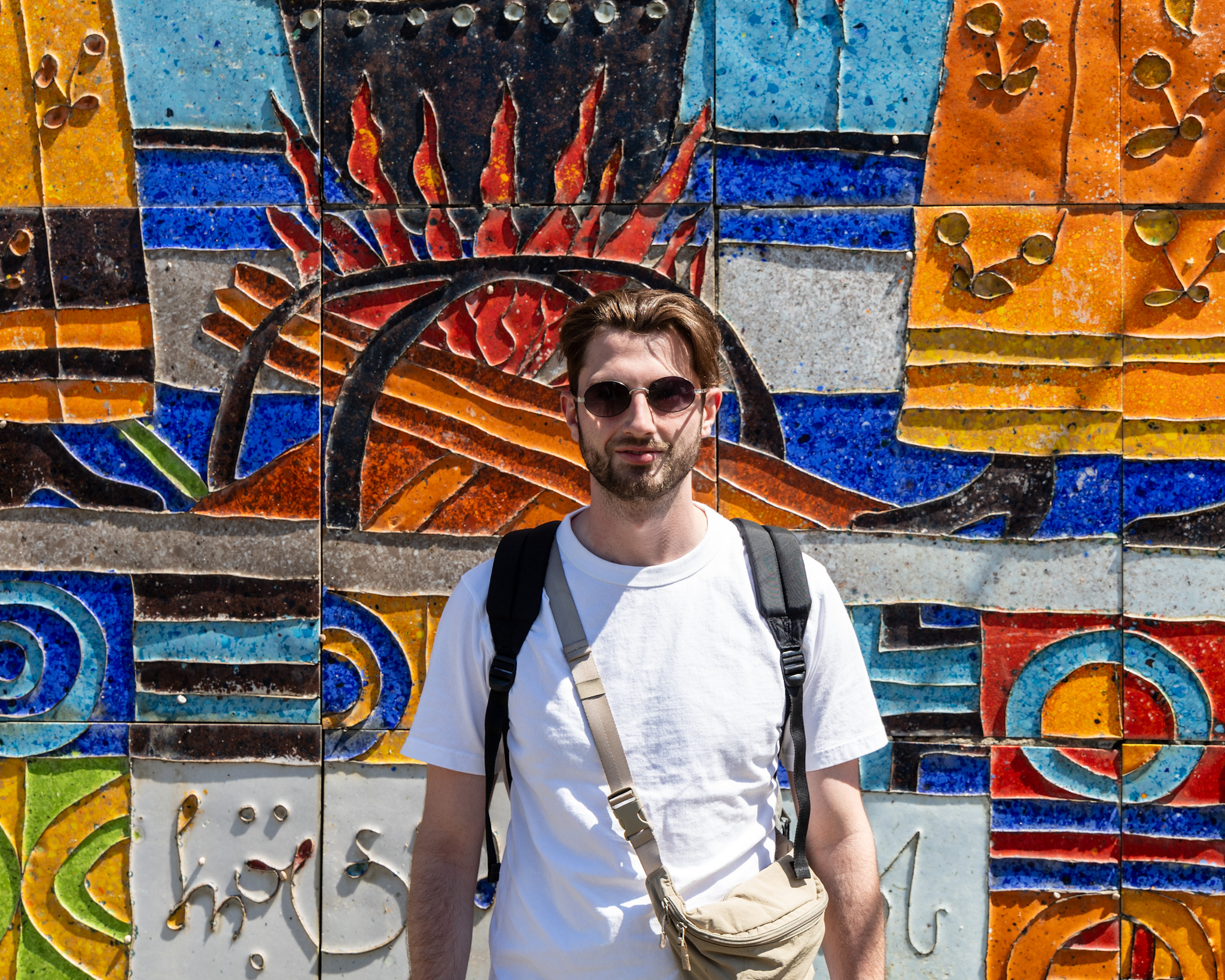
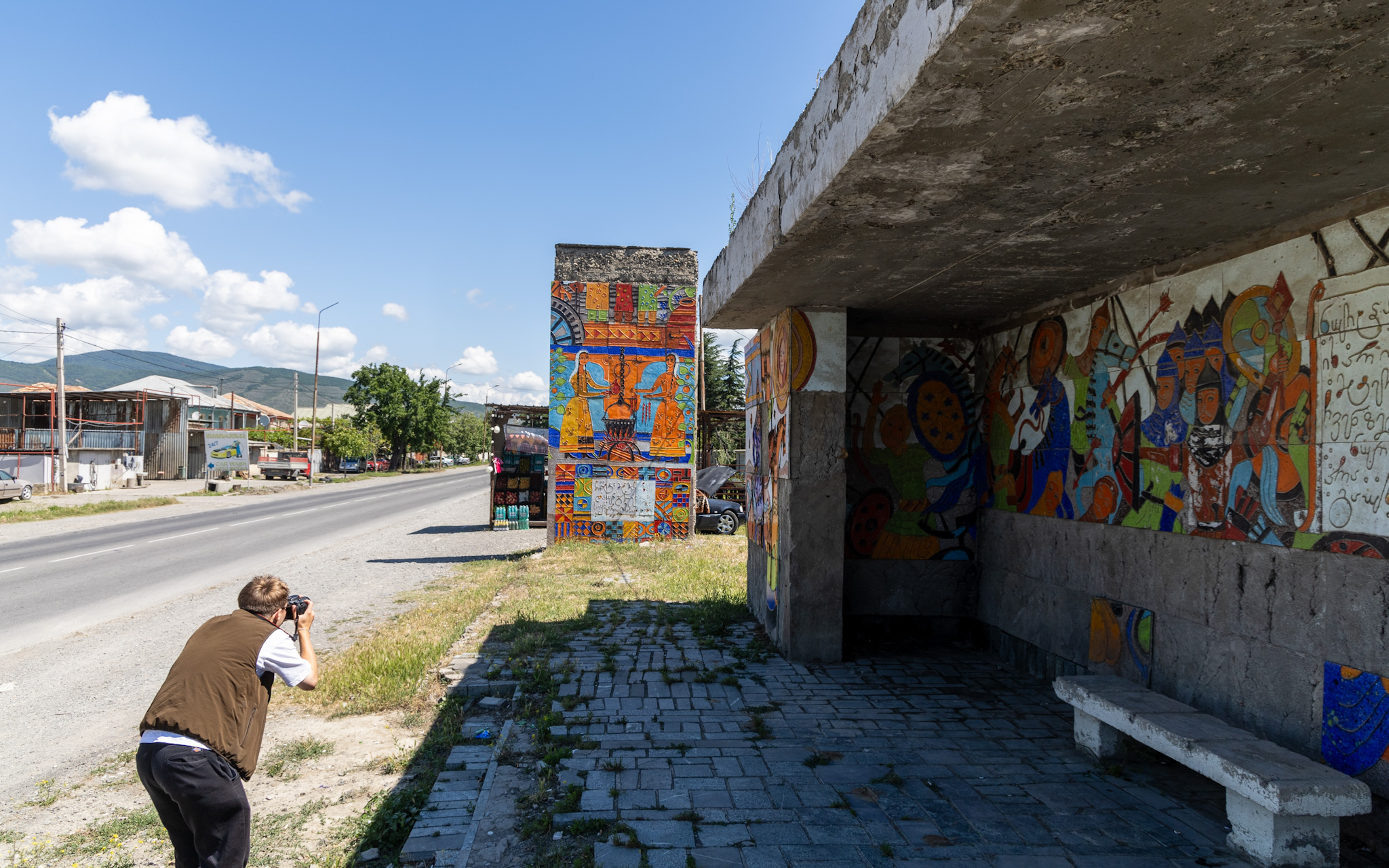
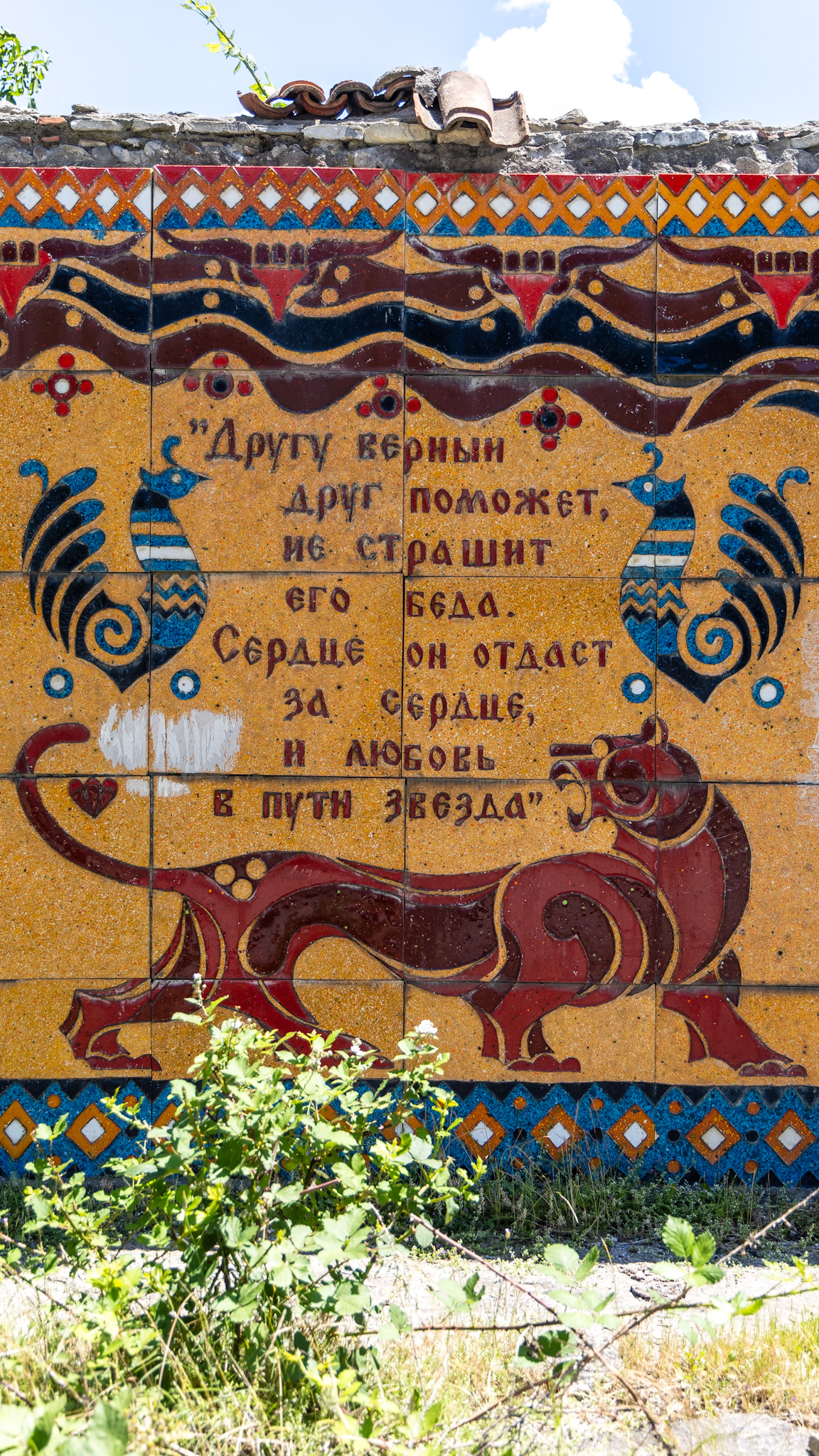
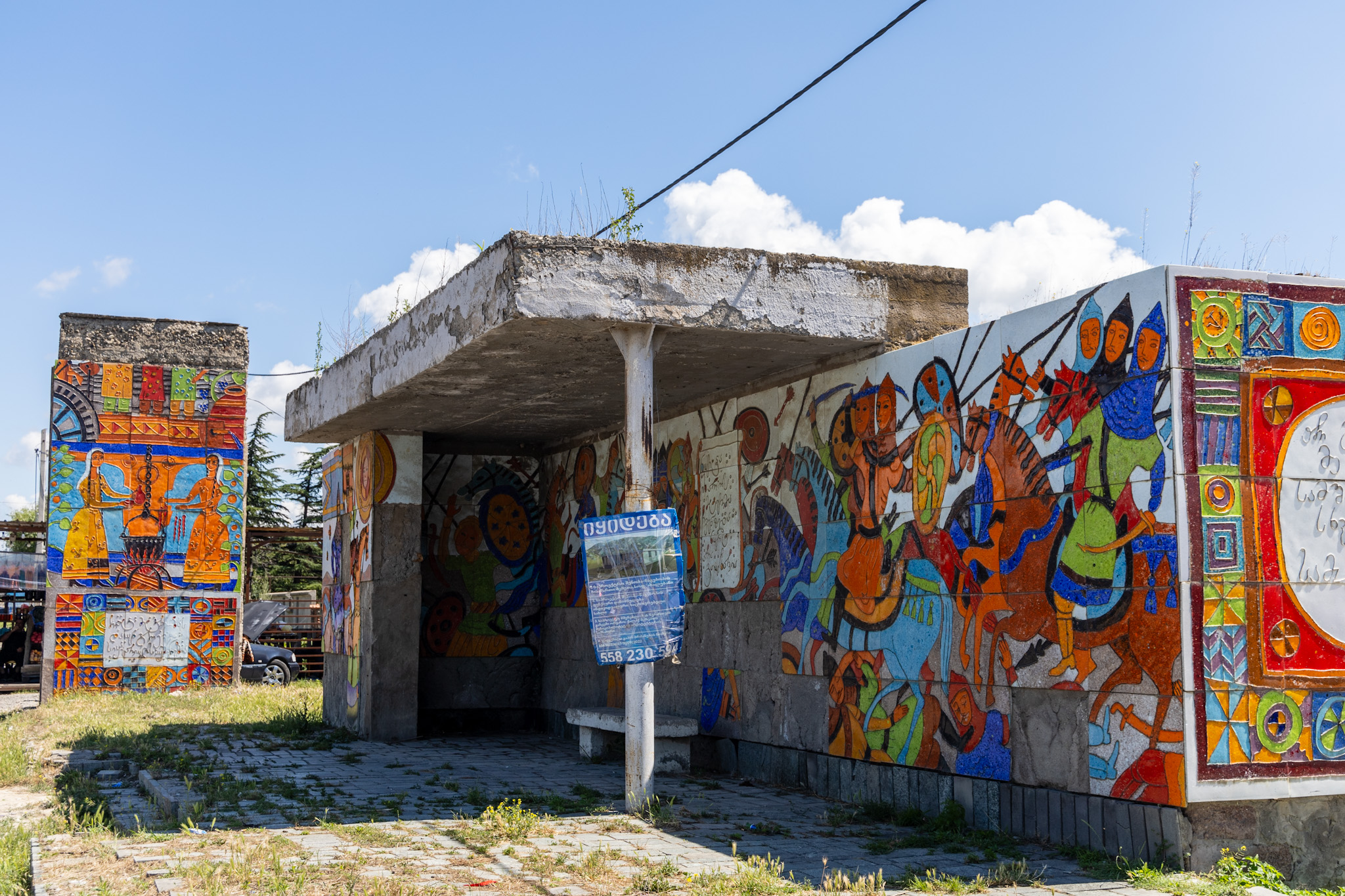
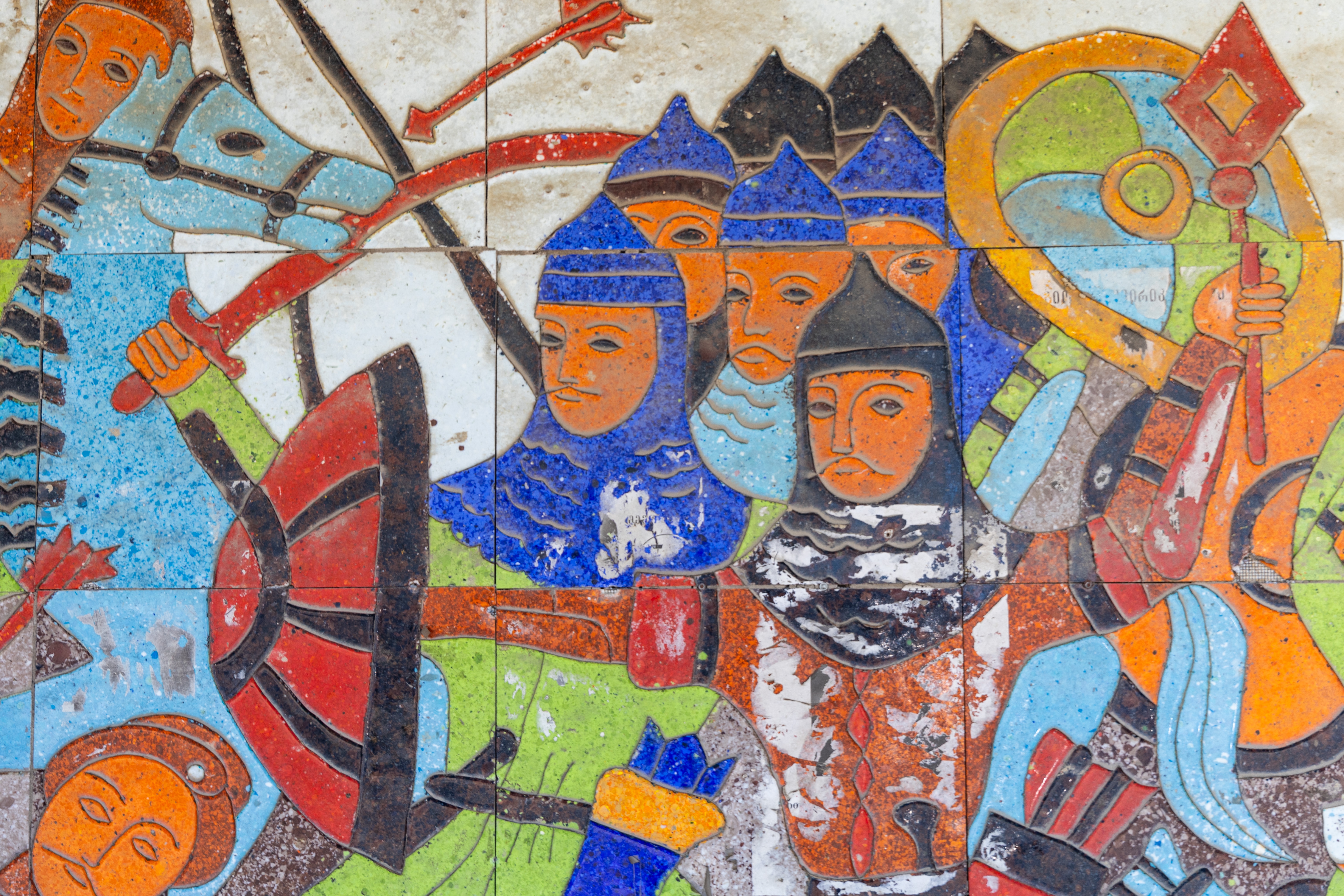
Soviet Bus Stops
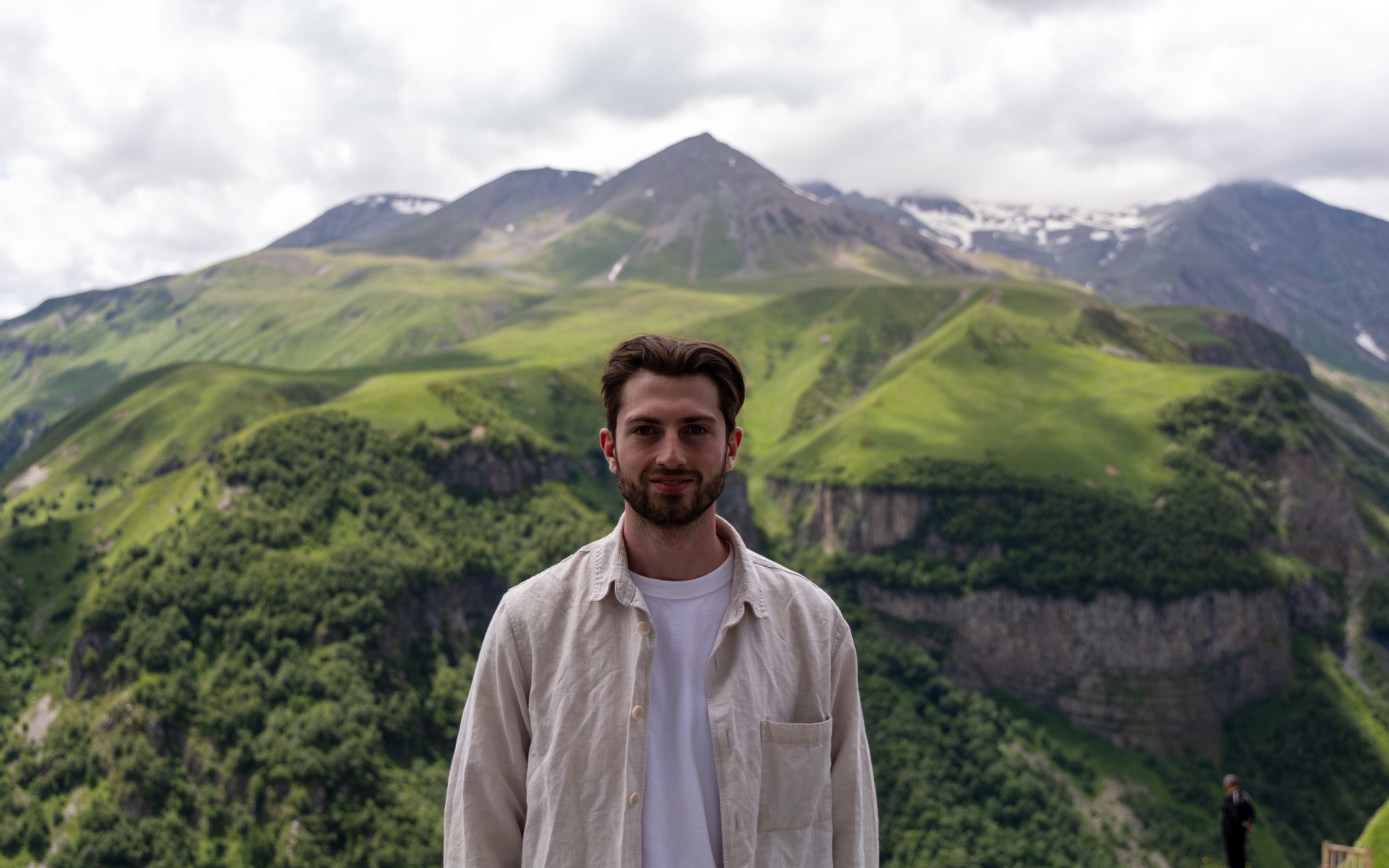
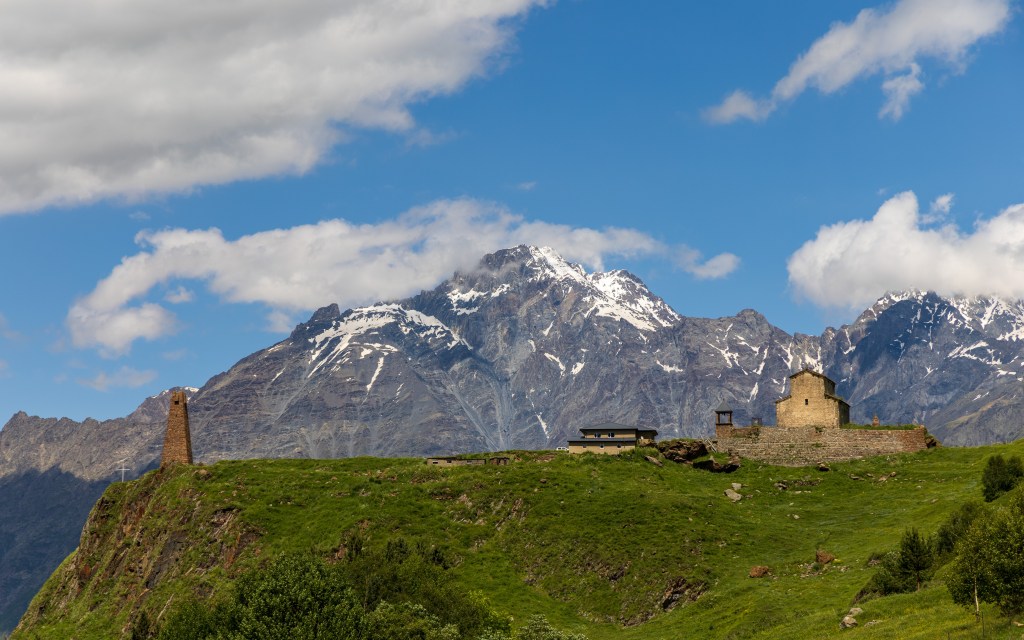
Arriving in Tbilisi, I was in an environment I knew well. I love Tbilisi and have written about it extensively before (which you can find here – Tbilisi, Georgia ). However, the real reason for me wanting to return to this side of Georgia was not for the city of Tbilisi, but to finally go up into the nearby High Caucasus mountain range to the foot of Mt Kazbegi. Kazbegi is a more than 5000-metre dormant volcano on the border with Russia, higher than any peak in the Alps. The mountain itself is vast, with massive valleys cutting through the region. The town of Stepantsminda sits at the foot of the mountain, a great place to grab lunch and stare at the mighty peaks surrounding it. Between the town and Kazbegi sits the Gergeti Trinity Church, a 14th-century Georgian Orthodox Church, sat atop a smaller peak. The church itself is like any other in Georgia, but the scene is certainly not. In my opinion, no place depicts the true beauty of Georgia more than here, a mixture of culture and natural beauty, difficult to find elsewhere in the world.
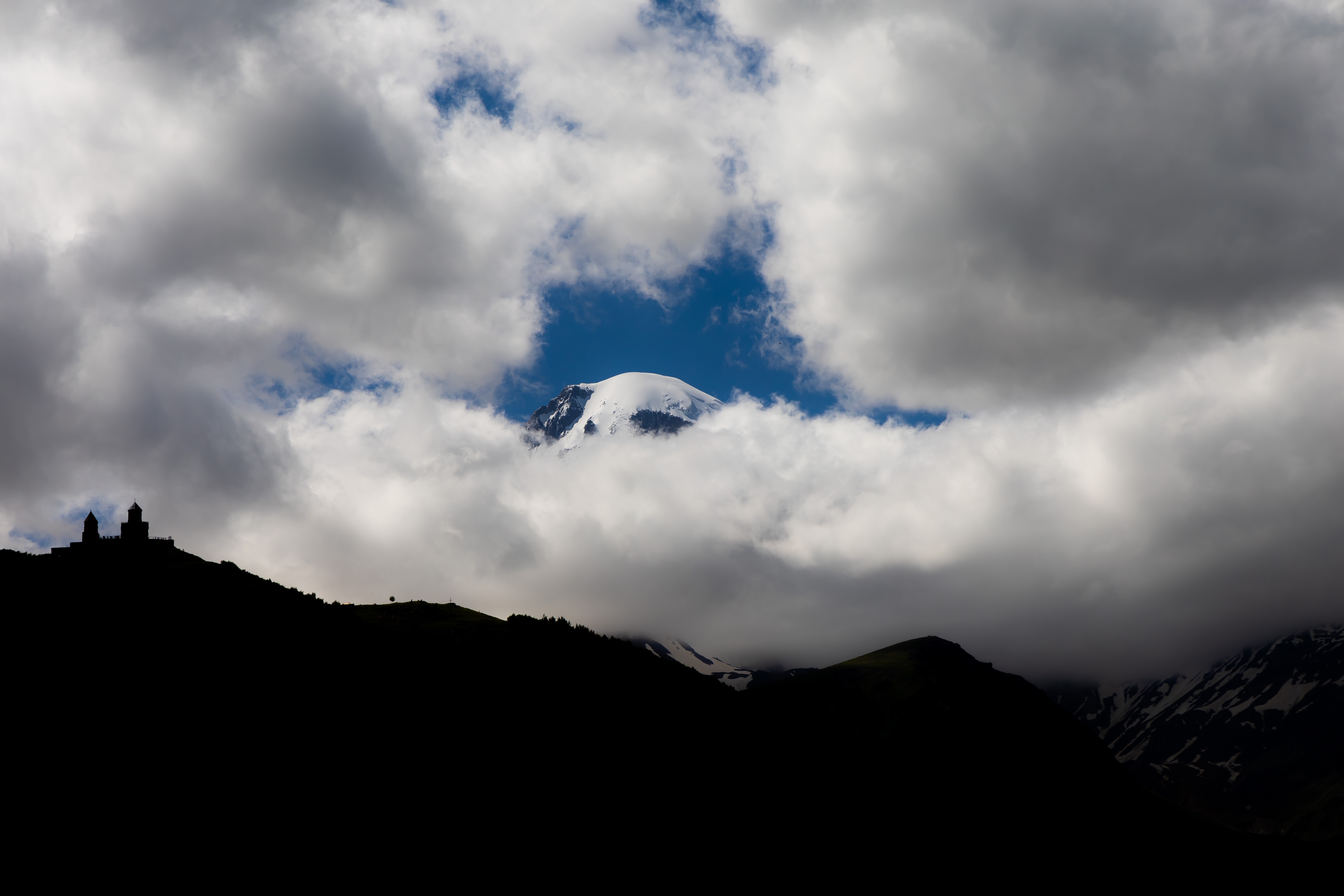
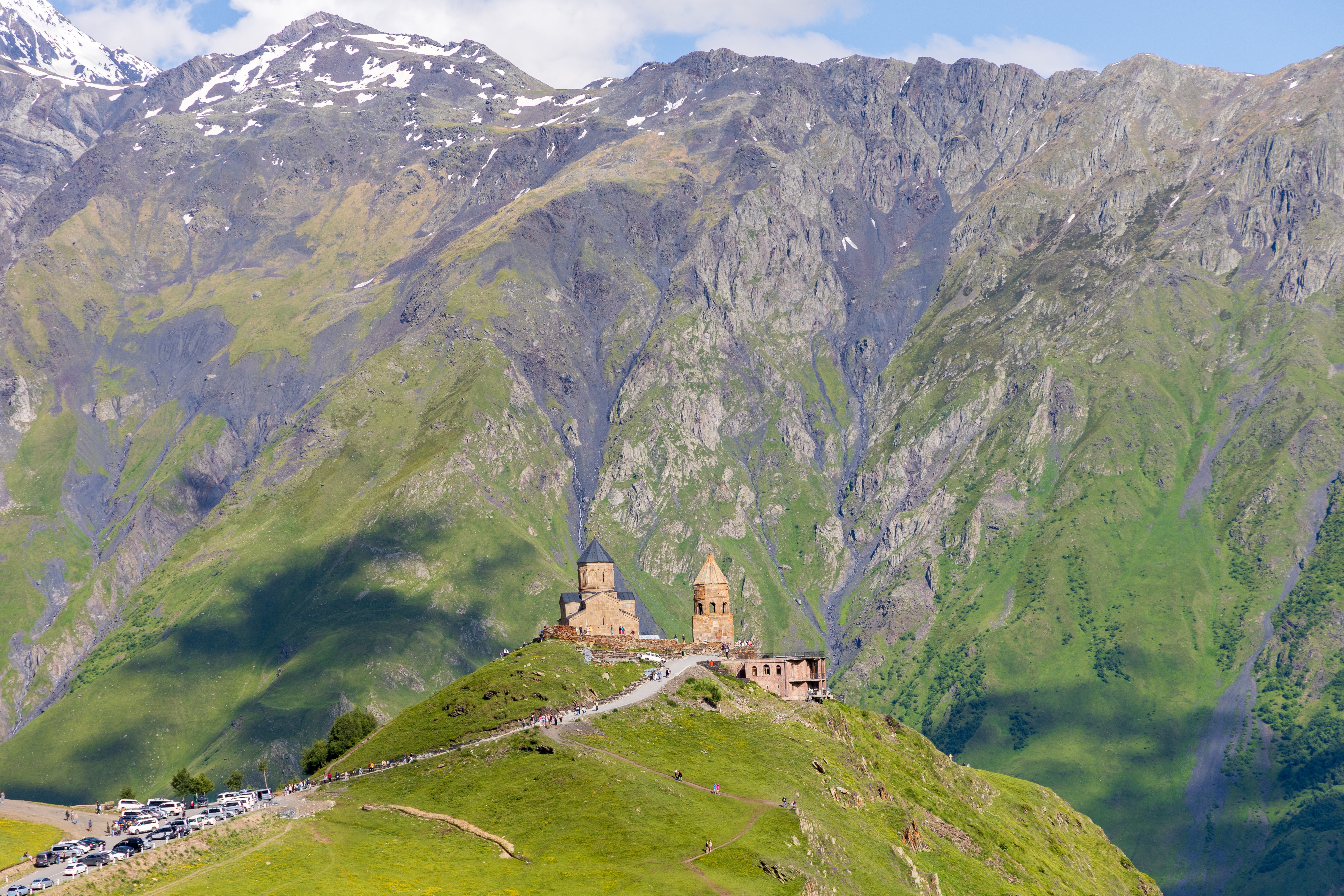
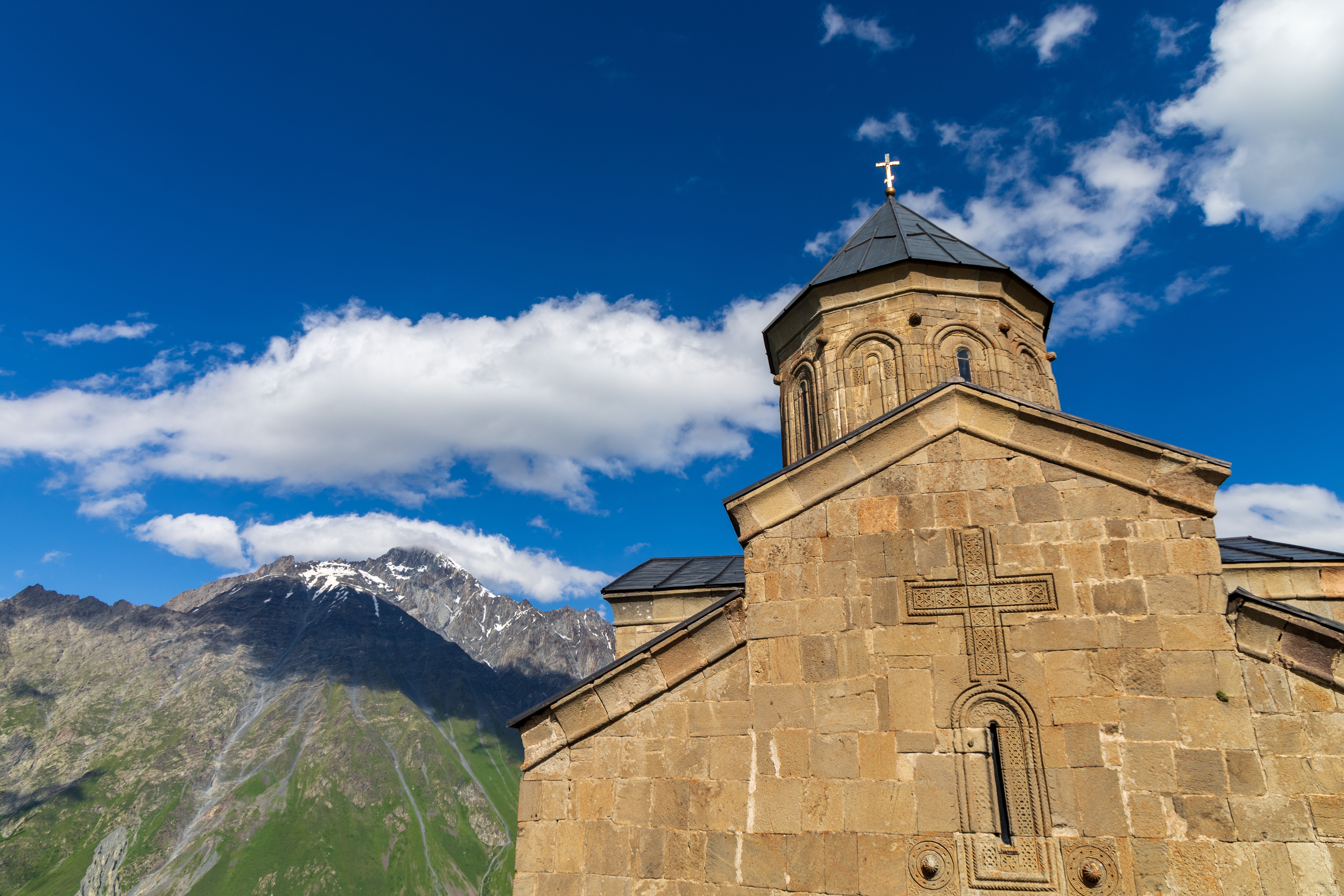
Gergeti Trinity Church
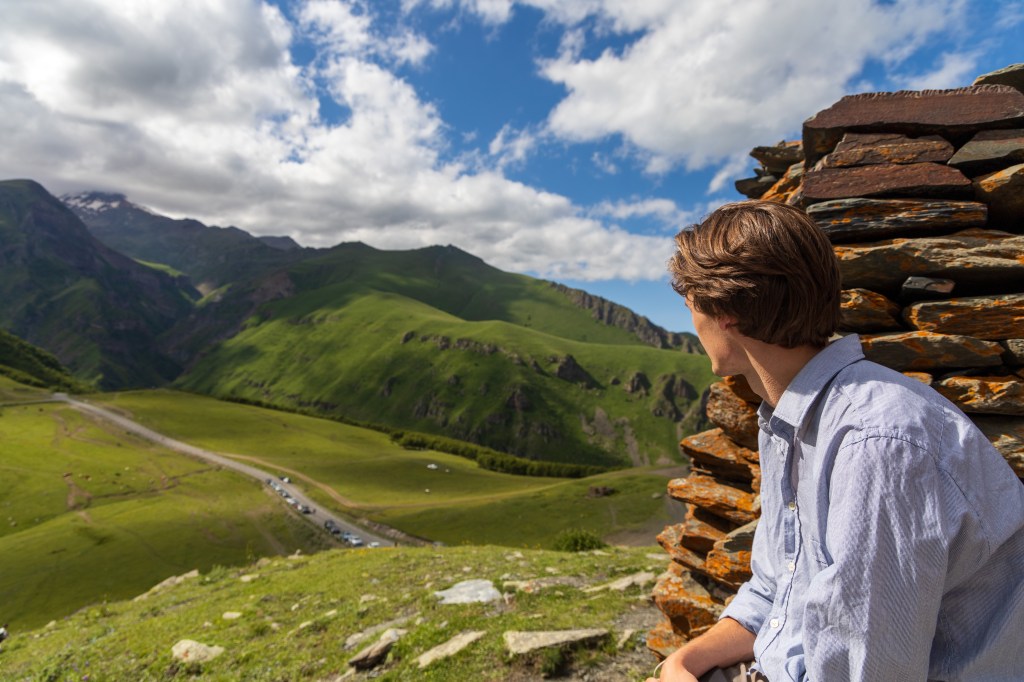
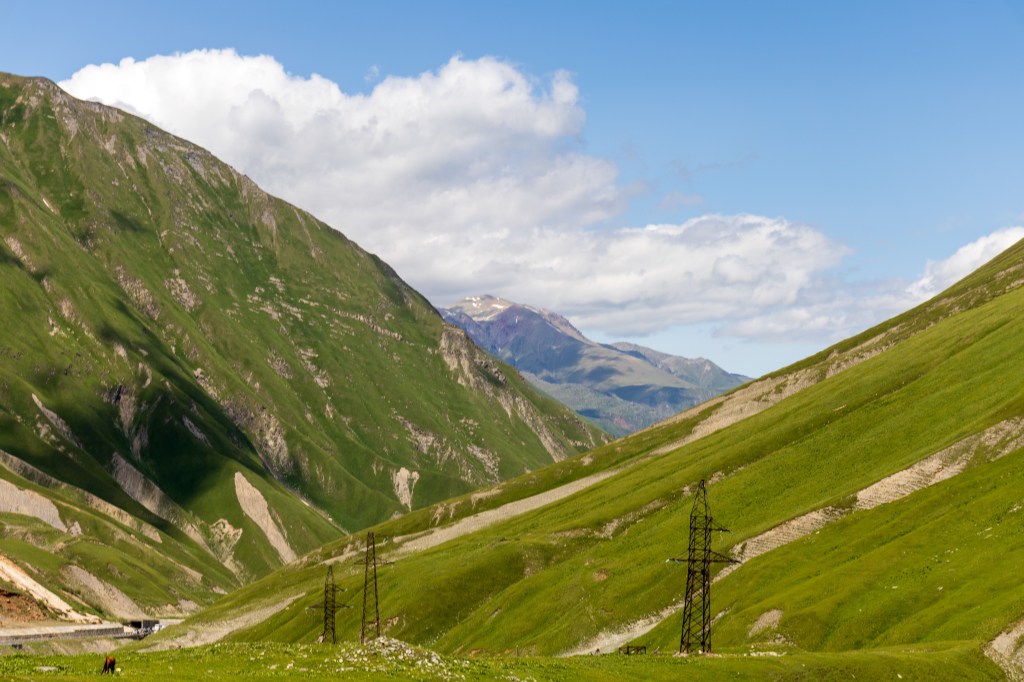
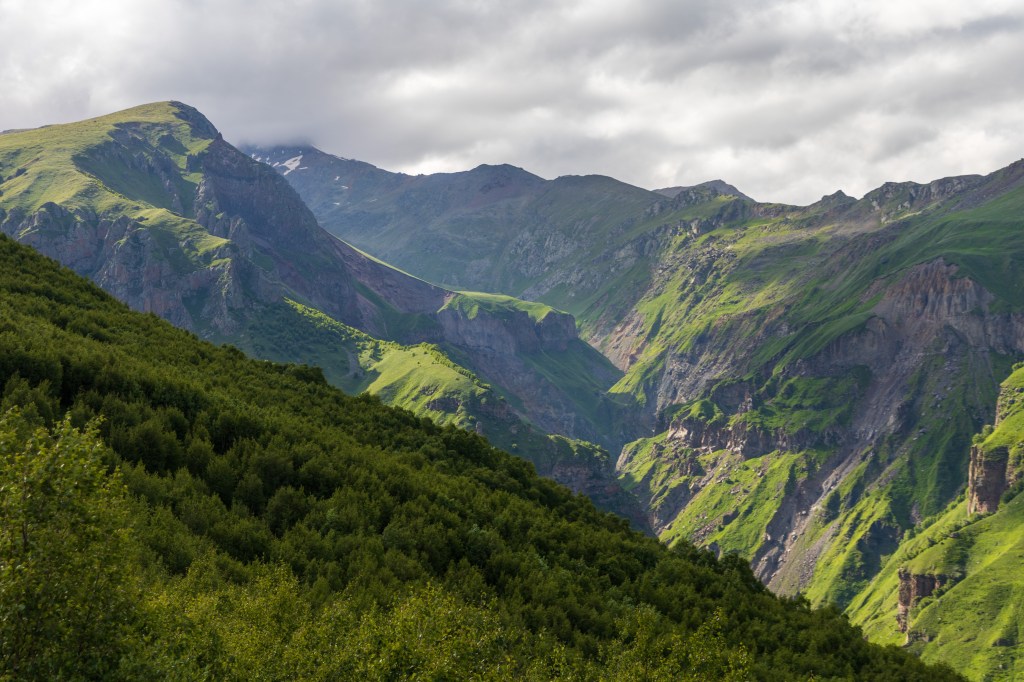
The drive, about 3 hours from Tbilisi to Kazbegi is also breathtakingly beautiful. The valleys gradually deepen as you travel higher into the mountains. The roads themselves are full of intrigue, full of trucks delivering goods to and from across Eurasia. Trucks from Iran, Kazakhstan, Russia and Uzbekistan fill the road which ultimately leads to the Russian border. There is also evidence of a vast Chinese infrastructure project constructing and tunnelling a much-needed north-south road through Georgia, the scale of which I’ve never seen before.
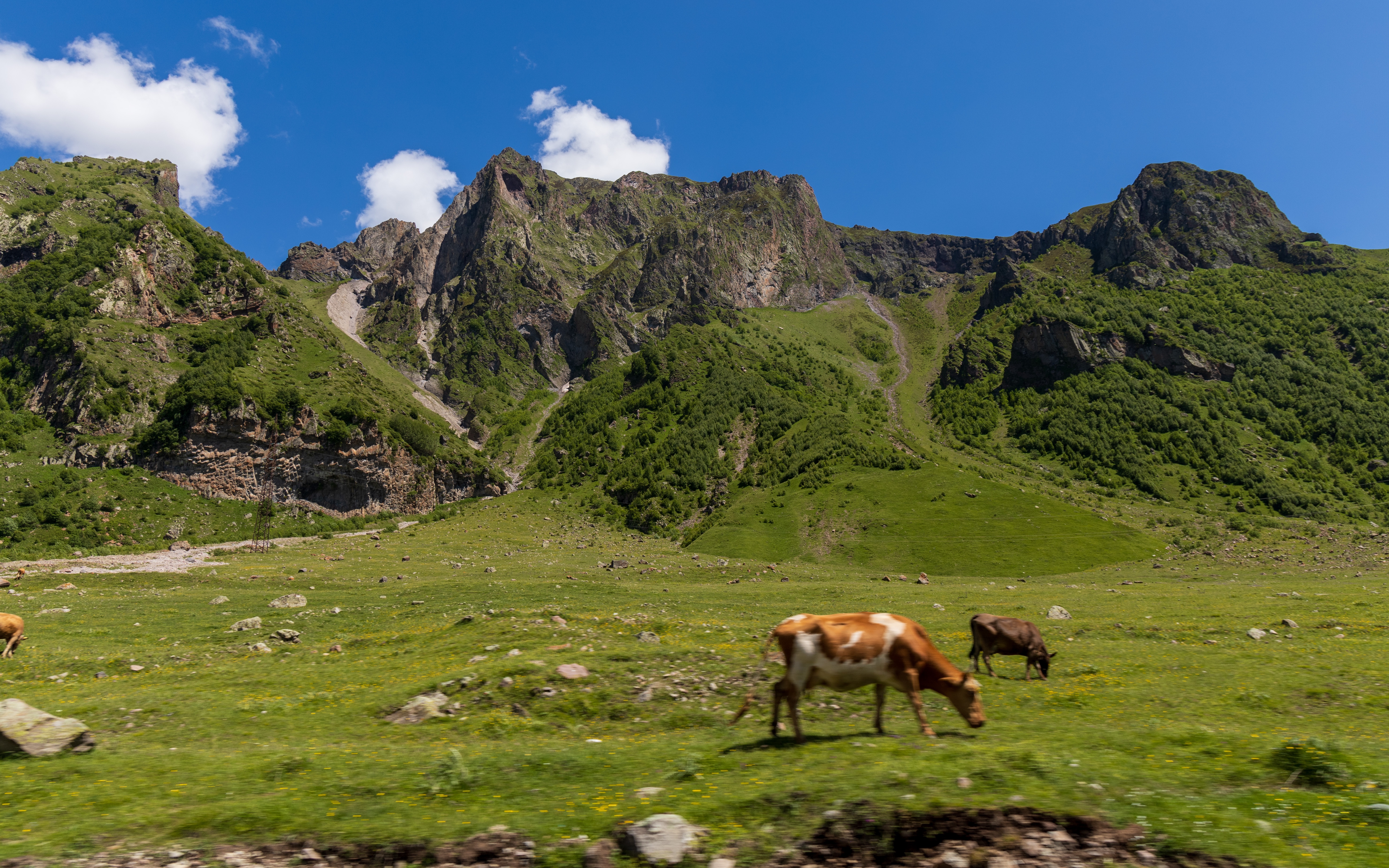
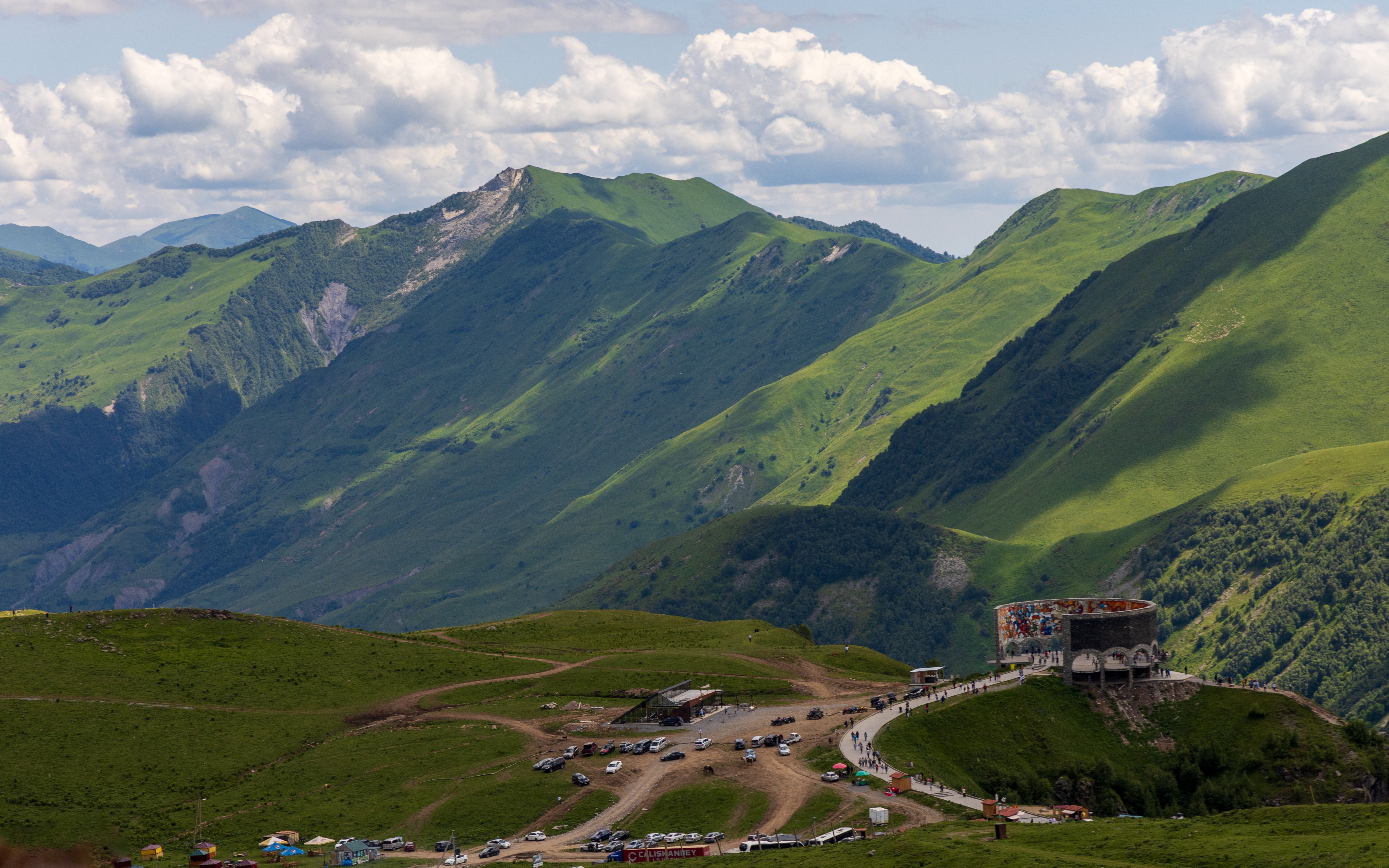
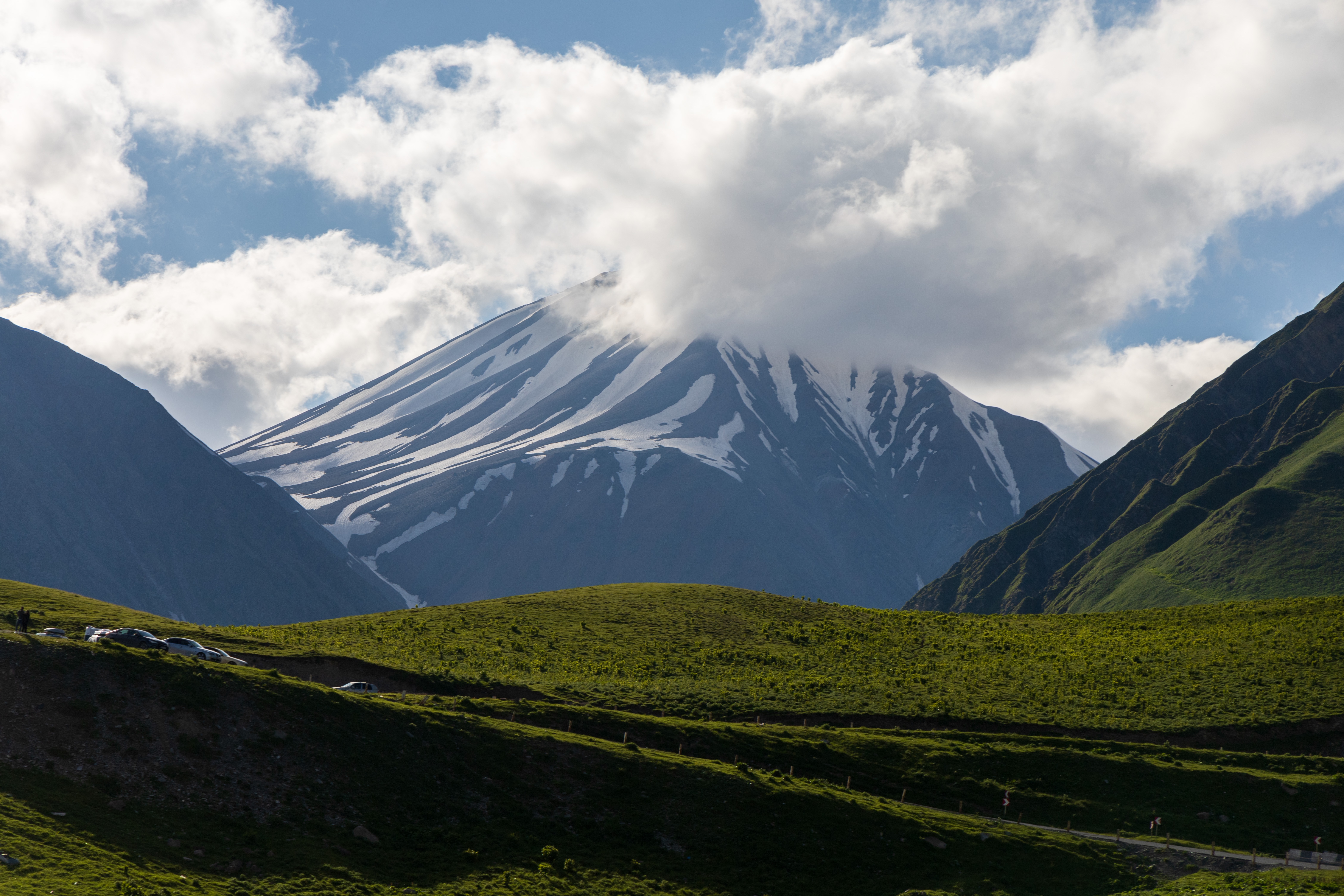
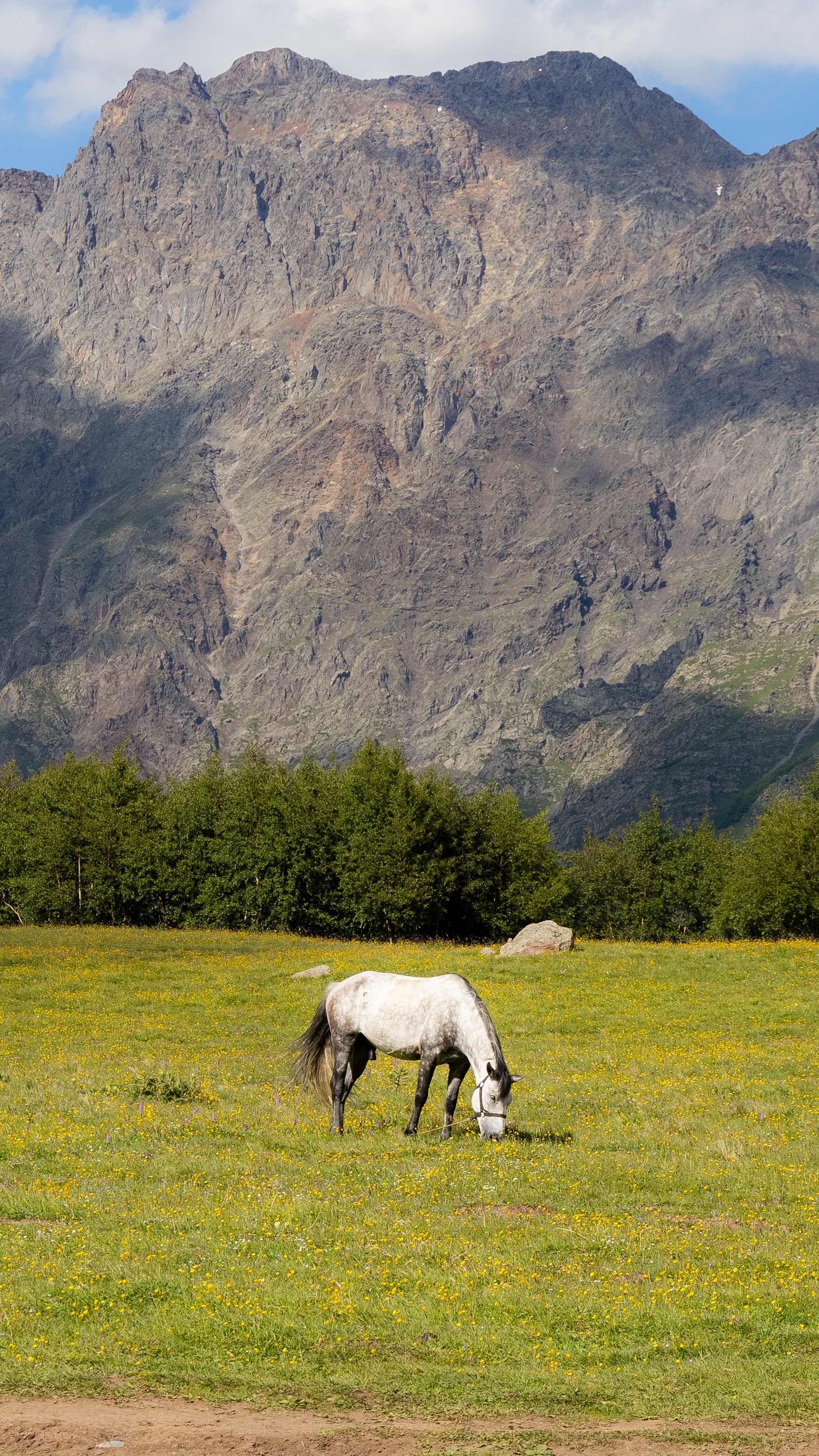
Some roadside views in the mountains
However, the highlight of the drive is the Soviet heritage. The road is littered with Soviet mosaic-filled bus stops. Yet these pale into insignificance when you arrive at the Georgian-Russian Friendship Memorial. Perhaps the jewel in the crown of Soviet monuments. The vast mural near the ski resort of Gudauri sits atop a vast green valley, with high peaks, including Kazbegi itself in the distance fleming down upon it. The monument built in 1983 to mark the 200th anniversary of the Treaty of Georgievsk, which made Georgia a protectorate of the Russian Empire, is covered in images depicting Georgian and Russian heritage as well as their shared membership of the Soviet Union.
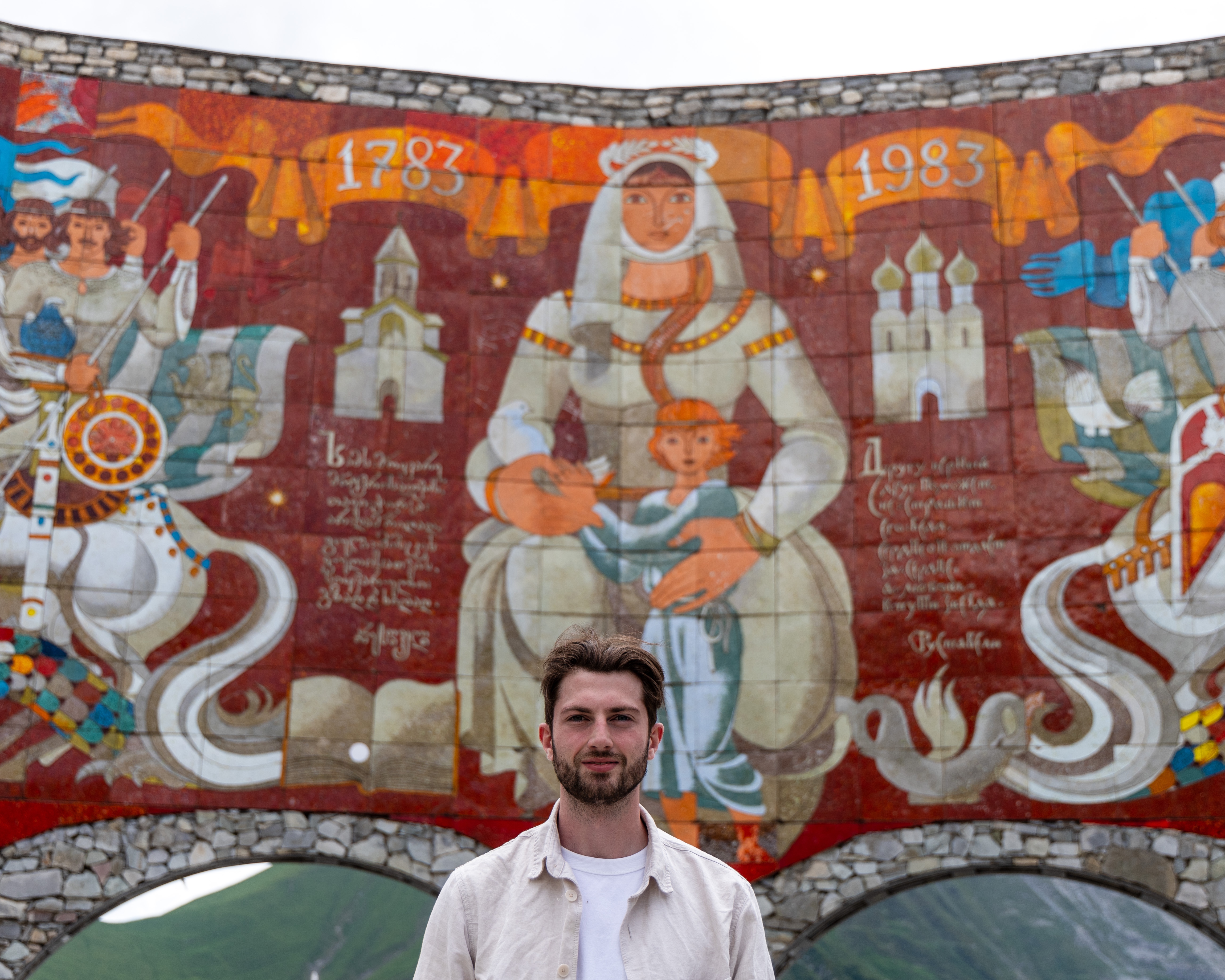
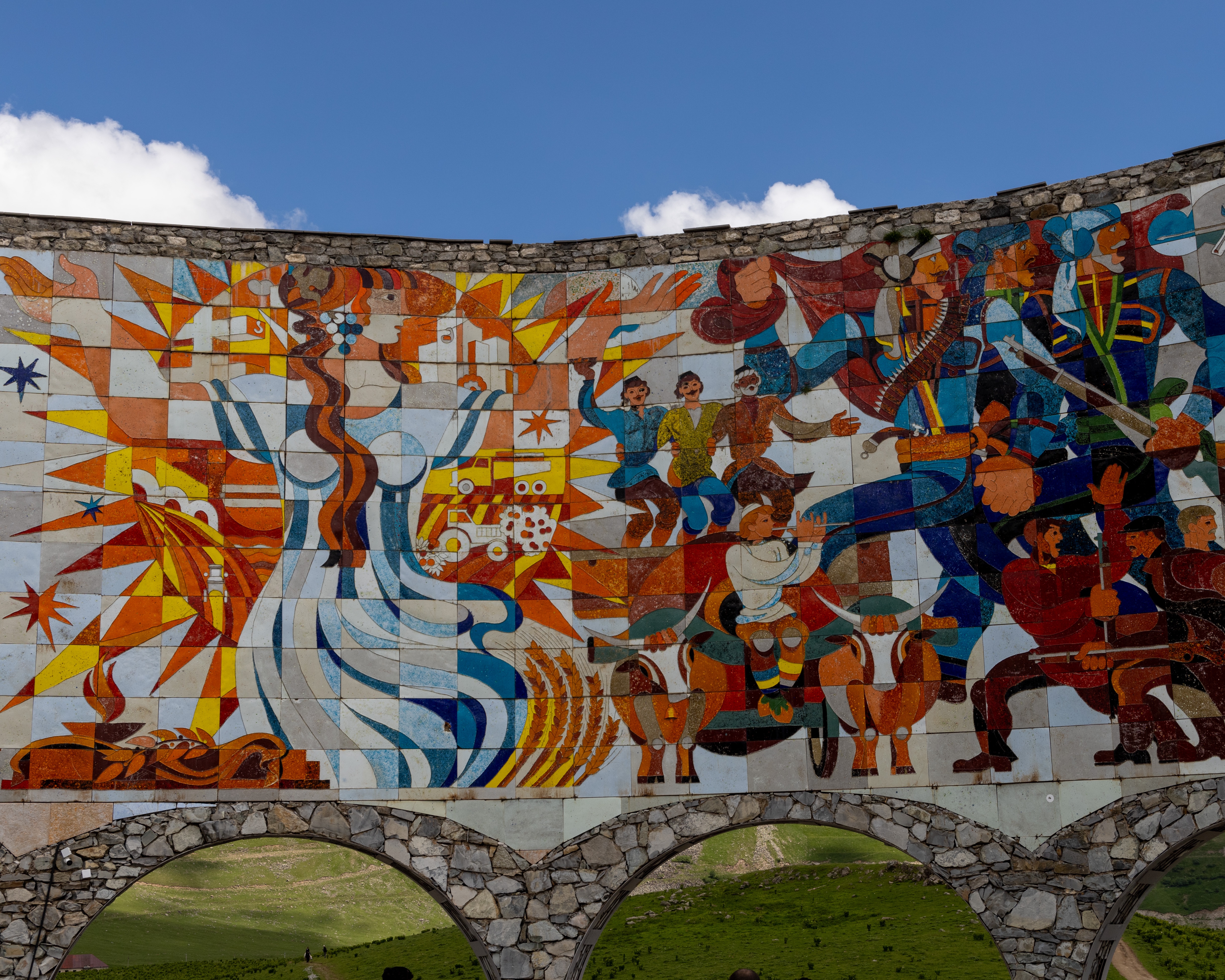
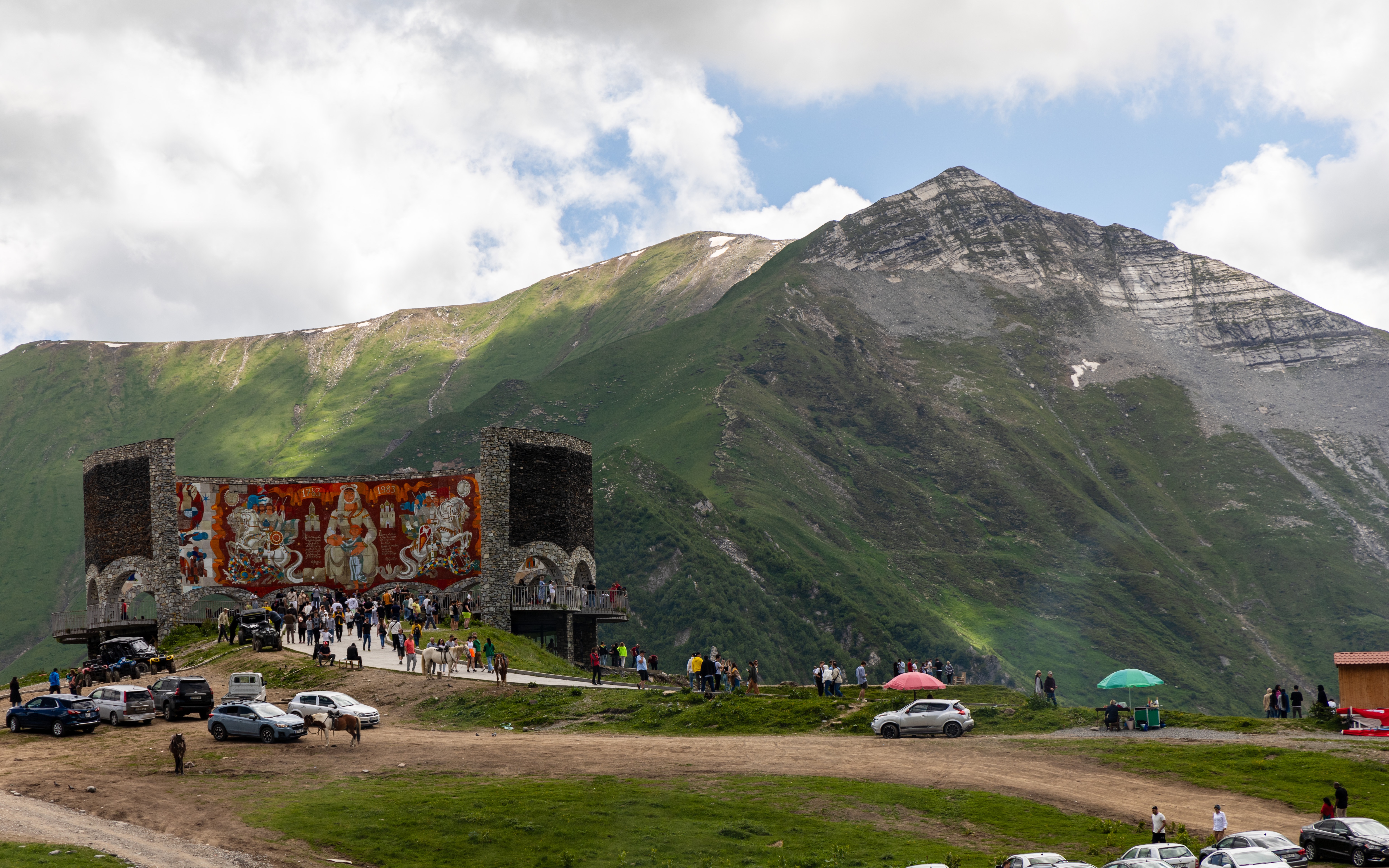
Georgian-Russian Friendship Memorial
The monument, despite its questionable political motivations, is beautiful. In my opinion it not only does not take away from the natural beauty but adds to it, although I am weird. The whole region is just stunning. The vast mountain range dominates, but man-made constructions add to its intrigue for a traveller. Anyone who visits Georgia must simply take the twisty few-hour journey out of Tbilisi to see the full vast great beauty that this small country in the Caucasus has to offer.
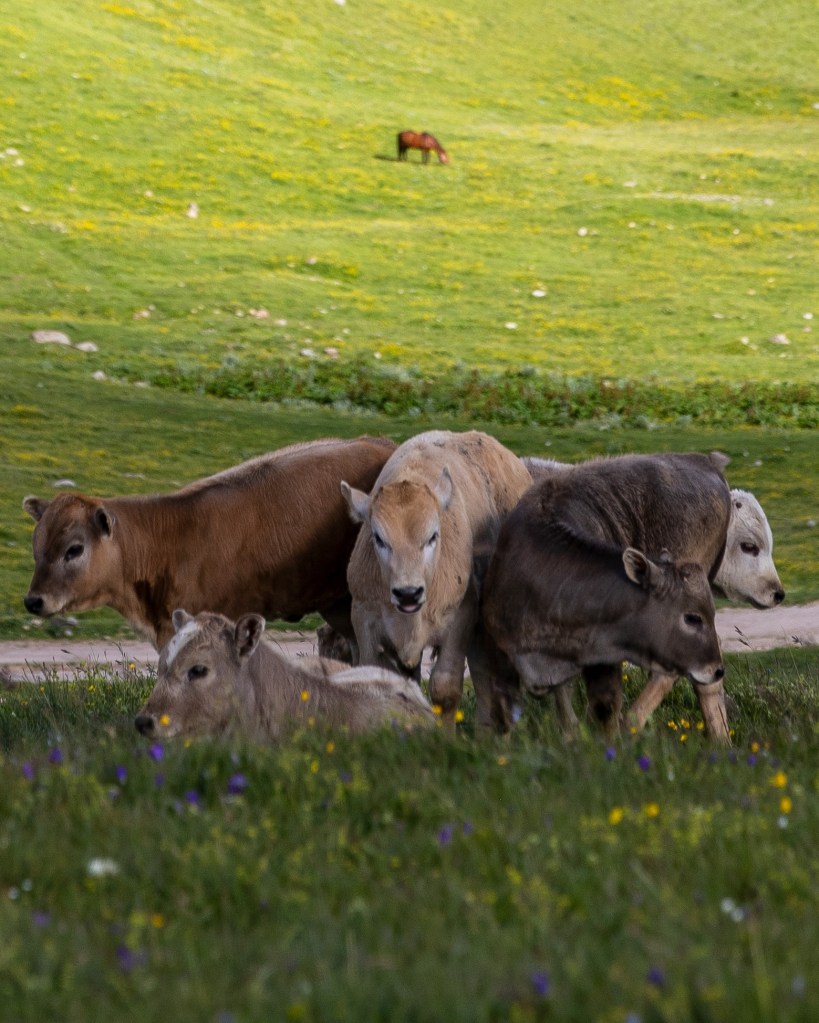
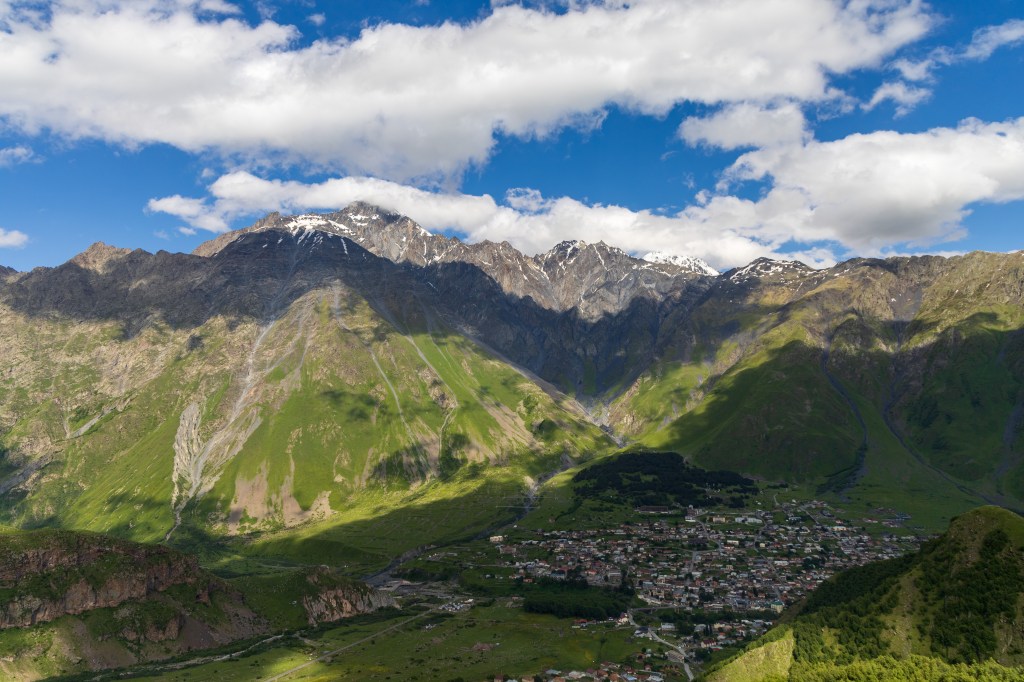
Some other pictures from in and around Kazbegi


Leave a Reply