
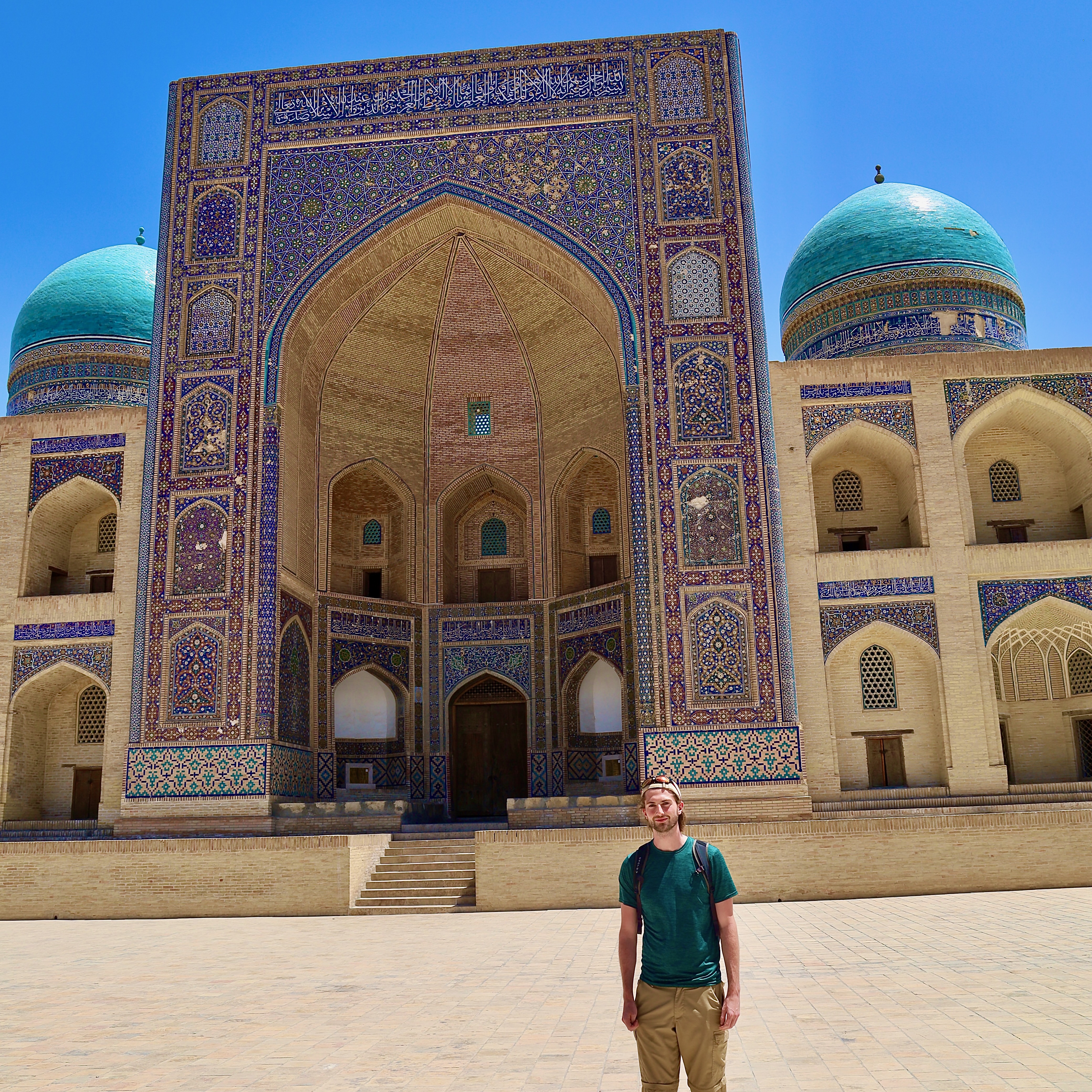
After a couple of great nights in Khiva, I took the long train journey through the desert to Bukhara. Bukhara is perhaps the most historically significant town of the former Silk Road I visited in Uzbekistan, that being said I’m sure people from Samarkand would debate this. Either way, Bukhara served as the capital of the Bukhara Emirate for centuries, perhaps the most important territory of Central Asia, a trading hub where cultures met in the squares and caravanserais of the city.
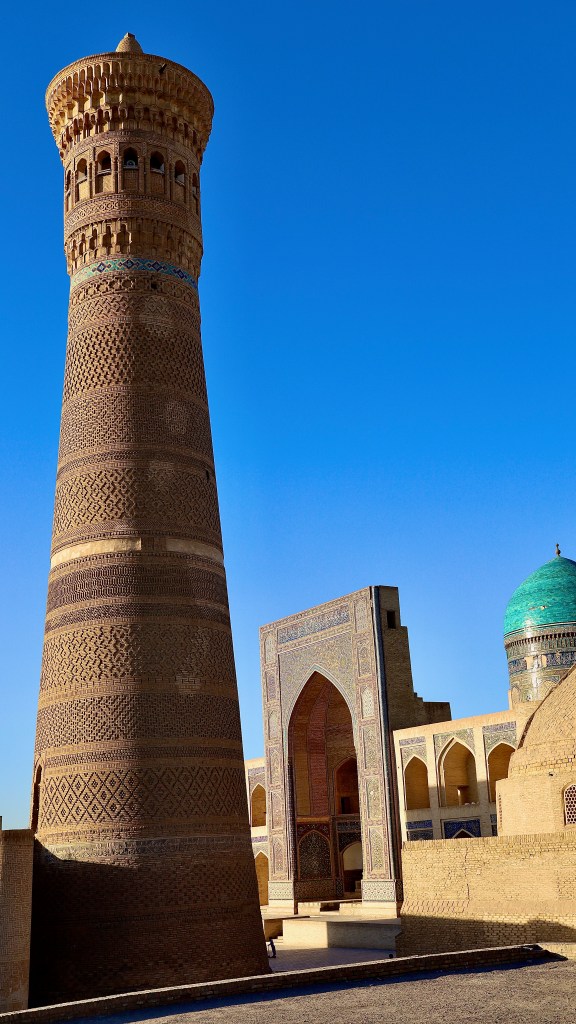
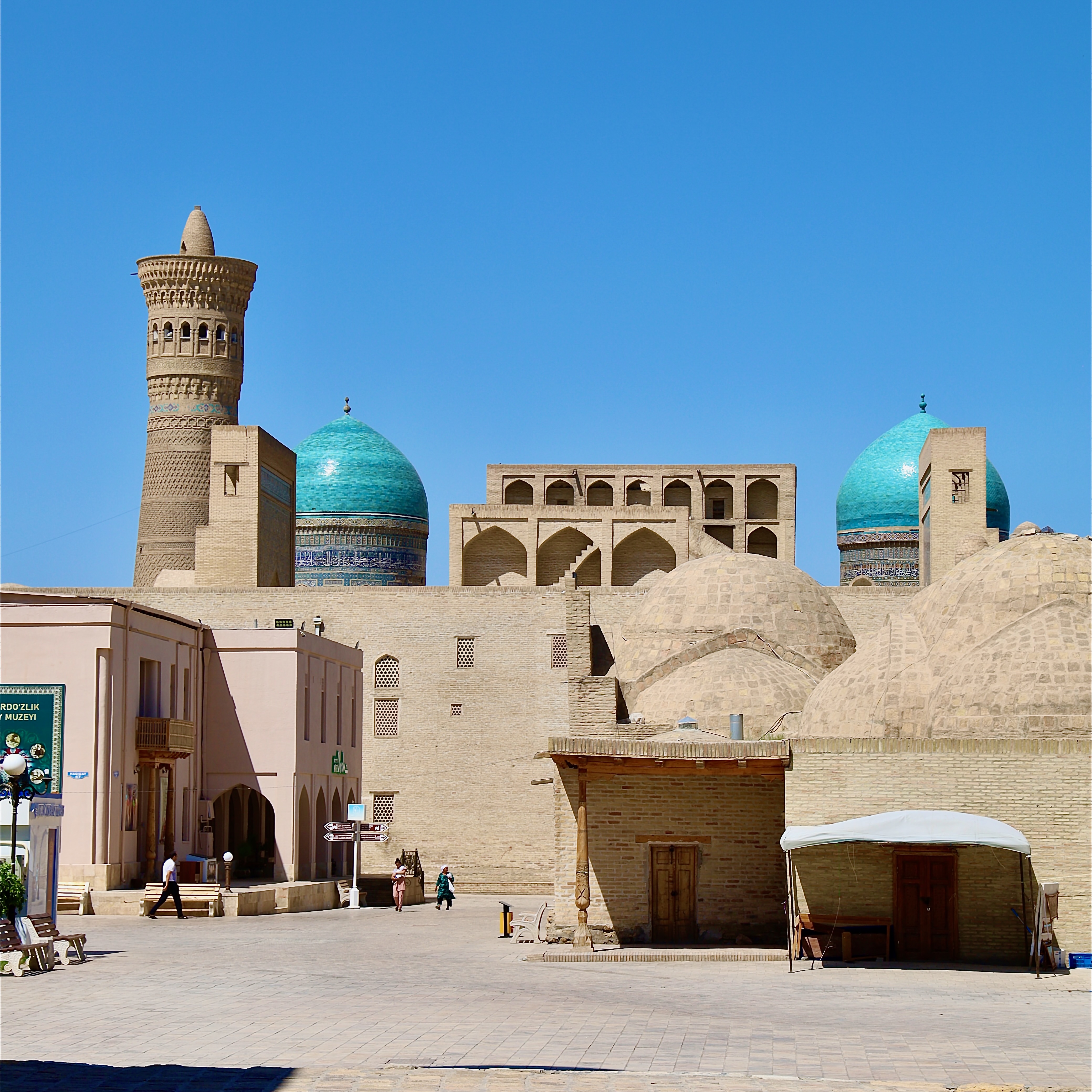
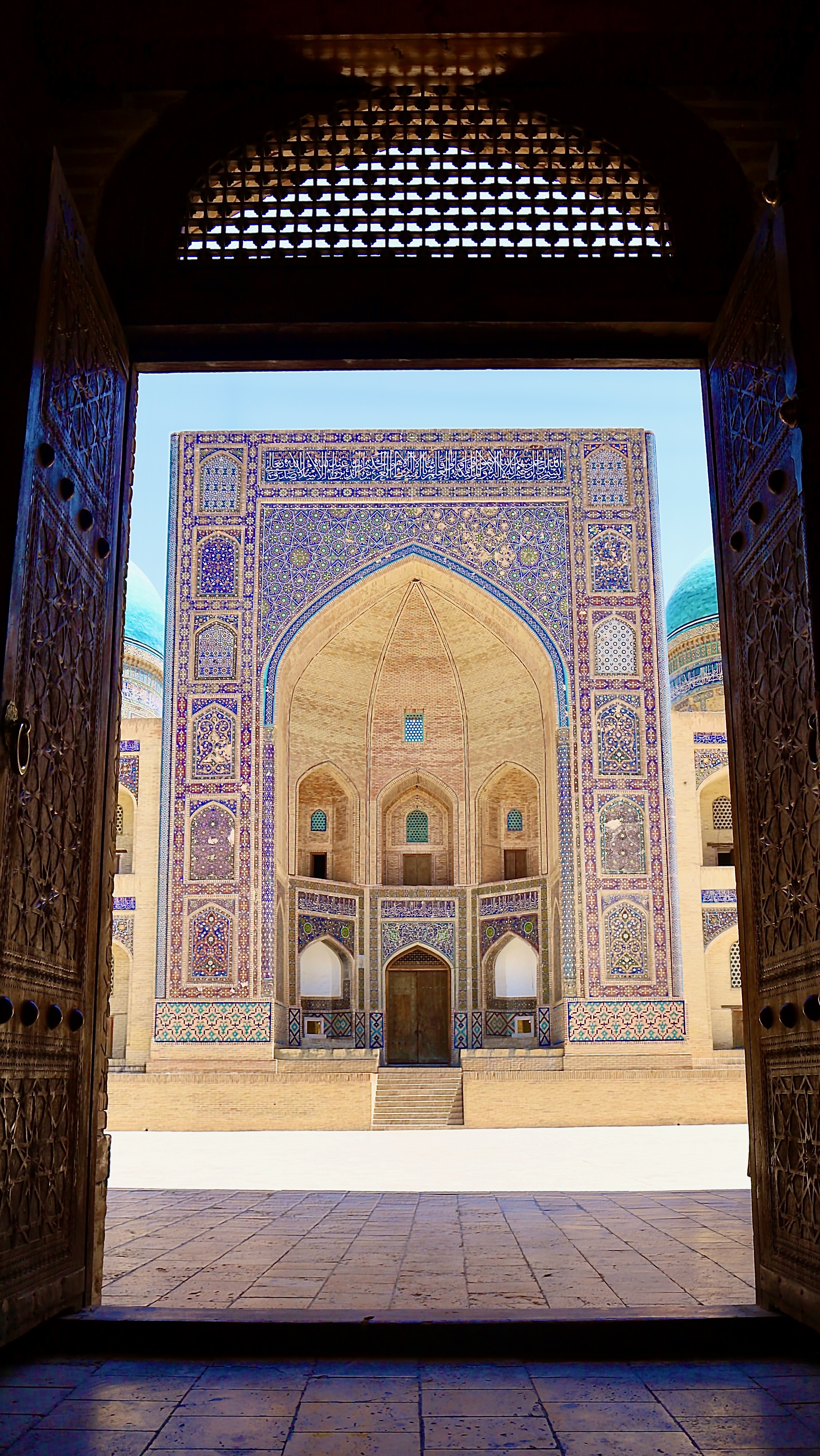
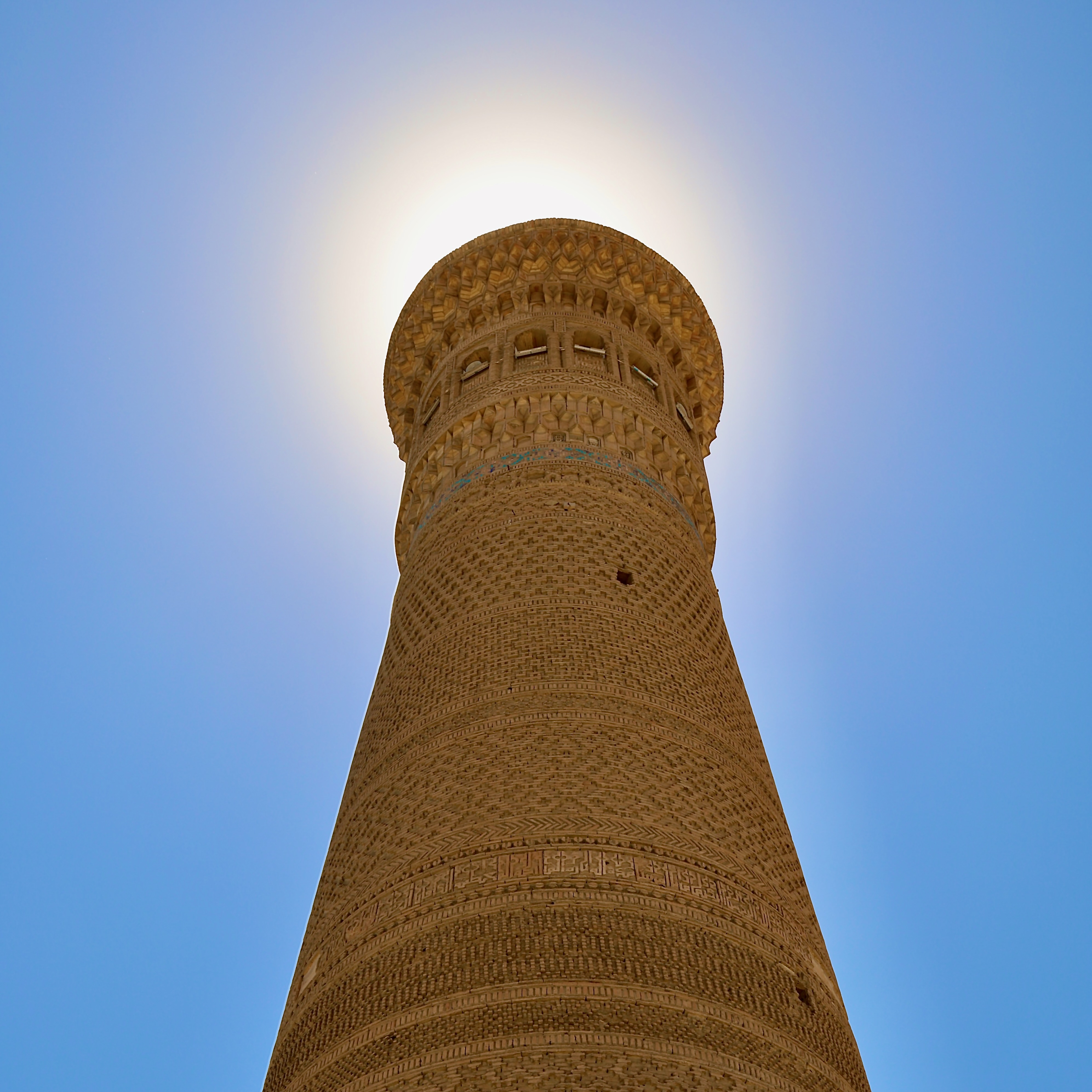
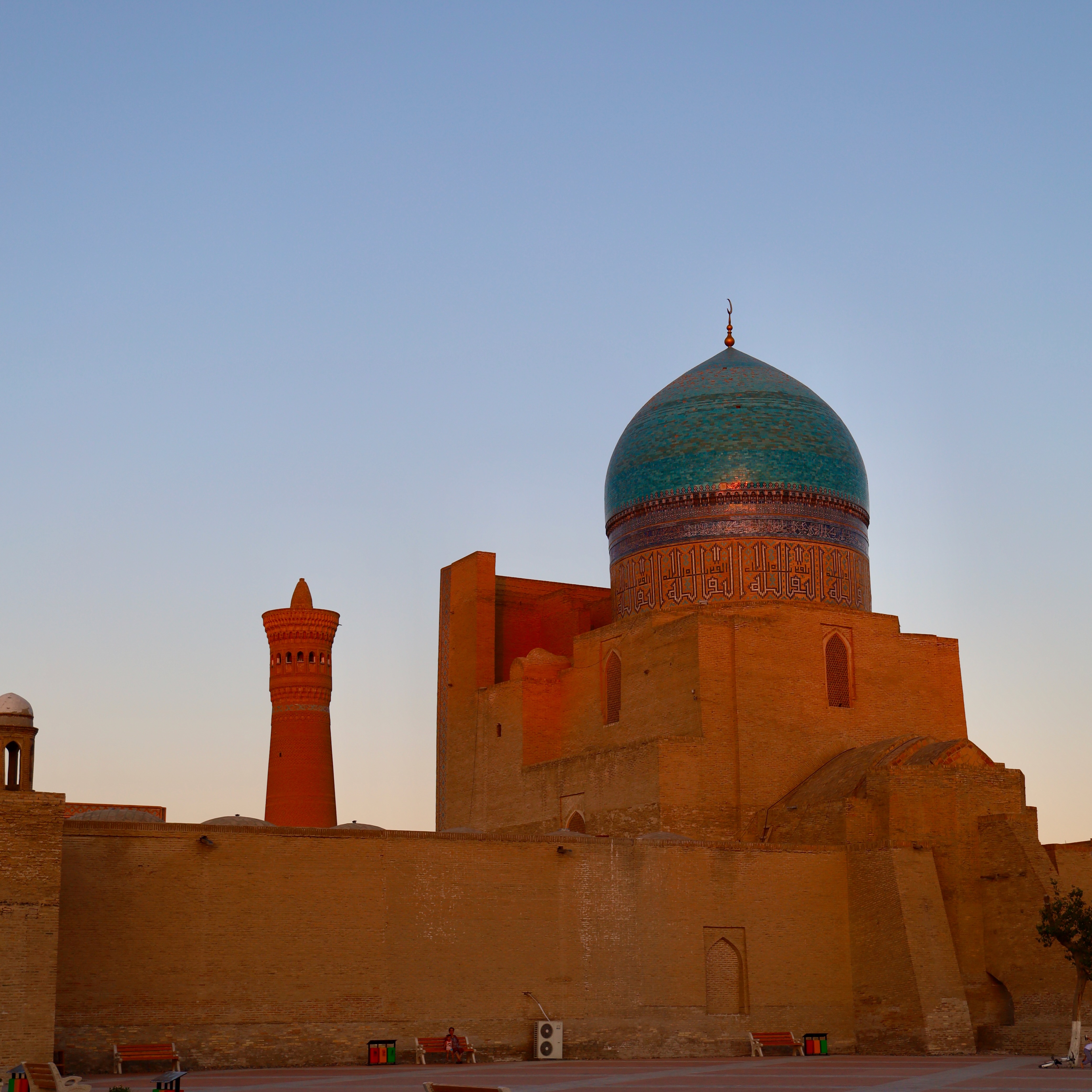
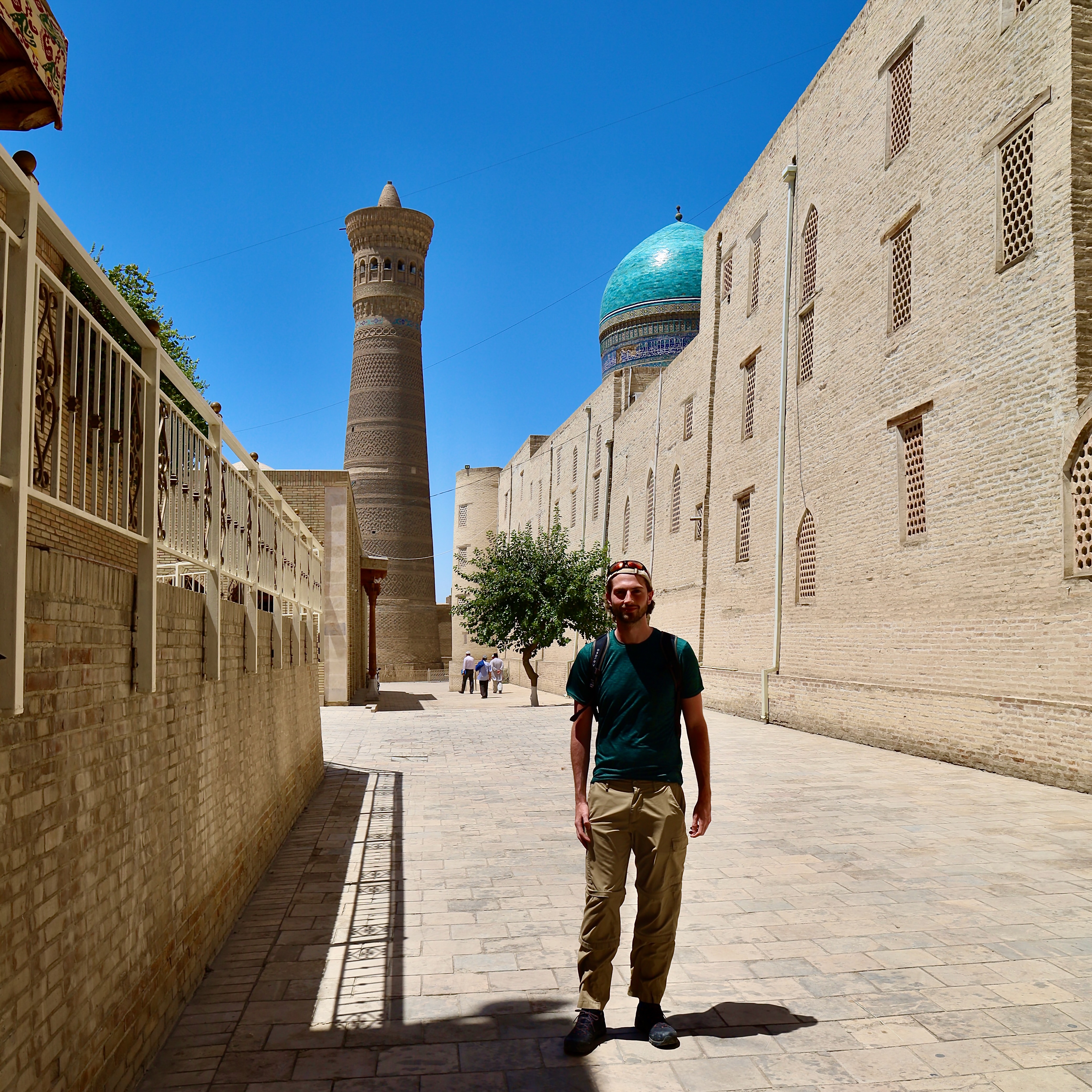
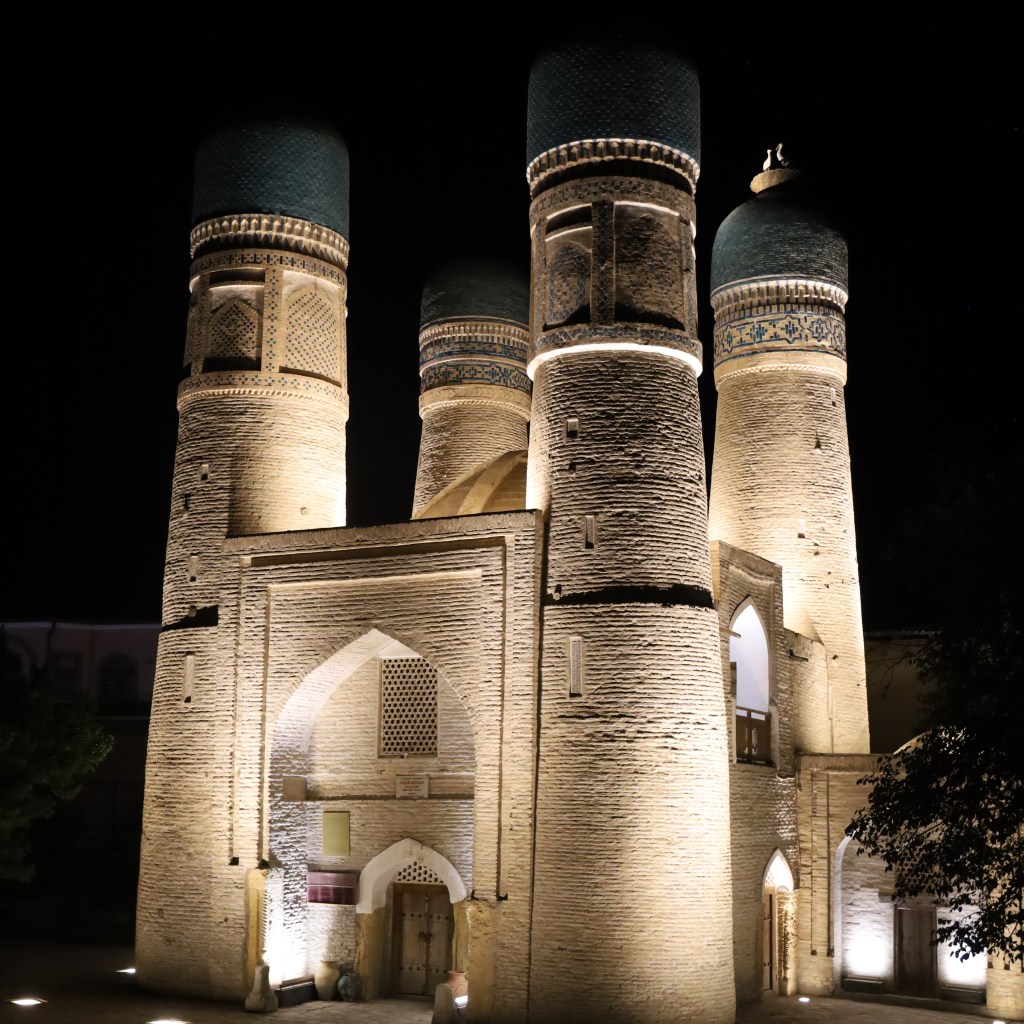
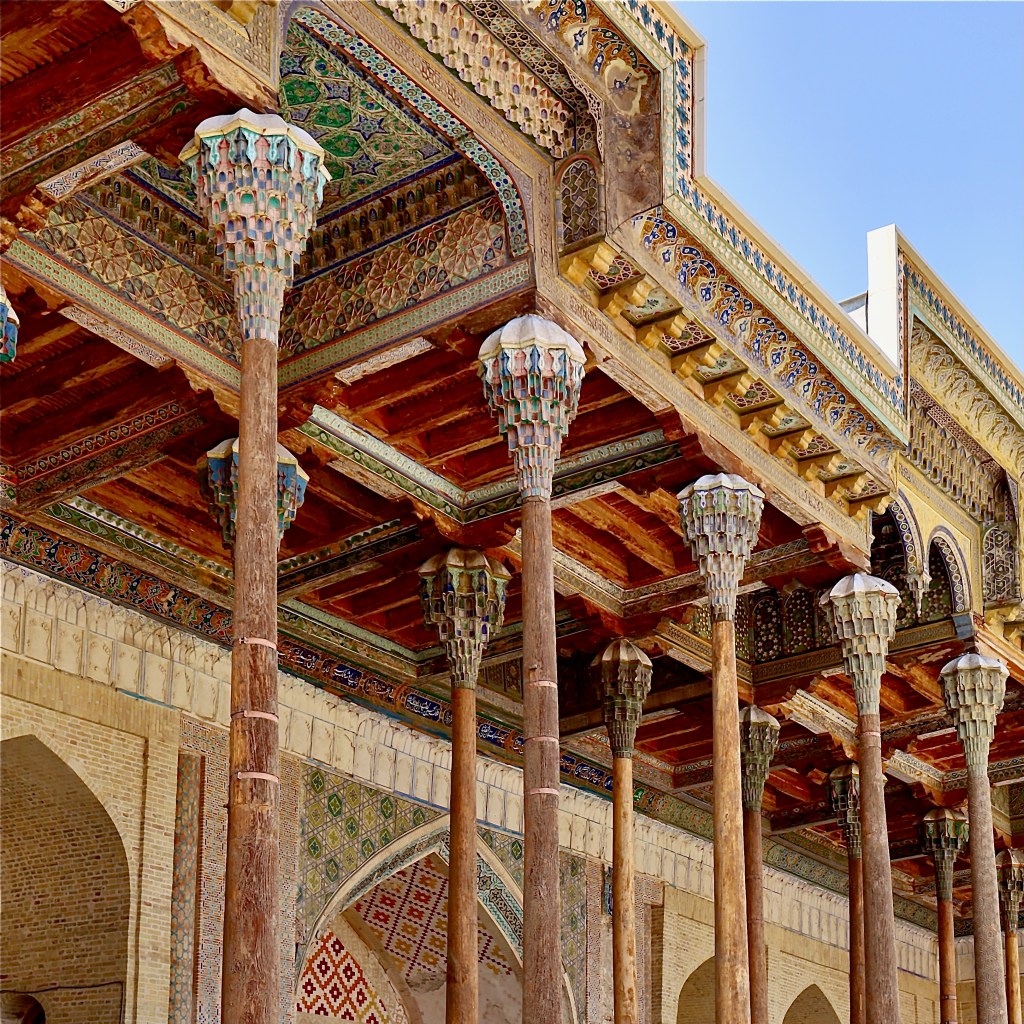
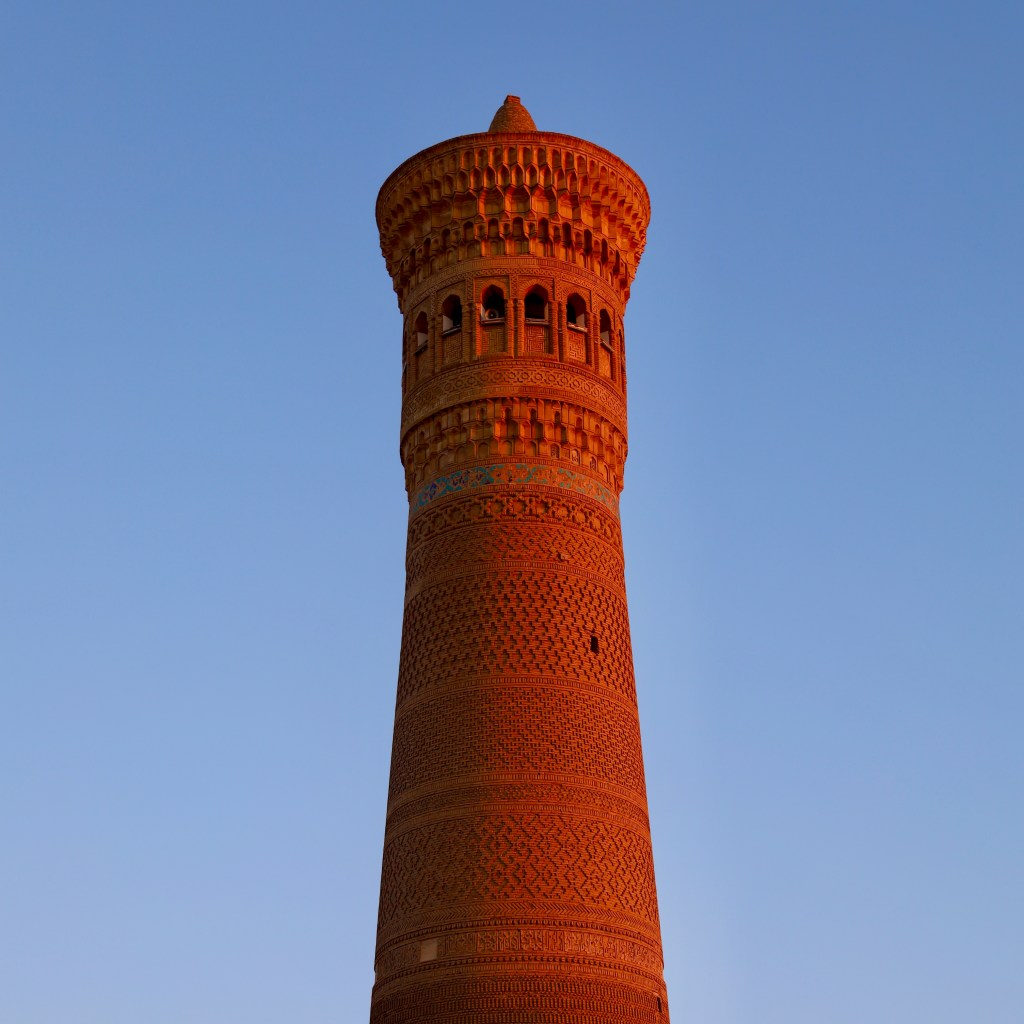
As with Khiva, Bukhara is a treasure chest of Islamic Architecture, with much of its key sites being from the 16th, 17th and 18th centuries, slightly older than much of Khiva. The Po-i-Kalyan complex is the focal point of Bukhara. The famous beige minaret of the Kalan Mosque, the celebratory mosque of the Emir, stands over the city, visible from all over. Opposite, through the doors of the mosque, is the blue-tilled facade of the Mir-i-Arab Madrasa. Unlike the vast majority of other madrasas in Uzbekistan, this Madrasa is still a functionally Islamic school. Every now and again you will see the students crossing the alley between the madrasa and the new dining halls. Although now dressed in modern clothing, in a modern canteen, the functioning nature of the madrasa gives just a little further glimpse of the past.
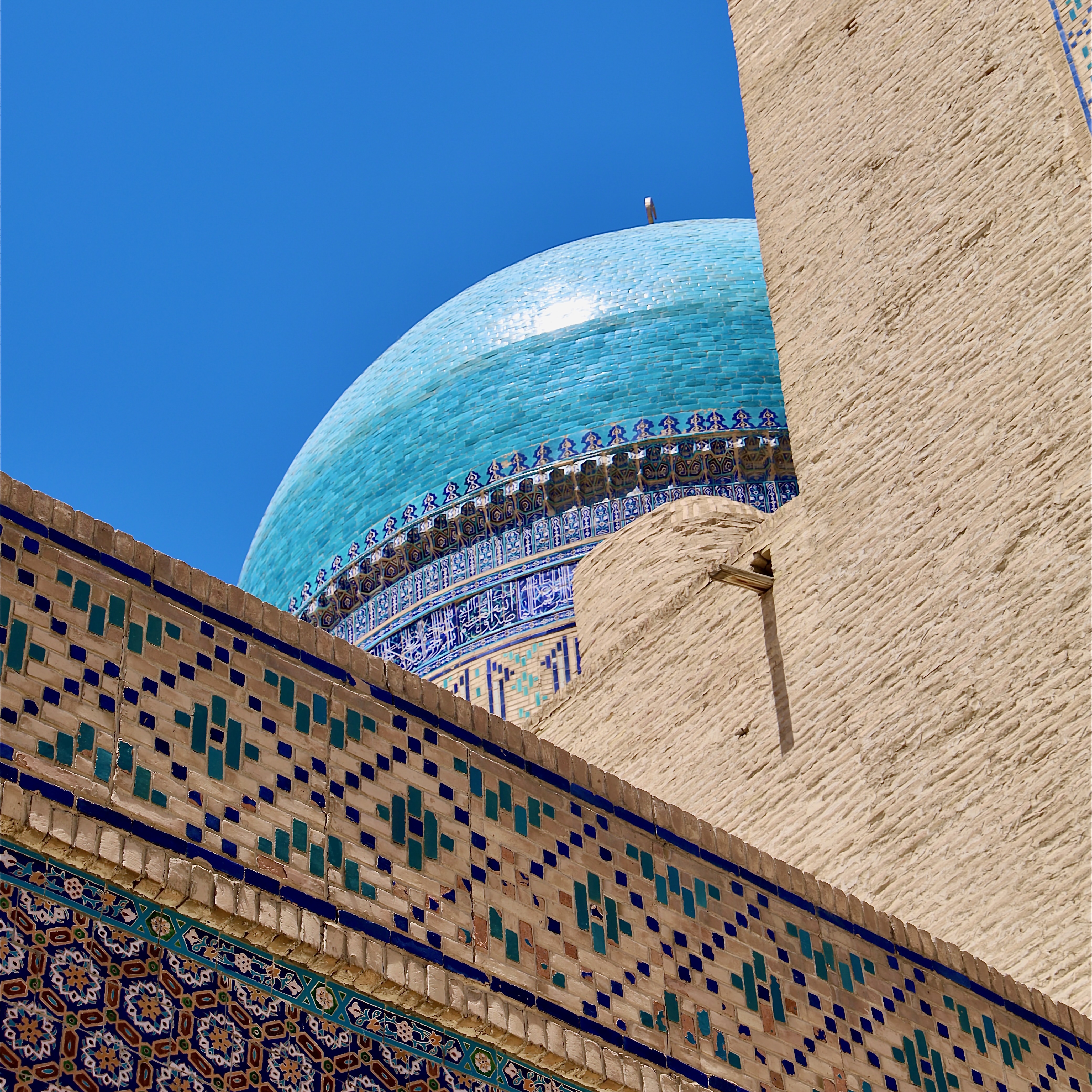
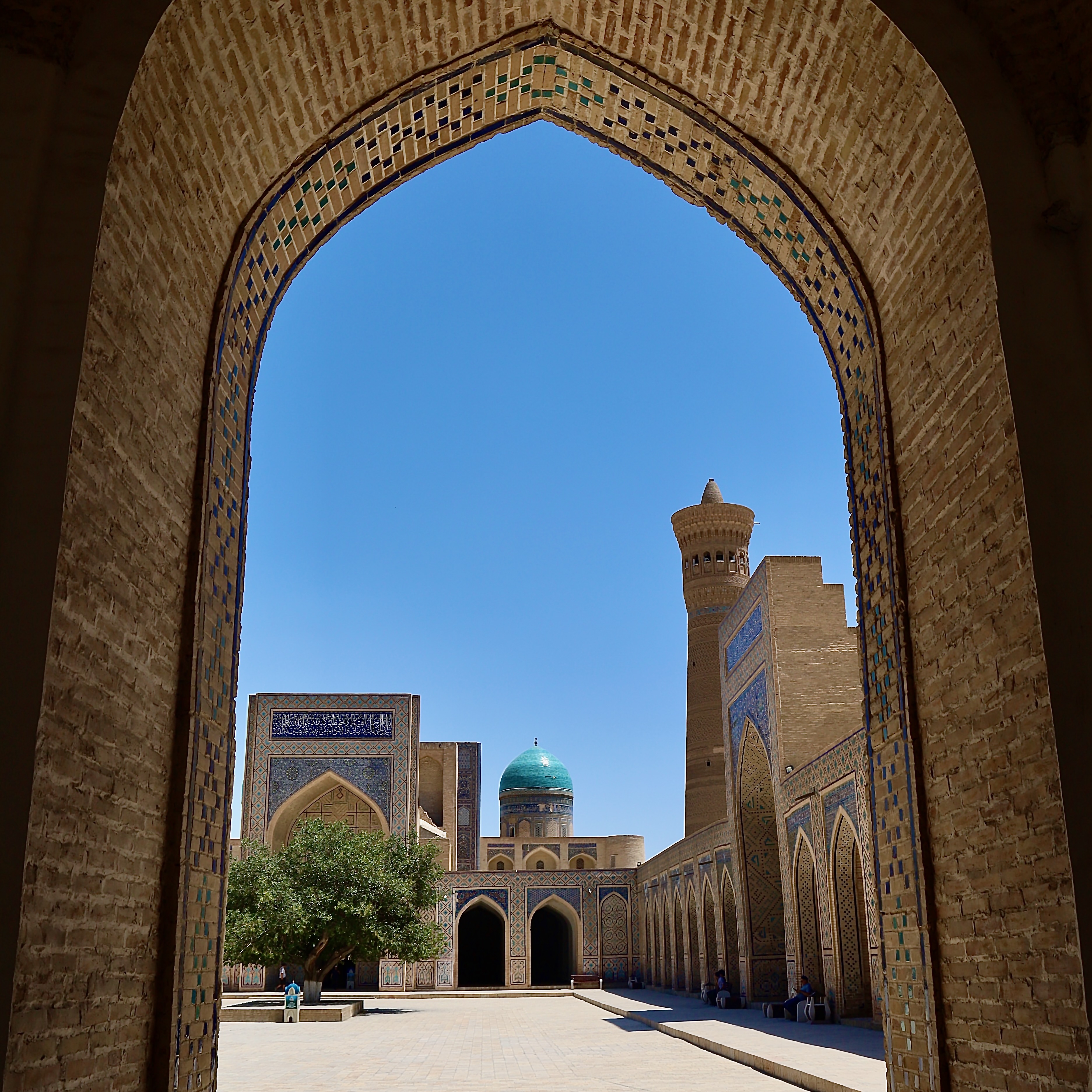
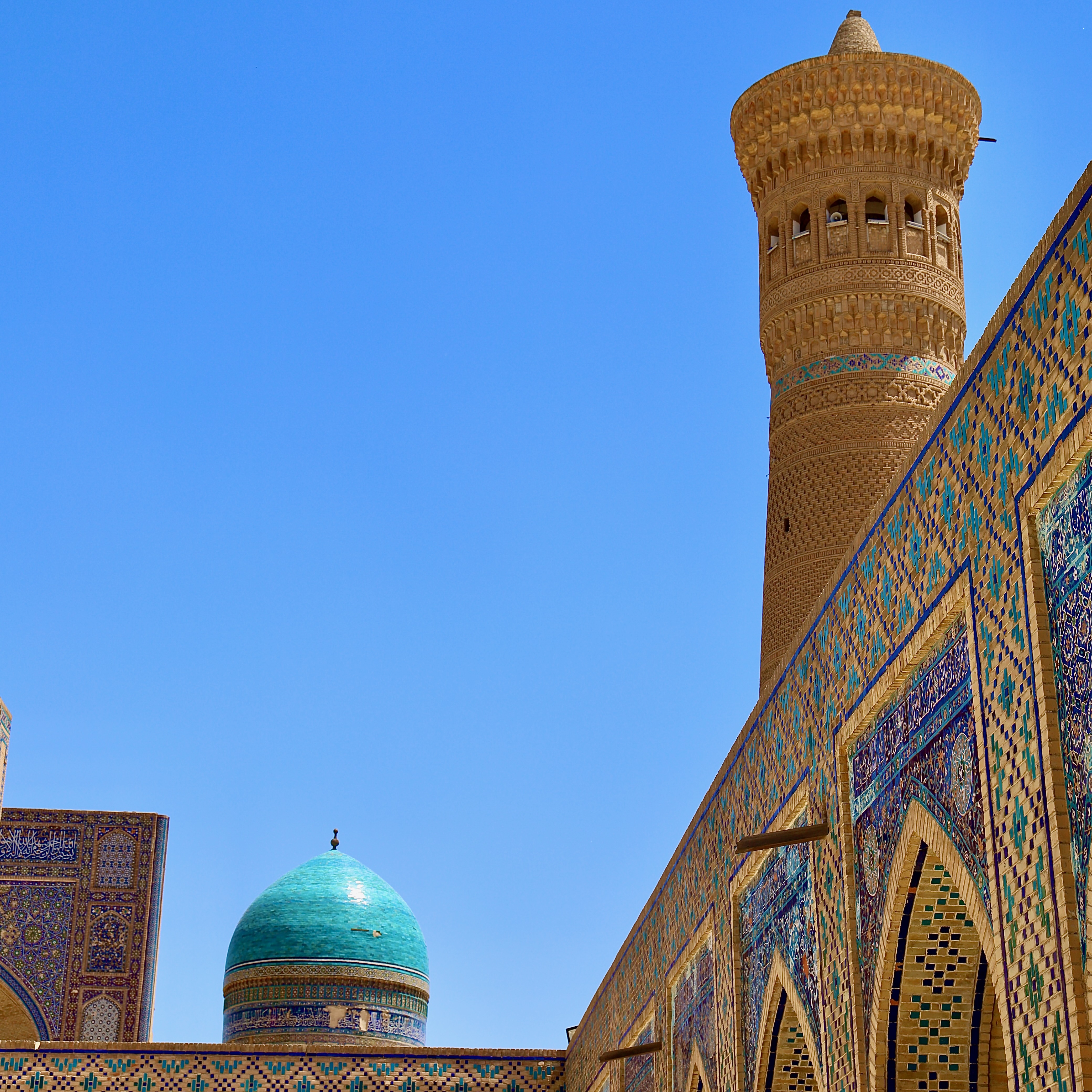
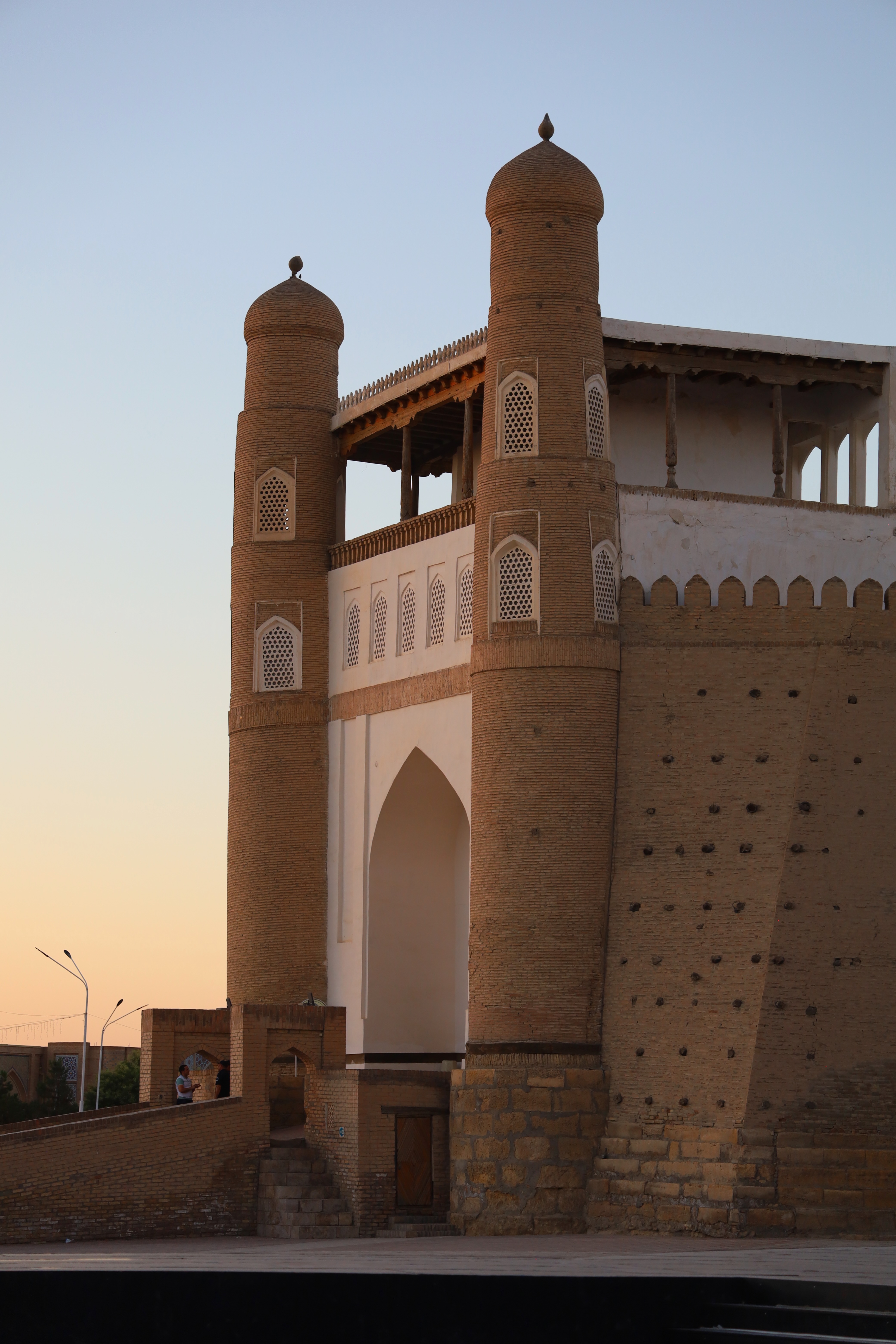
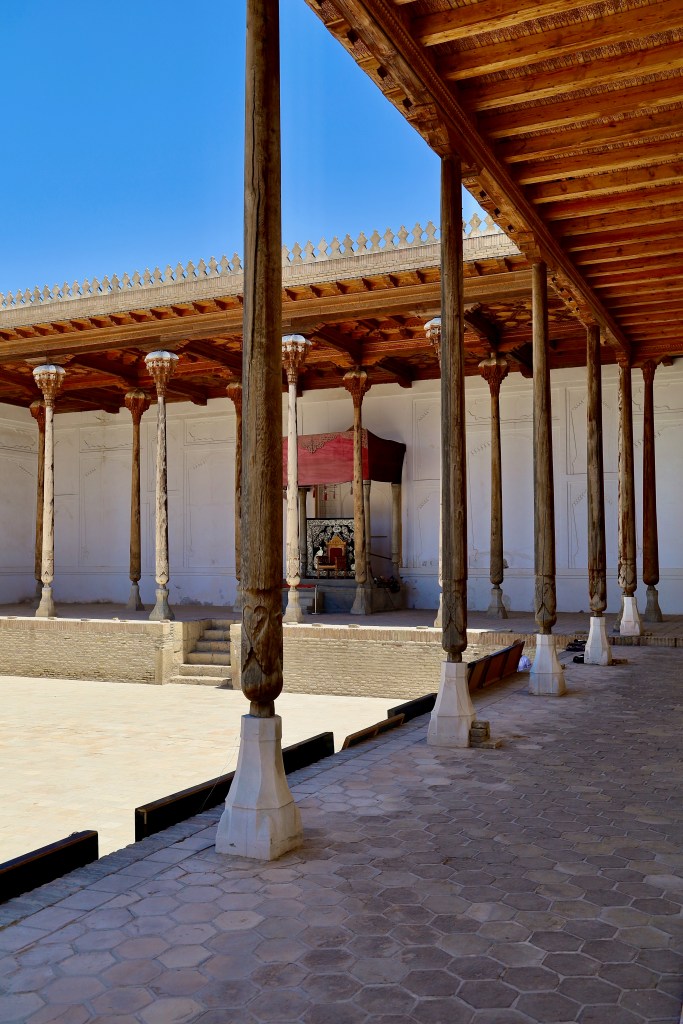
What you will also notice when looking at the Kalan Minaret, particularly during sunset, is patches of different coloured stone. This is a result of reconstruction following damage in the Russian Civil War. In 1920, the Bolsheviks shelled Bukhara to overcome the resistance of those supporting the Emir and his regime. Following a few days of fighting, the Bolsheviks controlled Bukhara, and Emir Mohammed Alim Khan fled the city to Afghanistan where he was to die in Kabul in 1944. The battle severely damaged the city, and almost entirely destroyed the Ark, the fortress and palace of the Emir, today only the gatehouse stands, with a mixture of reconstructed and ruined buildings. However, one particular element of the Ark caught my eye, the coronation hall. When I was in Moscow last year I visited the Tretyakov Gallery, where I saw a painting by the famous Russian artist Vasily Vereshchagin entitled Представляют трофеи (Presentation of the Trophies). The painting depicting decapitated heads being presented to the Emir really caught my eye when I visited the gallery. Although the painting is fictitious, it inspired me to visit these places for real. I am not sure if Vereshchagin was inspired by the coronation hall of the Ark of Bukhara, however, the moment I entered the courtyard I could see these images of a long past time, which this painting first drew me to.
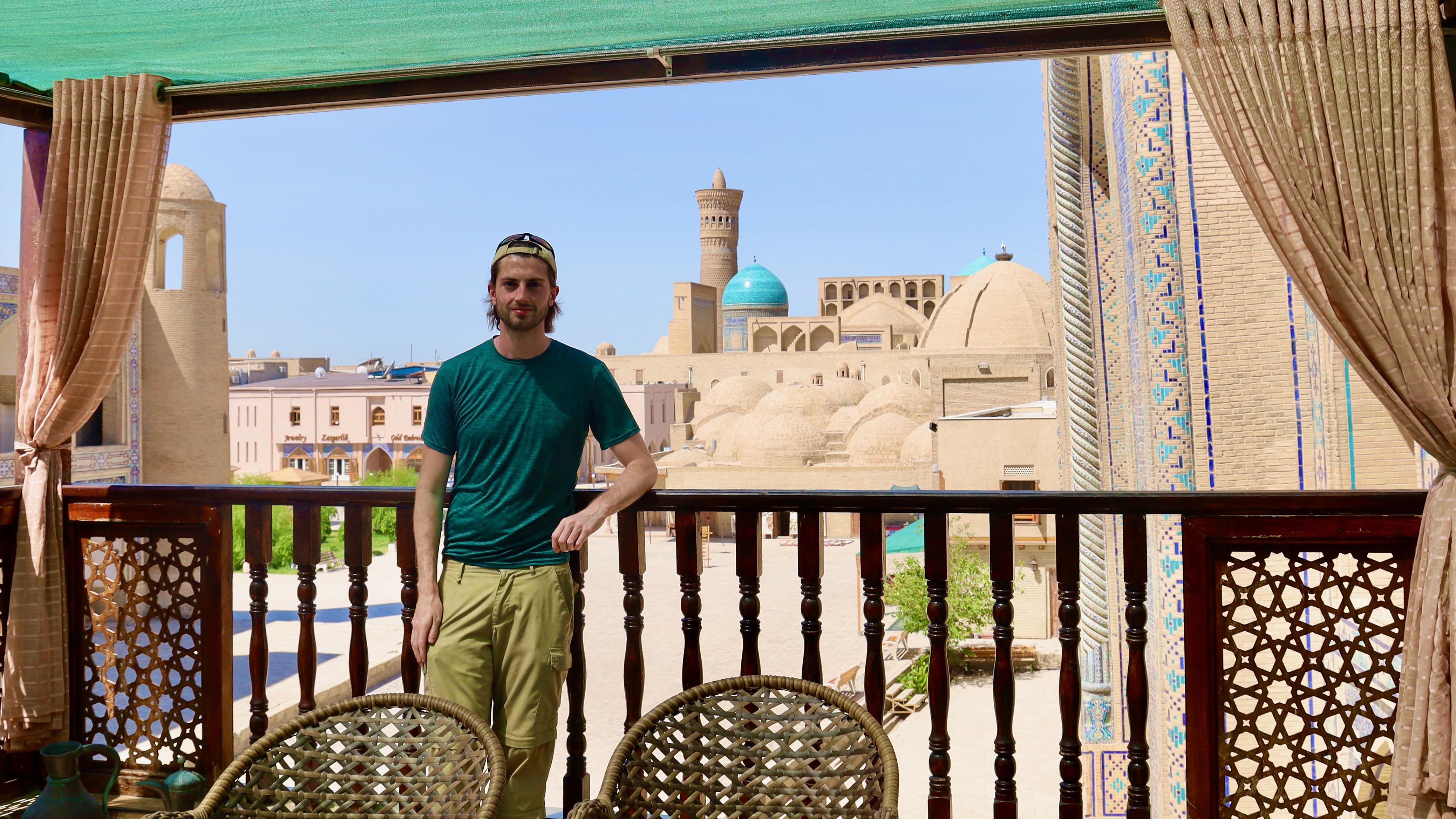
Realistically I only decided to enter the Ark because I was on a private walking tour with my guide Shira around the city. I can say with all honesty that she was one of, if not the very best guide I had ever had. She showed me around the city for nearly 6 hours and showed me to a wonderful cafe with one of the best views over the Bukhara, which we had all to ourselves. She took me for lunch at another great restaurant where I had one of the best Shashlik’s of all of my time in Uzbekistan. It was at these perfectly timed stops that we just chatted about all things Bukhara and beyond. She taught me a little Tajik, the predominant language in the city, told me about her son’s life living in China and most interestingly to me told me about the attitude of Bukharans to Soviet rule. In her opinion, in stark contrast to some other former Soviet Republics, she said the experience of Bukhara, Uzbekistan and perhaps the wider southern central Asia region was 70% positive. The first thing she mentioned was how the lives of women were totally transformed, in the times of the Emirate she explained how most women’s lives were constrained within the walls of the house. The Soviet rule totally changed this traditional Islamic culture and her own life is a testament to this change. Secondly, the infrastructure. Bukhara lacked simple utilities that we would view as total necessities. The Soviets and Imperial Russia before them brought electricity and more importantly a healthy water system. Bukhara’s traditional water pools, three of which still stand today, provided water for the city’s inhabitants, but also provided disease for the inhabitants. The Russian and Soviet rule transformed this, by building a water tower followed by further utility infrastructure.
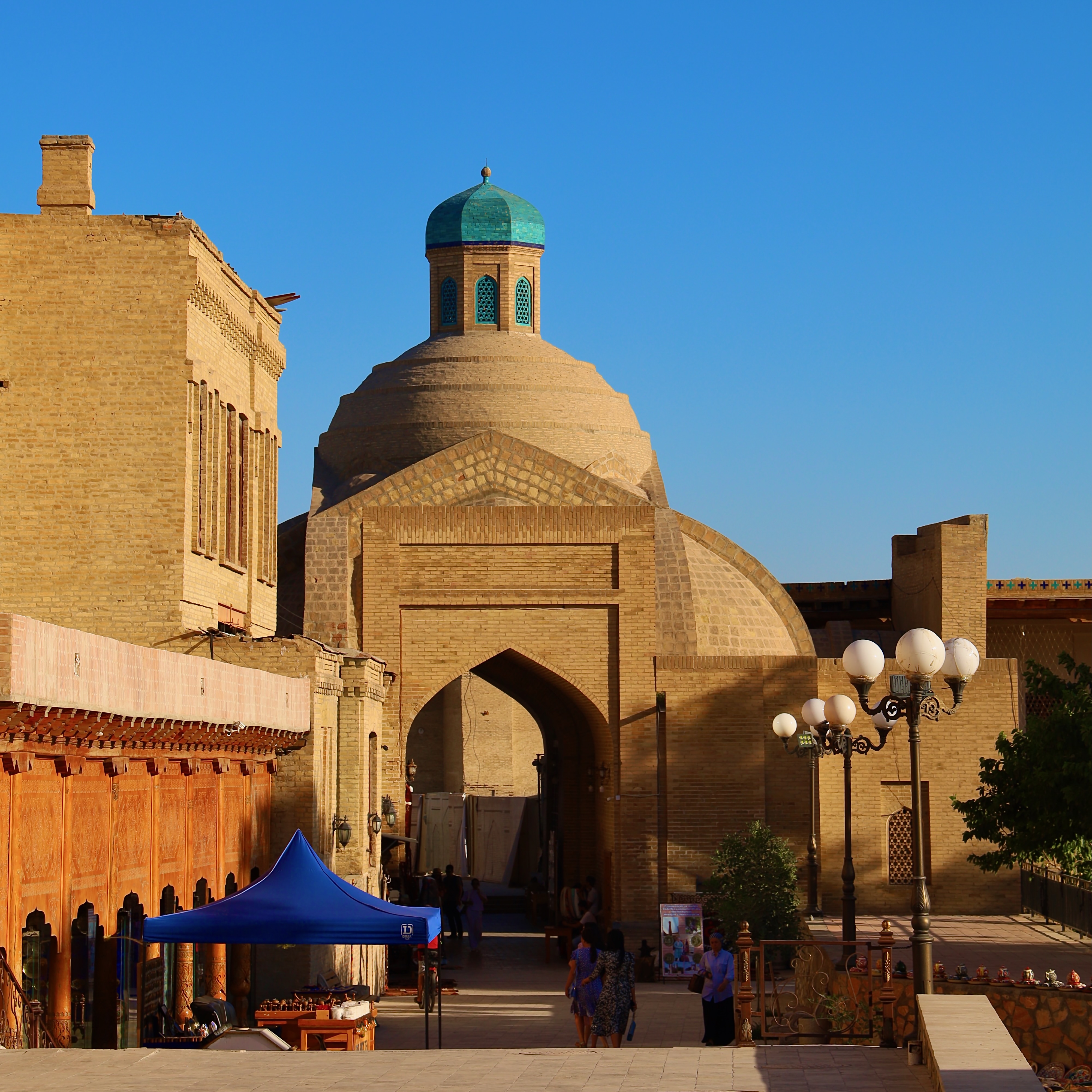
Water has always been a golden resource in this region of Central Asia. I mean this quite literally, at times in history the price of gold and water was at parity. Shira also touched upon the post-Soviet water disputes between Uzbekistan and its mountainous neighbours who have this most precious resource. In the time of the Soviet Union, this was not a problem for Bukhara and Uzbekistan, however, following independence the problem of water has once again emerged. I feel this has been a common theme in my recent travels, but the collapse of the Soviet Empire resulted in many issues across an enormous landmass that people simply could not have foreseen. These issues continue to plague the region in some cruelly visible ways. I have no solution to these issues beyond I hope they improve in the future, but it does demonstrate why in some areas of the former Empire the disintegration had a harsher impact leading to a certain positive memory.
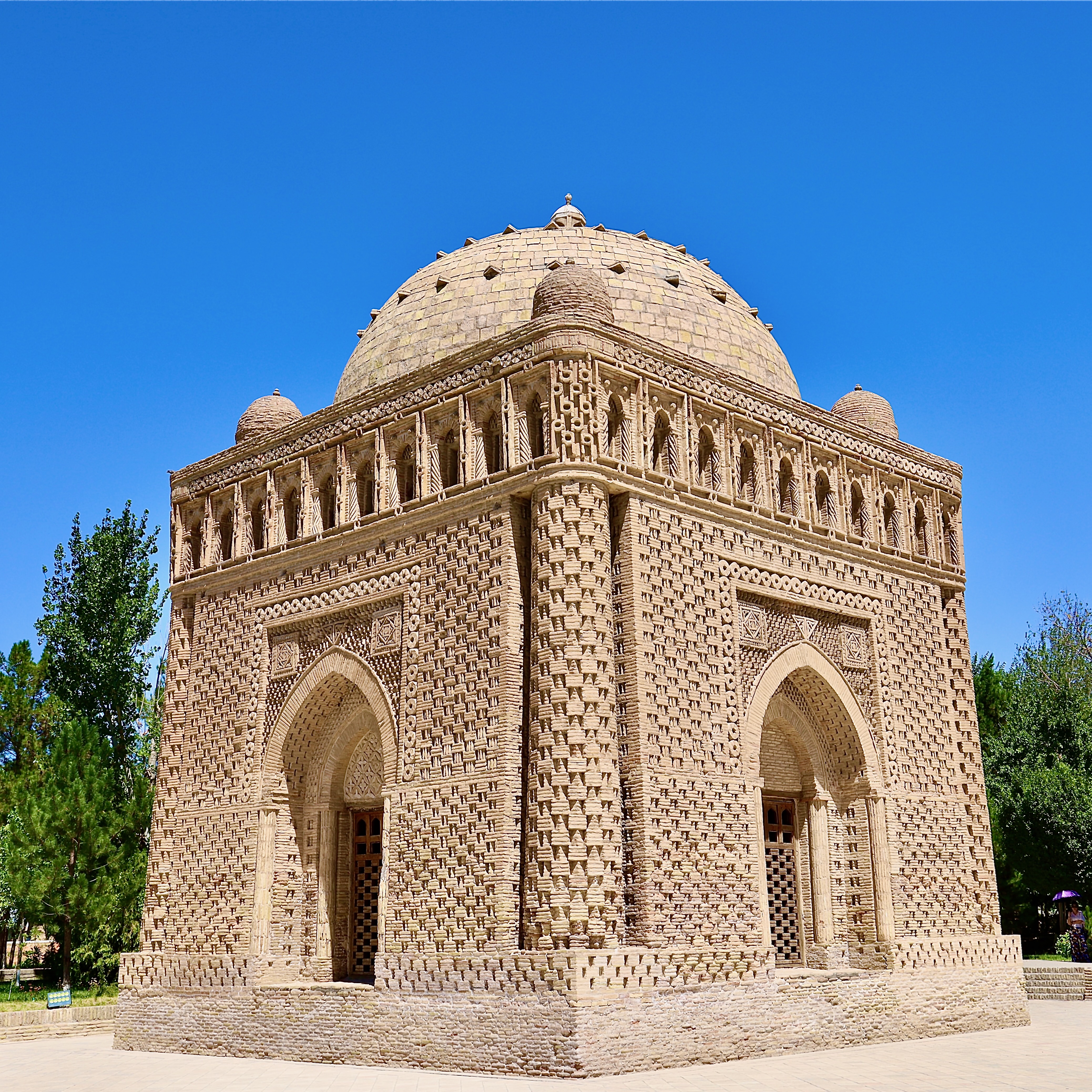
On my tour with Shira, the final place we visited was the Samanid Mausoleum, situated perhaps a ten-minute walk from the Po-i-Kalyan complex. The mausoleum houses the tomb of the 10th century head of the Samanid Dynasty Nasr II, Amir of Transoxiana and Khurasan. The mausoleum is one of three architectural buildings in the city to survive the invasion of Genghis Khan, thanks to it being buried under a mound of sand. The building itself is a rare demonstration of old Persian architecture, the existence of Zoroastrian symbols scatter the exterior, whilst the lack of blue tilled mosaics creates a contrast to the rest of Uzbekistan’s silk road.
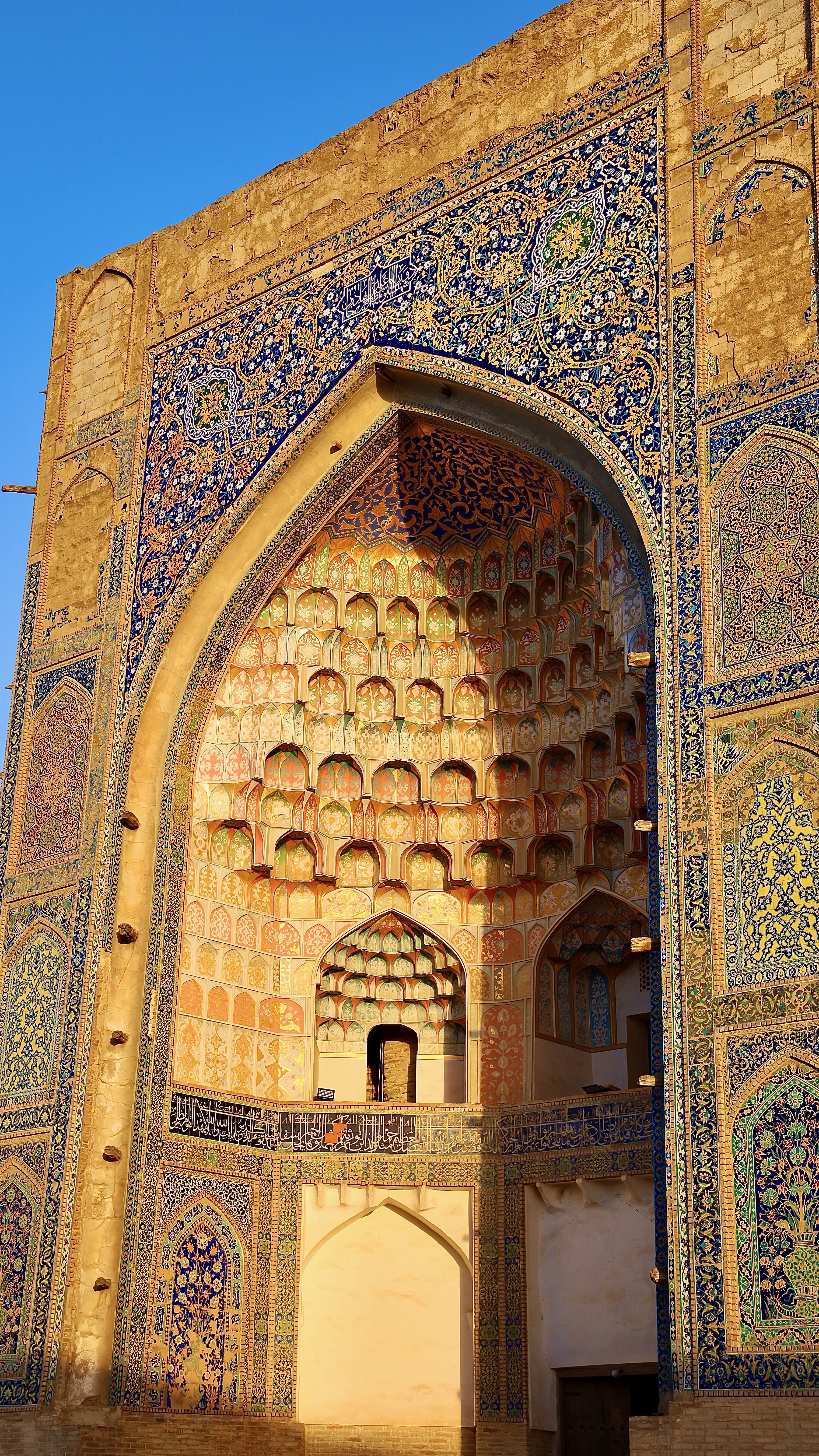
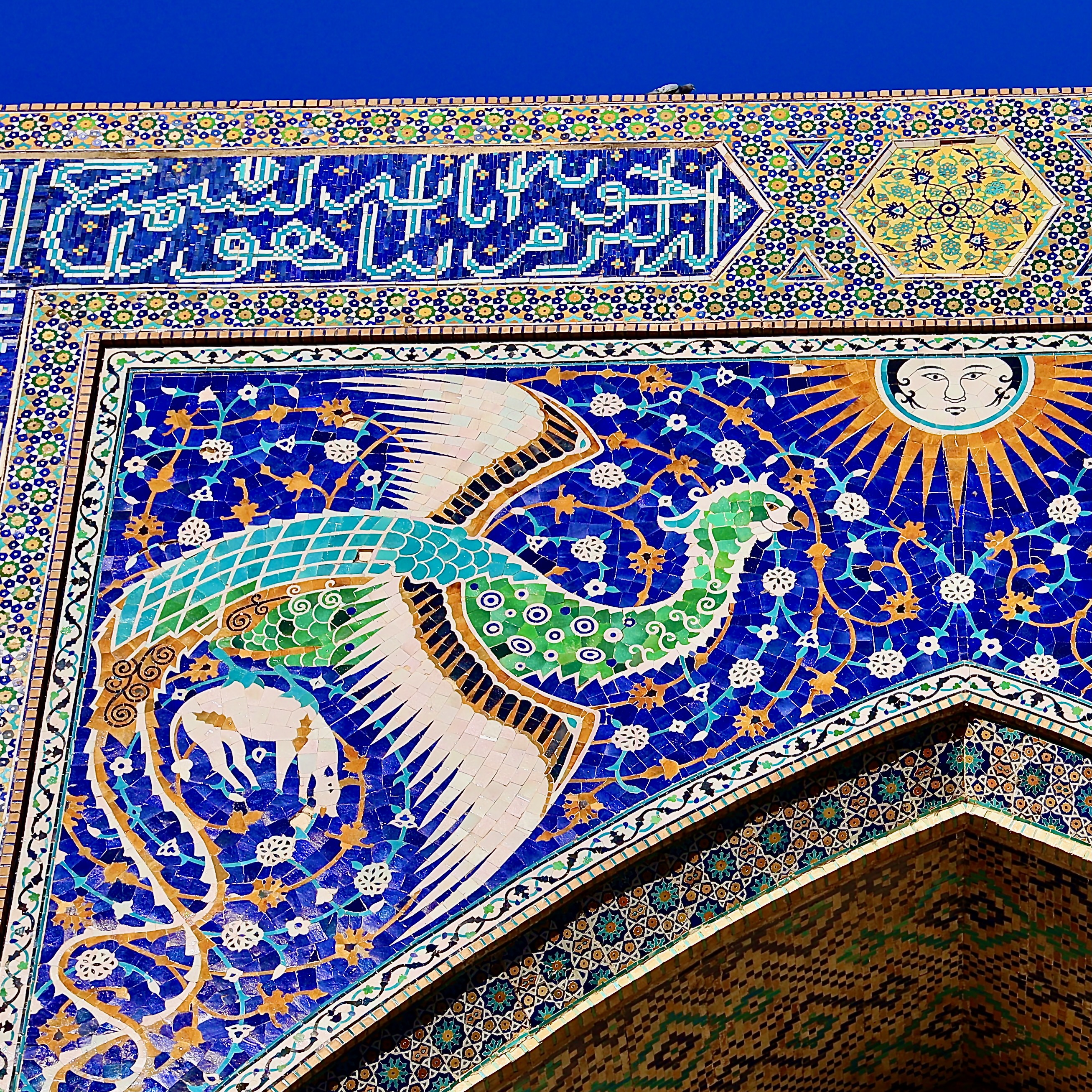
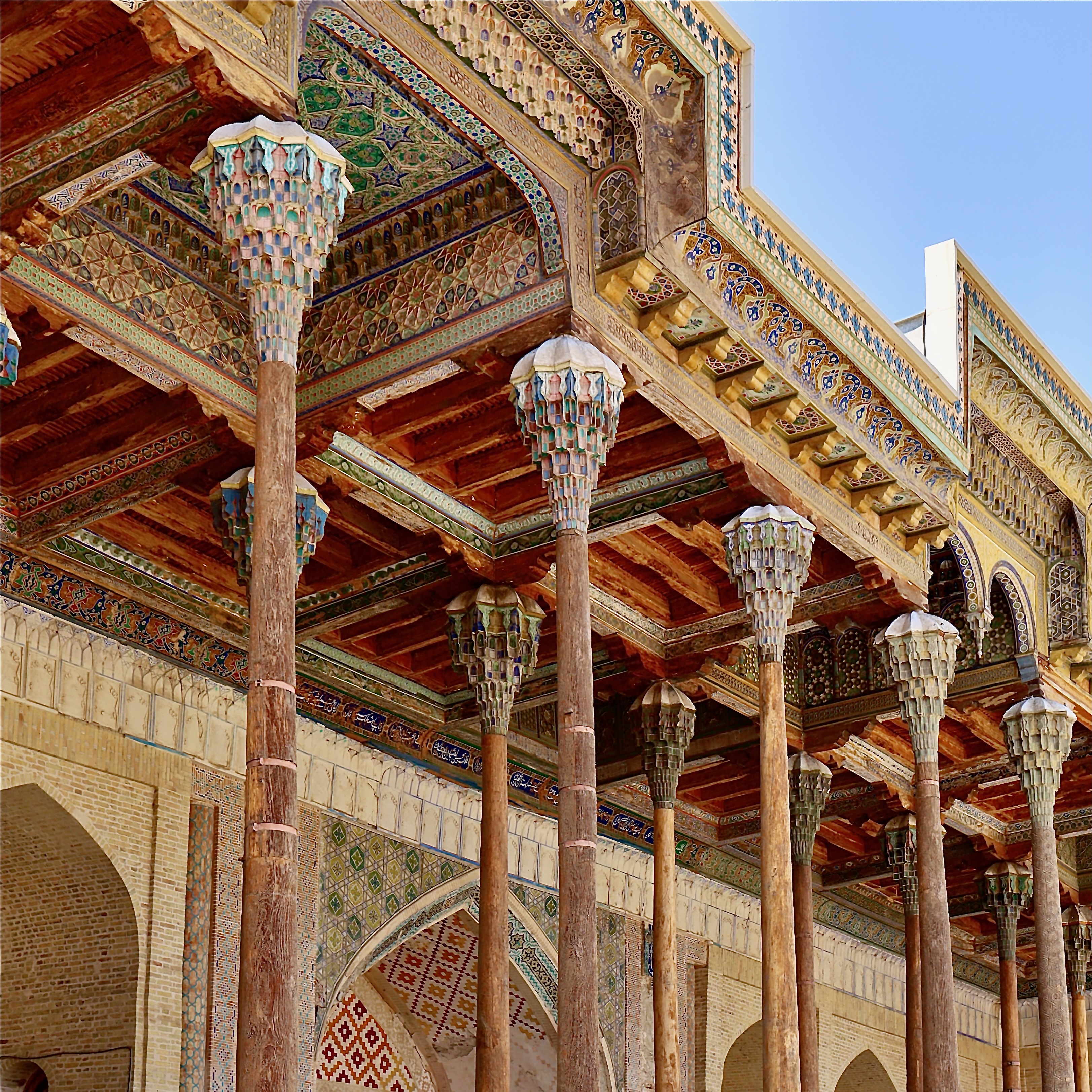
The blue tiles you do see in Bukhara do have the Persian Shiite influence that is absent from Khiva. Unlike in Khiva the mosaics in the city depict living beings. This is most clearly seen in the Nadir Divan-Beghi Madrasa, where a Simurgh, a mythical Persian bird similar to a Phoenix, is depicted. This artistry adds an additional element to the beautiful mosaics which I think I prefer to the plain patterns. This madrasa sits as a part of the Lyad-i Hauz area of the city. The area surrounding one of the old drinking ponds which today includes a number of large madrasas, mosques, a large recreation area and stands on the edge of the area occupied by the Bukharan Jews, whose population has greatly declined following the fall of the Soviet Union.
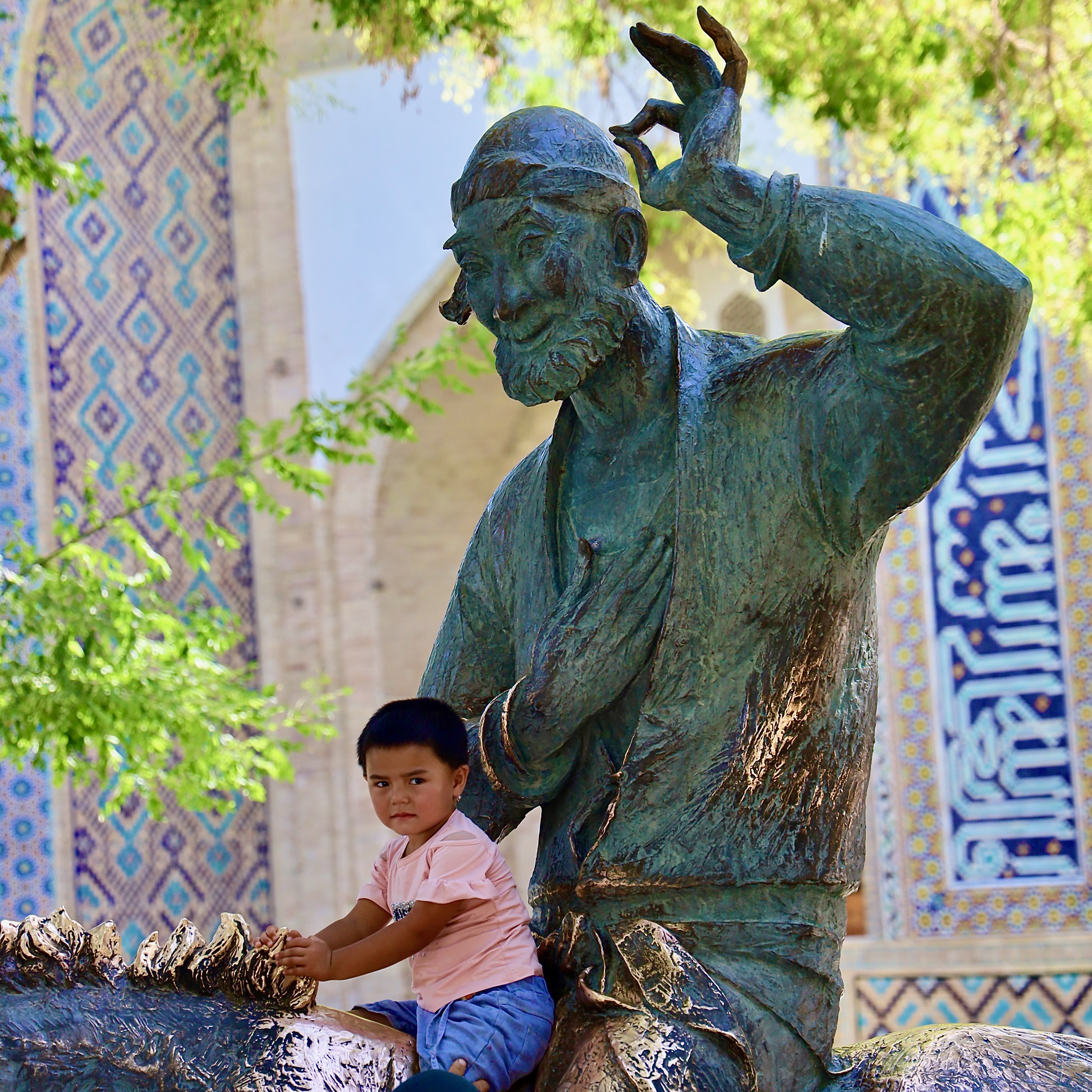
Overall, I really enjoyed Bukhara, and the more I think back the more charmed by the city I am. Just sitting by the Ark watching children playing in the shadow of this old great fortress was a really nice scene, an ancient city still functioning. The main sites from a historical point of view are really interesting and the city is the perfect size. I’m sure I’ll be returning one day to the great old city.
Accommodation
I stayed at Amulet Hotel, situated in an old Madrasa just a few minutes’ walk from the main attractions. You will stay in old students’ cells but don’t let this put you off. The rooms are very tastefully decorated and the breakfast was exceptional and enormous. Also, a special thank you to, who I think was the owner who would always be asking if you needed anything, whether you wanted more free tea or anything organising. I just felt very welcome.
Booking.com link: http://www.booking.com/Share-Zp2J1oU


Leave a Reply